The Vital Role of Fascia in Martial Arts Practice
One of the greatest benefits of practicing martial arts is the positive effect it has on overall physical and mental wellness. A few of these effects have been reported by The National Institute of Health as measurable improvements to cardiovascular health, bone density, mental well-being and executive function (attention, judgement, anticipation, planning and conflict resolution).
Each of us has our own reason to practice martial arts, mental or physical wellness, community or simply because we love the sport. One thing we all have in common is a desire to improve our skills.
Mastering any physical discipline requires regular training, rest, healthy diet and supporting cardio and muscle growth. But what about training your internal flow in and out of live rolling and sparring? That’s when honing your mind-body connection becomes truly important.
The mind-body connection is not simply an understanding of our own physical movement. It also includes the extension of ourselves to our opponent – how we feel the energy flow between us.
[Connecting the Mind and Body with Intentionality]
What is fascia?
Recent research regards connective tissue, known as fascia, as a network of receptors transmitting and influencing neural signaling. According to the National Library of Medicine, fascia is considered one of the richest sensory organs in our body, with 250 million nerve endings. That’s 25% more nerve endings than we find in our skin!
Making up 17% of our body weight, connective tissue acts as a full-body tensional network. It provides support and alignment to muscles, bones, organs, nerves and the brain. Though we once thought that fascia was simply glue and packing material, we now understand it as a crucial component to movement, nerve signaling, real-time body awareness and development.
So how does our fascia factor into our martial arts training?
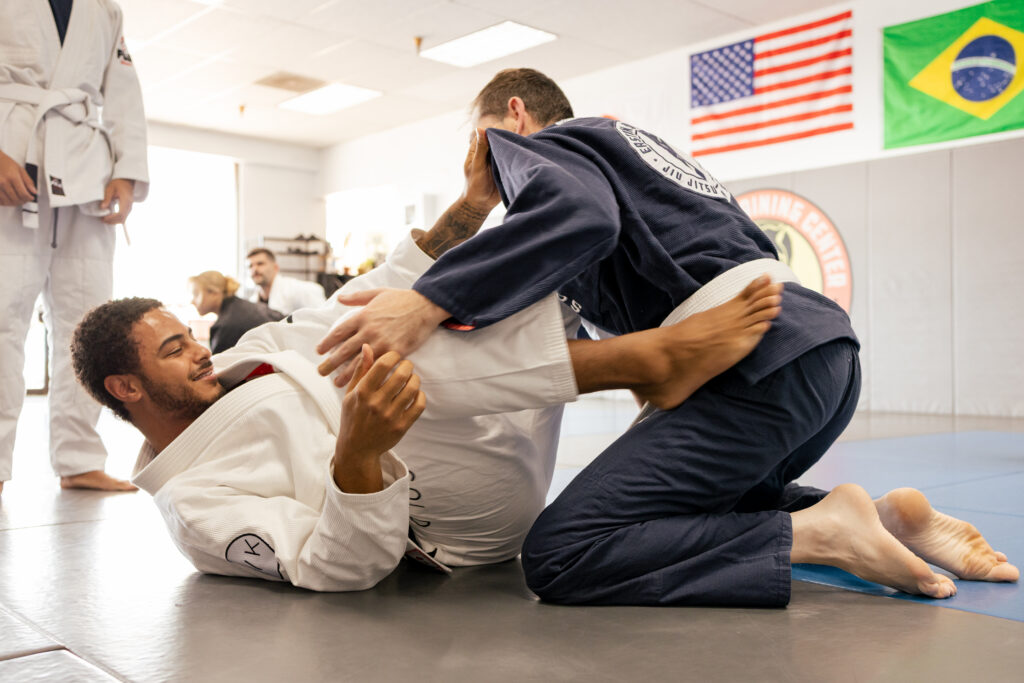
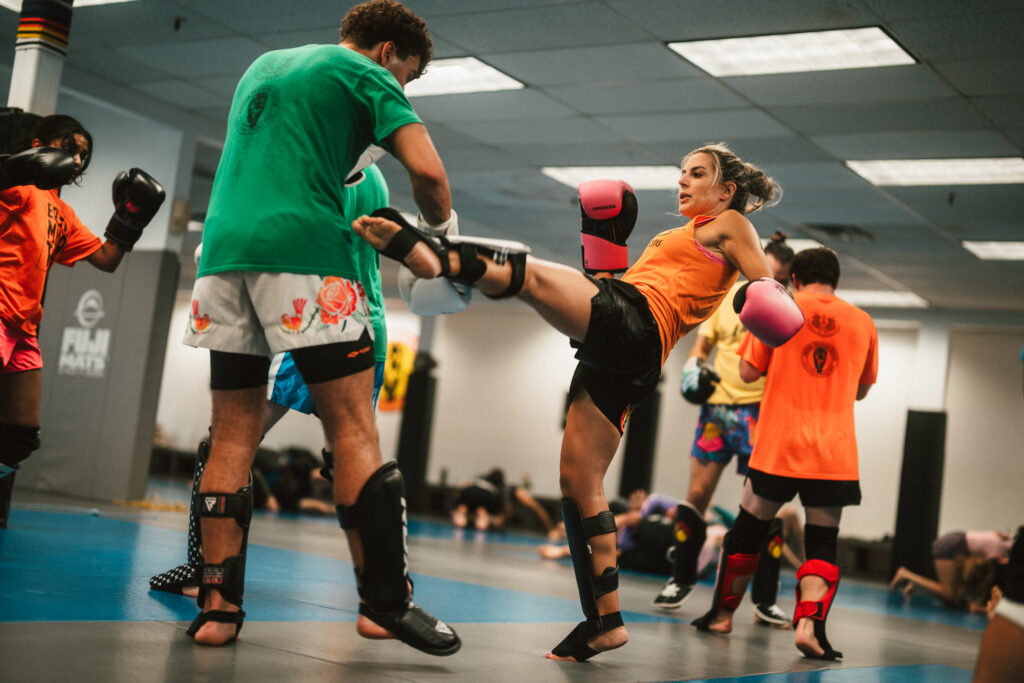
Even for a beginner practicing Brazilian Jiu Jitsu and Muay Thai, it quickly becomes evident every strike, kick, roll and takedown is a full-body movement. The body is a complex, inter-connected system. For a successful roundhouse kick, leg position is important, but without proper shoulder, hip and foot rotation, it’s impossible to achieve correct form or full impact potential.
As muscles, joints, and bones work together to produce a given line of power, like a roundhouse kick, they form what we call the “kinetic chain.” The coordination of a kinetic chain is only possible because of the network of fascia throughout our body that acts as the linking component.
Fascia’s role in proprioception
Because of this complete internal networking and its high density of nerve endings, fascia plays a continuous role in sensing our internal state and position in space – what we call proprioception. Researchers are beginning to understand that role.
Being fully present with the internal world turns up the volume on sensing the external world. Because of this, martial artists can use the body to sense nuances in balance, differentiate between feints and hesitation and use their opponents’ expended energy to their advantage. Fascia responds to forces in real time to adapt our bodies to the input received from the external world.
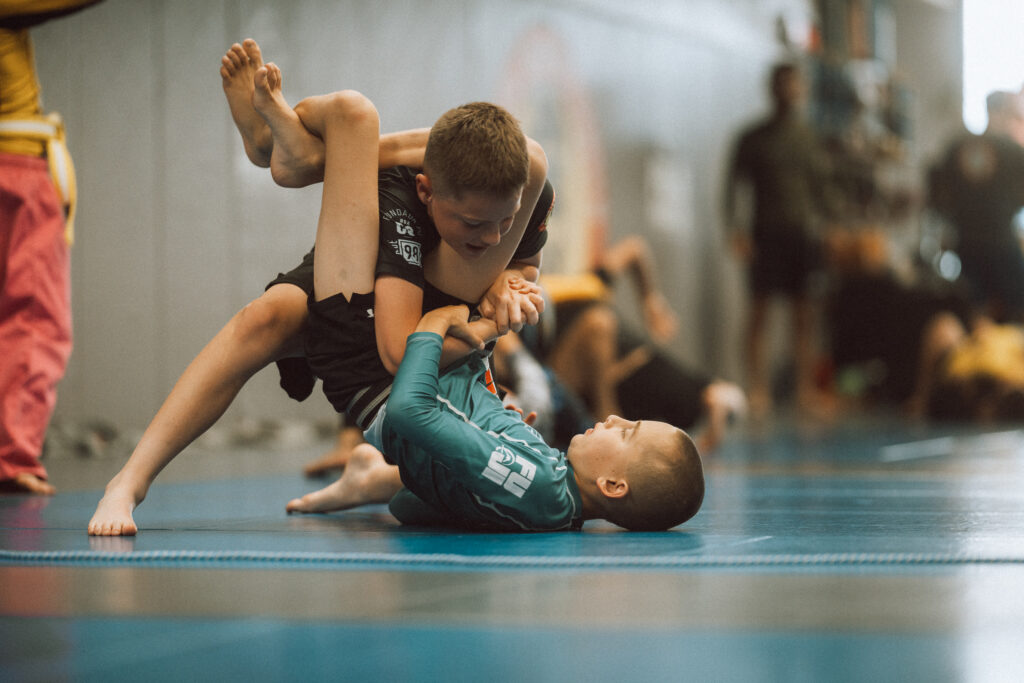
The real-time responsiveness is what you feel as the subtle weight shift before a takedown, or the small rhythm change that telegraphs a kick. When sensing our opponent in the clinch, grappling or striking, proprioception allows us to determine the balance and shifts of our own bodyweight.
With practice, we can process this information without even thinking. Through proprioception and experience on the mat, we understand the next move and counter before our opponent has a chance to turn, roll, or strike.
How to take care of your fascia
Given our fascia’s crucial role in coordination and proprioception, it’s easy to understand why supporting its well-being is important. But how can we maintain a healthy fascia?
- For elasticity and strength in training, focus on smooth drills that activate the full range of motion of your muscles and joints. If you don’t use that range of motion, you’ll lose it.
- Your core is a key area of fascial connection. Engage it every chance you have.
- Just like muscles, fascia needs recovery. Incorporate mindful stretching and foam rolling to strengthen the connection between your mind and the part of the body you’re stretching.
- Then, pay close attention in training, rolling, and sparring. As you gain more perception and control of your fascia, the feeling of movement during partner drills just might feel stronger.