The Psychology of Tap Outs
How do you feel when someone with a lower rank chokes you out?
It can bruise our ego. We might secretly feel embarrassed. Or angry with ourselves.
To avoid that ego bruising, we may hang on too long next time, refusing to tap out of pure stubbornness. Then go home with a mangled jaw.
We might carry that shame or anger into the next roll. We get so focused on winning that we don’t register those few seconds we crank our partner’s neck. Now they’re struggling to look left for three days because we couldn’t take our loss gracefully.
This happens not because we got tapped out, but because of the meaning we gave to that tap.
We experience it, then go into a story of what it means. We see it as proof that “I suck. I’m not getting better. I don’t deserve my rank.” Whatever it may be. (Those were the stories I had.)
In competition, you may feel that a tap out means you let your team down.
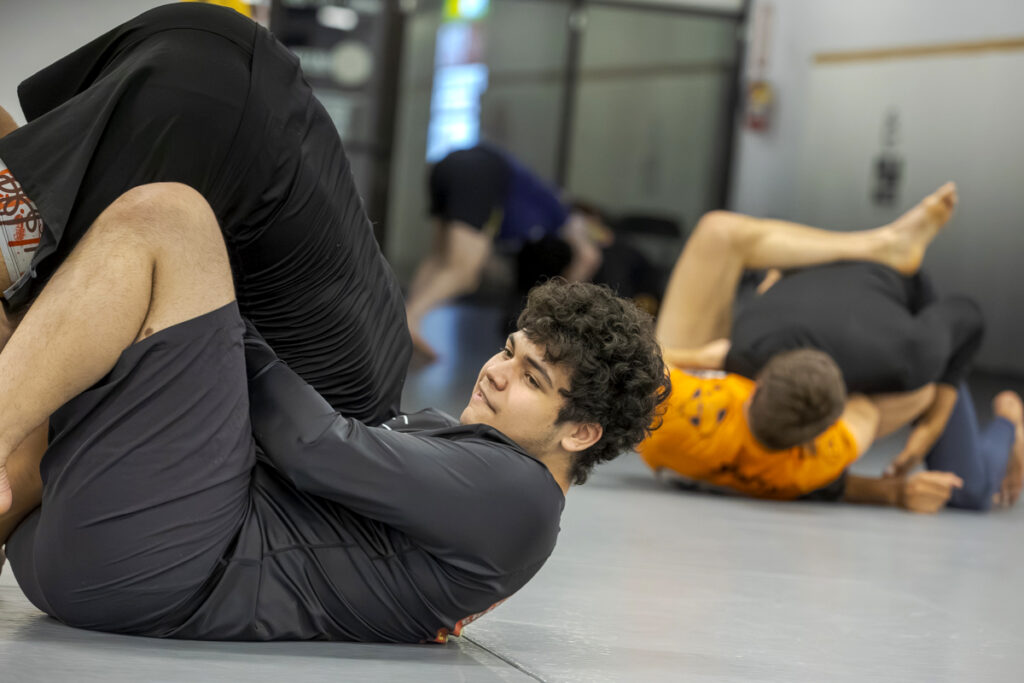
The meaning we give the event gives it its charge. And that charge causes issues within ourselves and on the mat. At the very least, it can suck joy out of this thing we do for fun.
But we can change that meaning. We can use getting tapped as a launchpad to strengthen our Jiu Jitsu game, our mindset, and our relationships with our training partners.
If you’re familiar with mindset work, you may think, “Yeah, change the meaning. See tapping as a learning experience.”
[The Power of Mindset in Martial Arts]
And that’s great. Though it can jump the gun — like going for a submission before you’ve secured your guard pass.
When we go straight to adopting a new meaning, we often find it doesn’t take hold easily. It makes sense in our mind, but it doesn’t land in our body.
So we tell ourselves, “Tapping just means I learned.” But deep down, we still feel that anger and shame, and we hear that inner voice insisting, “No, you just suck.”
Now we’re fighting this internal battle as well as our training partner. How exhausting.
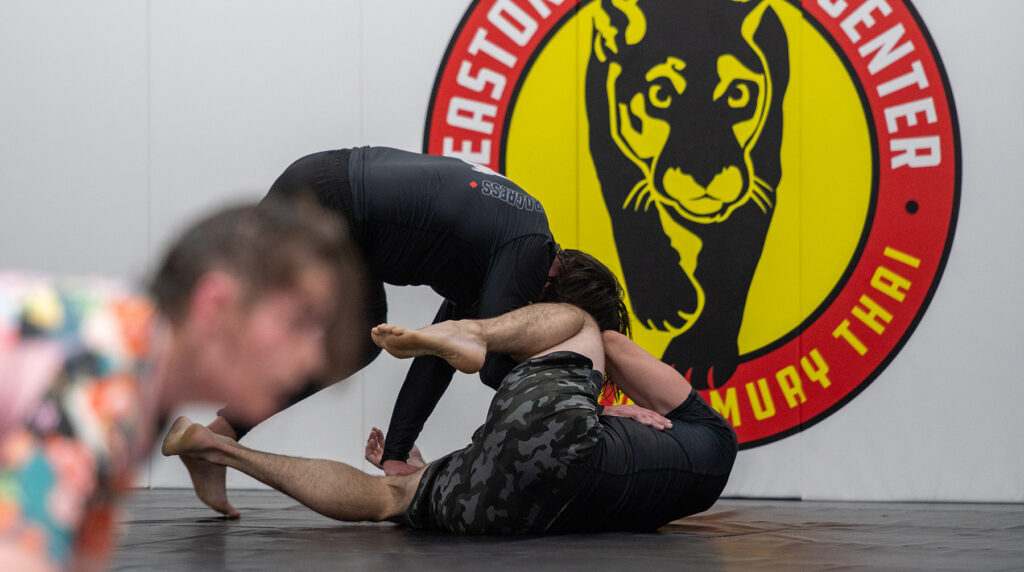
Instead, let’s try to explore the initial meaning more deeply. When we do this, we find it’s based on beliefs and assumptions that aren’t true. The more we explore, the more those beliefs fall apart. That creates space for the new meaning to take hold.
So when those thoughts of, “I’m terrible, I don’t deserve my rank,” come up, challenge them from a place of genuine curiosity. Ask questions like:
Is that true? When is it true, and when is it not true? What does being terrible at Jiu Jitsu even mean? Where did that explanation come from?
For example, let’s say someone you normally beat smashes you, and you start thinking you don’t deserve your rank. You can ask yourself:
“What does it even mean to be this rank?” You might answer something like: “It means I should be able to beat people lower than me.”
Okay, now go deeper. Ask questions like: “Is that true? Where’d that idea come from? Did you get that belt solely because you beat all lower belts, or were there other reasons?”
Do you know anyone else who you believe deserves their belt even if they tap out to lower ranks? If so, what makes you hold yourself to a different standard than them?
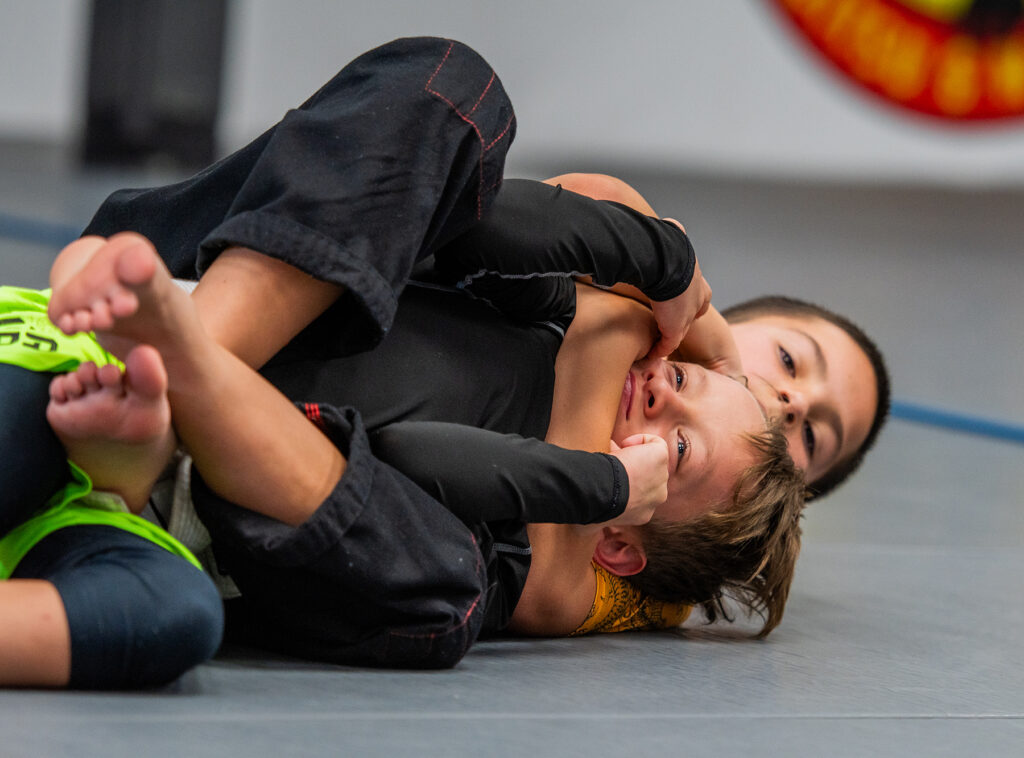
Go slow and be honest. You may find that initial meaning that once felt so real was built on a foundation of sand. The more you poke at it, the more it crumbles.
It’s mental Jiu Jitsu. Rather than fighting against those initial thoughts and feelings, we explore them and use their own energy to defeat them.
[Mindfulness and Mental Resilience in Martial Arts]
Don’t rush to the submission too early, either. Take time to secure the position. In this case, that means doing a solid job dismantling those old beliefs before stepping into the new one.
As for that new meaning, you can find that by asking questions like: What would you like tapping to mean? Is there a truer definition than the one you currently have? One that’s more useful?
You may decide tapping simply means there’s an area of your game that needs work. Which is true for everyone, always. It just gives you clarity on what that area is right now.
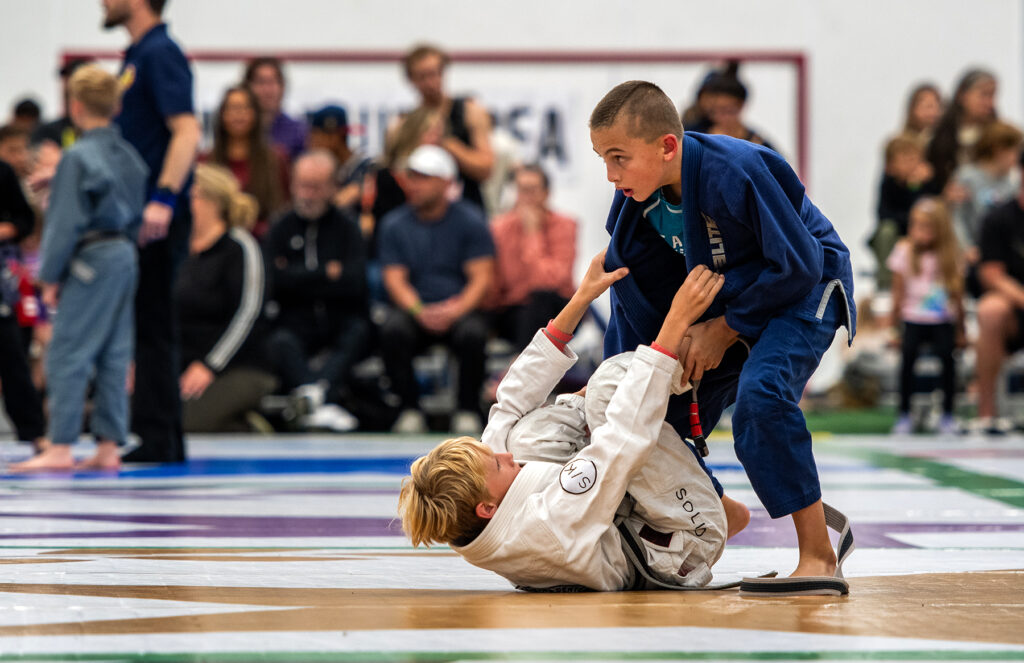
Then, solidify that meaning by finding something specific you learned. Even if it’s as simple as “My back defense needs work.” Anchor that meaning by taking action aligned with it. For instance, by asking a question after class to help shore up that back defense.
You may also give it meaning that has nothing to do with you. Tapping could mean, “That person worked hard on their armbar, good for them.” Then solidify it by congratulating them on their technique. Now tapping becomes building a connection instead of division.
This applies beyond Jiu Jitsu. When an event creates shame or anger, like a big project at work fails, we can dig deeper into the meaning we give it. Challenge and question that meaning with genuine curiosity until it starts to fall apart. From there, we can move forward with more clarity and confidence, instead of spiraling in shame, anger or self-doubt.
Tap outs are going to happen. It’s worth building a good relationship with it. Let it be a vehicle to improve your game and yourself rather than a source of rage and negativity.
Afterwards, you can leave the gym feeling good, knowing you’ve learned something and connected with your training partner. And you can enjoy your dinner without grimacing in pain at every bite because you refused to tap to that rear-naked choke.

Brian McCarthy has trained BJJ at Easton Denver since 2021. He performs improv comedy and coaches burned-out leaders to reclaim their time and energy.