A History of BJJ Leglocks
If you started training Brazilian Jiu Jitsu at a traditional school sometime in the early 2000s or even in the early 2010s, you’ve more than likely heard some of your training partners (and especially your coach) all share more or less the same opinion when it comes to using leglocks in BJJ.
“They’re too dangerous.”
“Heel hooks don’t work on anyone good.”
“Falling back for ankle locks isn’t real Jiu Jitsu.”
Or, “Going after my legs is enacting prison rules, and I will be forced to flip out and go 100% if you even attempt such a tactic.”
You know, the usual anti-guard-pulling/leglocking sentiments that were circulating between 10 and 20 years ago.
For years, leglocks occupied a strange place in our art. They weren’t illegal everywhere, but they certainly weren’t respected.
Many academies barely taught them, and most major tournaments outside of ADCC banned them from being used. It almost seemed like learning them was a waste of time that could be better spent developing other areas of the martial art.
From neglected to essential
In the current 2026 Jiu Jitsu scene, it’s quite the opposite. Every elite no-gi competitor has a sophisticated understanding of how to navigate, defend and counter leg entanglements.
Guard passing has evolved and changed permanently because of the threat of leglock entries. White belts can now simply pull out their phones and access instructional series across multiple online learning platforms that are devoted to teaching Aoki Locks, 50/50, Saddle, K Guard, Outside Ashi, and the list goes on.
The leglock revolution started sometime around 2015 with four competitors all training out of a basement in New York City under an MMA coach who had simply noticed something missing from the sport of high-level Jiu Jitsu.
This revolution had such a profound impact that you could almost divide the competitive no-gi grappling scene into two eras, the way historians use B.C. and A.D. Before the Danaher Death Squad and after the Danaher Death Squad.
Leglocks were never new
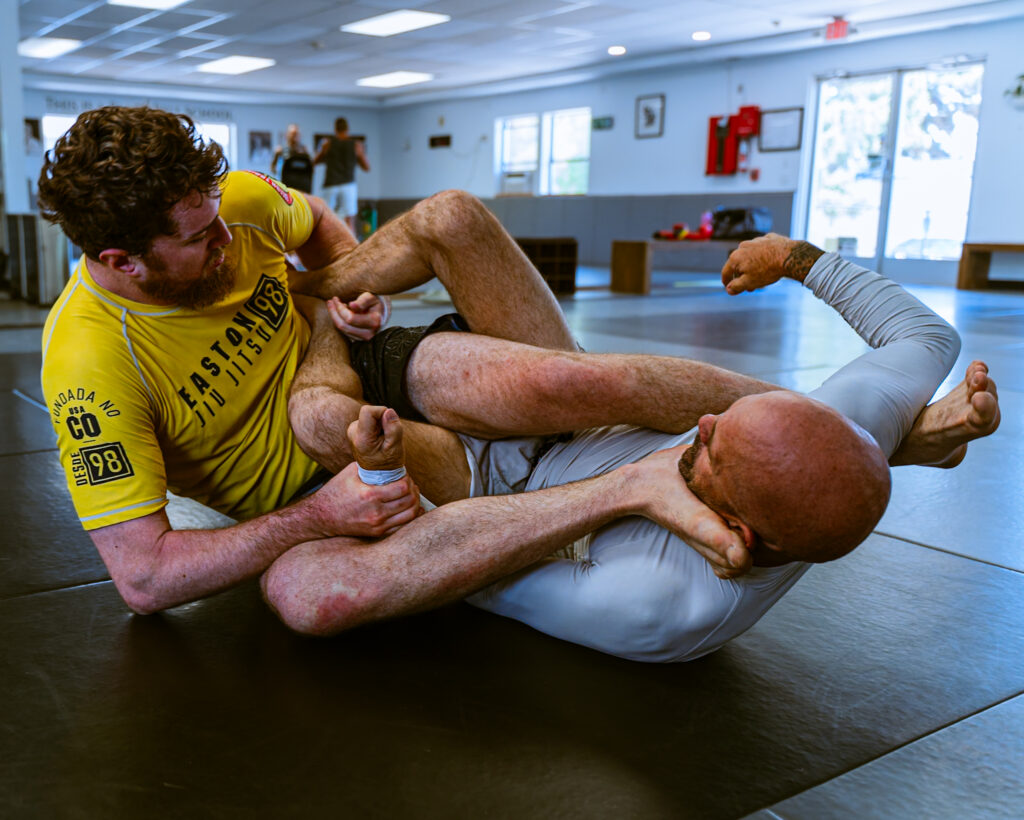
Before diving into the modern era, it’s important to acknowledge that Gordon Ryan and John Danaher, as crazy as it might sound, did not, in fact, invent heel hooks or the idea of leglocking as a whole.
Catch wrestlers, sambo practitioners, luta livre competitors, early Jiu Jitsu and judo practitioners have all been attacking the legs forever. Heel hooks, kneebars, toe holds, and straight ankle locks existed in multiple grappling disciplines long before they became mainstream within Brazilian Jiu Jitsu.
What changed was not the existence of these submissions. What changed was how the grappling world as a whole viewed them and respected them.
A dangerous reputation
The poor reputation surrounding leglocks in BJJ didn’t just come out of nowhere. Competitors using leglocks, and people hating on competitors using leglocks, has actually been a thing that goes back well over a century. (And likely further than that, but I’ll narrow it down to just a few relevant examples in chronological order so we’re not here all day.)
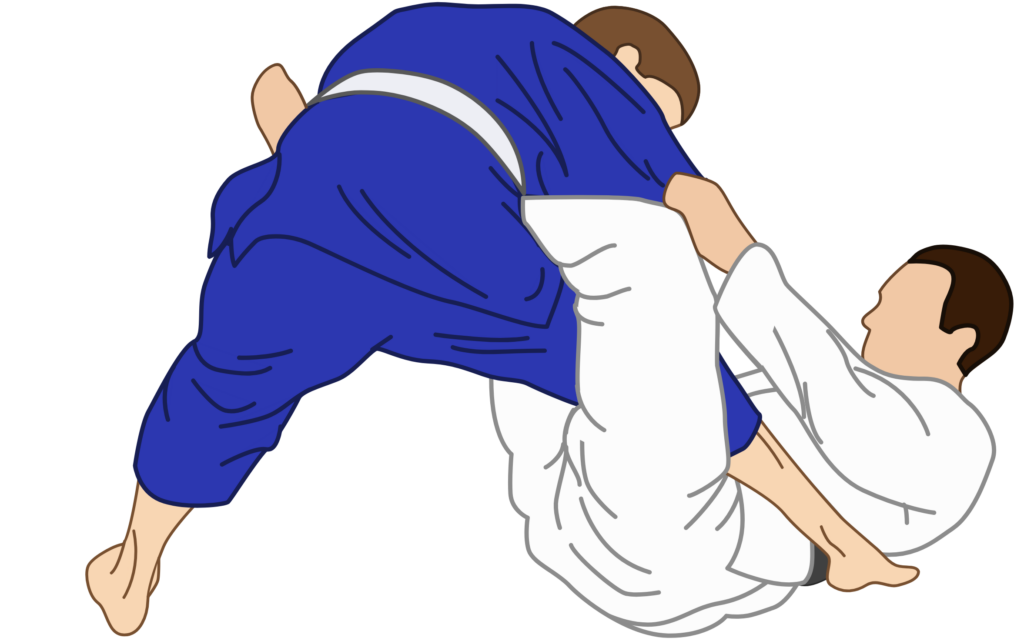
Back in the spring of 1898 a Japanese Jiu Jitsu practitioner and headmaster of the Fusen-ryū school named Mataemon Tanabe fought a 3rd degree Judo black belt, Yuji Hirooka, in a challenge match in front of Prince Yoshihito. During the bout Tanabe was able to pull Hirooka into an Ashi Garami or “leg entanglement” and ultimately ended up injuring Hirooka’s knee before he could tap or surrender.
Afterwards, during a reunion at the Butoku Kai (Dai Nippon Botuku Kai was a large martial arts organization where rules were decided in Japan at the time) Jigoro Kano (the founder of judo) met with Tanabe and other martial artists at the time proposing a ban on using Ashi Garami in matches due to it being too dangerous.
ACL reconstruction and physical therapy weren’t exactly a thing in pre 1900s Japan. If you broke an arm or suffered a devastating knee injury, you pretty much had to live with it.
Tanabe tried to argue that the arm locks, chokes and throws they were teaching and practicing were just as dangerous (sound familiar?) but ultimately, when put to a vote, Tanabe was outnumbered and the use of Ashi Garami was effectively outlawed from competition … at least for the time being.
The influence of class divisions
If we fast forward to 1955 in Brazil, history would repeat itself again during a challenge match between the Gracie family and students of Oswaldo Fadda. Oswaldo Fadda was a respected Jiu Jitsu instructor under Luiz Franca who often took in and worked with students from poorer areas who couldn’t afford it. This stood in contrast to the Gracie family who almost exclusively taught and worked with the wealthy and higher standing members of society.
Fadda put an ad out in the newspaper respectfully issuing the challenge, and the Gracies accepted. While the results of the challenge itself are disputed, one detail that both sides agreed upon was the effectiveness of Fadda’s students’ use of leglocks against the Gracies.
During their matches, members of the Gracie family would start shouting “Sapateiro!” When Faddas students began attacking their legs.
The Portuguese term sapateiro means “shoemaker” in English. Someone who cleans and fixes old boots for a living. A line of work seen as dirty and low class at the time. As the years went on this term would serve as both a punchline and an insult hurled at anyone who dared dishonor their bloodline by attacking someone’s legs.
With this sort of background, it isn’t hard at all to see how or why leglocks and anything surrounding their use developed this negative reputation. Not only were the techniques themselves viewed as cheap and dirty, the people who practiced them were viewed as cheap and dirty as well.

Early leglocks were unrefined
With little value placed on heel hooks as the years went on, instructors naturally gravitated away from teaching them or even exposing their students to them. Entire generations of grapplers went from white belt to black belt and became experts at passing guards, getting to the back and attacking chokes and armlocks while having comparatively little experience defending sophisticated leg attacks.
There is one more missing piece to this that I haven’t yet mentioned. A large majority of leglocks, especially in the earlier days of BJJ tournaments, came from the top position.
This meant leglocks were being treated as a shortcut. Instead of someone patiently working to neutralize and pass a fierce competitor’s guard, they would become frustrated, grab a foot, throw themselves backwards and hope to catch a quick submission.
When it didn’t work (and often, it didn’t), it meant they had voluntarily surrendered top position and ended up underneath their opponent.
As if their reputation wasn’t already bad enough, leglocks also became associated with desperation rather than control. They weren’t viewed as part of a complete positional system. They were viewed as the one-off technique you attempted when your guard passing wasn’t good enough.
Looking back, it’s easy to understand why so many instructors discouraged them and saw them as disrespectful. Founder of 10th Planet Jiu Jitsu, Eddie Bravo, once recalled how he attempted a toe hold during the 1996 Pan Ams in California and was immediately showered with boos. Some people in the crowd even took off their shoes and threw them at him mid-match.
[The Psychology of Tap-Outs: Learning to Let Go]
Dean Lister, a leglock revolutionary
Few competitors challenged the traditional mindset more than Dean Lister. While leglocks were still looked down upon in the early 2000s grappling landscape, tournaments like the ADCC openly allowed them.
Lister was someone who achieved success as early as 2003 when he defeated Alexandre Ferreira, aka “Cacareco,” and Saulo Ribiero, two legends of the sport. Lister finished them with an inside heel hook and knee bar respectively; eventually taking home gold in the absolute division that year.
This goes to show that long before the modern leglock revolution, Dean Lister was consistently defeating world-class grapplers using lower-body attacks. His success at ADCC forced people to reconsider techniques that many had been dismissing for years.
One could even go so far as to argue that Dean Lister, or really one very small interaction he had with a certain well-known, beloved, rash-guard-wearing Jiu Jitsu coach from New Zealand, would be responsible for igniting the creative spark that gave birth to the modern leglocking game as we know it today.
Why ignore 50% of the human body?
Around the year 2000, Dean Lister traveled to New York City as a purple belt to live with Matt Serra and train at the famed Renzo Gracie Academy. Even as a young purple belt a few years prior to his ADCC 2003 run, Lister was proficient with straight ankle locks and was pulling them off on a few of the upper belts in the Blue Basement.
After training, a young John Danaher, sitting upstairs with Lister (no doubt engaged in the long-standing Jiu Jitsu tradition of talking for three hours straight after class has ended) pointed out how effective his ankle locks seemed to be, particularly against opponents with much more experience than he had.
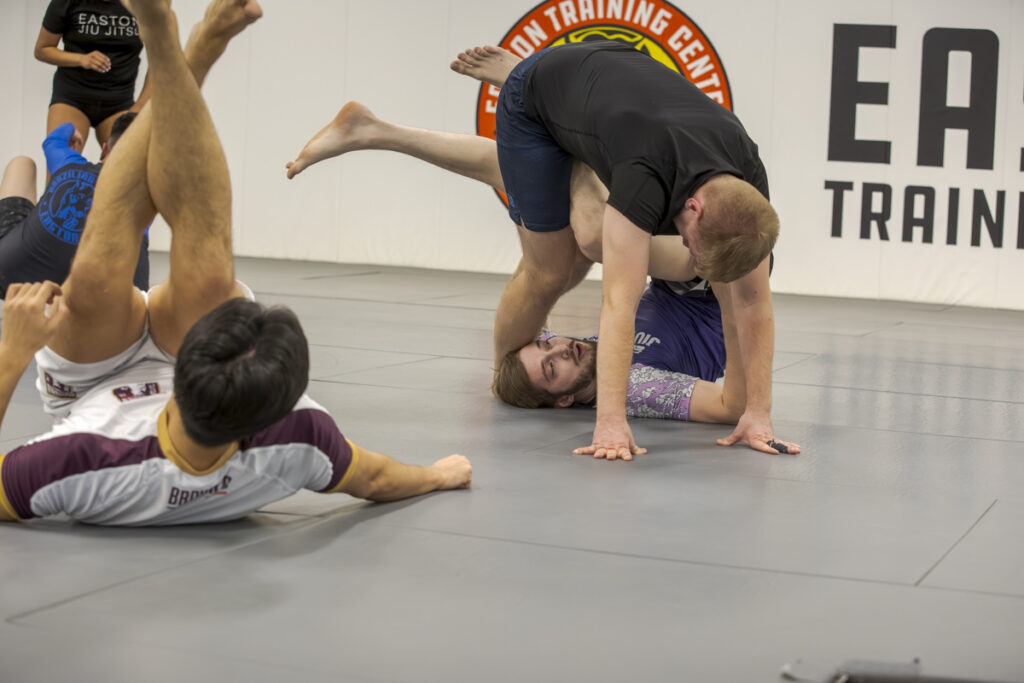
Lister’s response was simple: “Why would you ignore 50% of the human body?” A rhetorical question that would end up having such a massive impact on the grappling world that to this day it’s still getting quoted, referenced and edited into 1000-plus BJJ memes. I wouldn’t be surprised if there was a shirt or two floating around out there with this phrase printed on it.
John Danaher, an academic on the mats
For those unaware, John Danaher was a man who came to New York from New Zealand to study philosophy at Columbia University. During his time in New York, he would find work as a bouncer.
One fateful afternoon, a student came into his university office and told him about a new martial art he was practicing called Brazilian Jiu Jitsu. He insisted on a quick test of its effectiveness. This consisted of Danaher closing the door to his office, putting his student in a headlock and the student quickly squirming away to take his back.
This of course led Danaher to meet Renzo Gracie and the rest, they say, is history.
John Danaher was no doubt a brilliant mind who helped organize and develop a system where leg entanglements could be used to great effect. However, numerous debilitating knee injuries that Danaher sustained as a teenager, added to a botched surgery, left him unable to compete or even train as hard, especially as he got older.
It became clear as the years went on and Renzo’s senior students all left to start schools of their own that Danaher’s role, with his background in academia and analytical mind, would be that of a teacher and coach.
As time passed, a number of high-level MMA fighters and grapplers would travel to the Renzo Gracie Academy, nicknamed the “Blue Basement” (because it had blue mats and is underground), to take instruction from Danaher.
Eddie Cummings and the Death Squad
It was around 2013 that Danaher dove into further developing his leglocking system. He would also insist on using the traditional Japanese terms for the techniques. The Ashi Garami revolution was beginning.
Moving into 2014, it became clear that four of John Danaher’s students were starting to dominate various grappling tournaments around the East Coast using his leglocking system: Gordon Ryan, his younger brother Nicky Ryan, Garry Tonon and Eddie Cummings.
Out of those four, it seemed clear that Eddie Cummings had taken a particular interest in the system and was constantly drilling, studying, taking notes, then going and testing himself in competition.
During this time a new series of Jiu Jitsu tournaments run by Eddie Bravo called the Eddie Bravo Invitational, or EBI, were starting to take off. The EBI, of course, allowed heel hooks, and in 2014 and 2015 both Garry Tonon and Eddie Cummings would show up and dominate the competition.
Although quite a few of Cummings’ and Tonon’s opponents in these brackets were seasoned black belts and MMA fighters, none of them seemed to have an answer for the heel hook game, and were quickly finished one by one.
These EBI events, which were no gi, submission only (no points) and brought in huge crowds from around the world. They served as a platform and proving ground where the team, eventually known Danaher Death Squad, would cut their teeth.
The proliferation of Ashi Garami
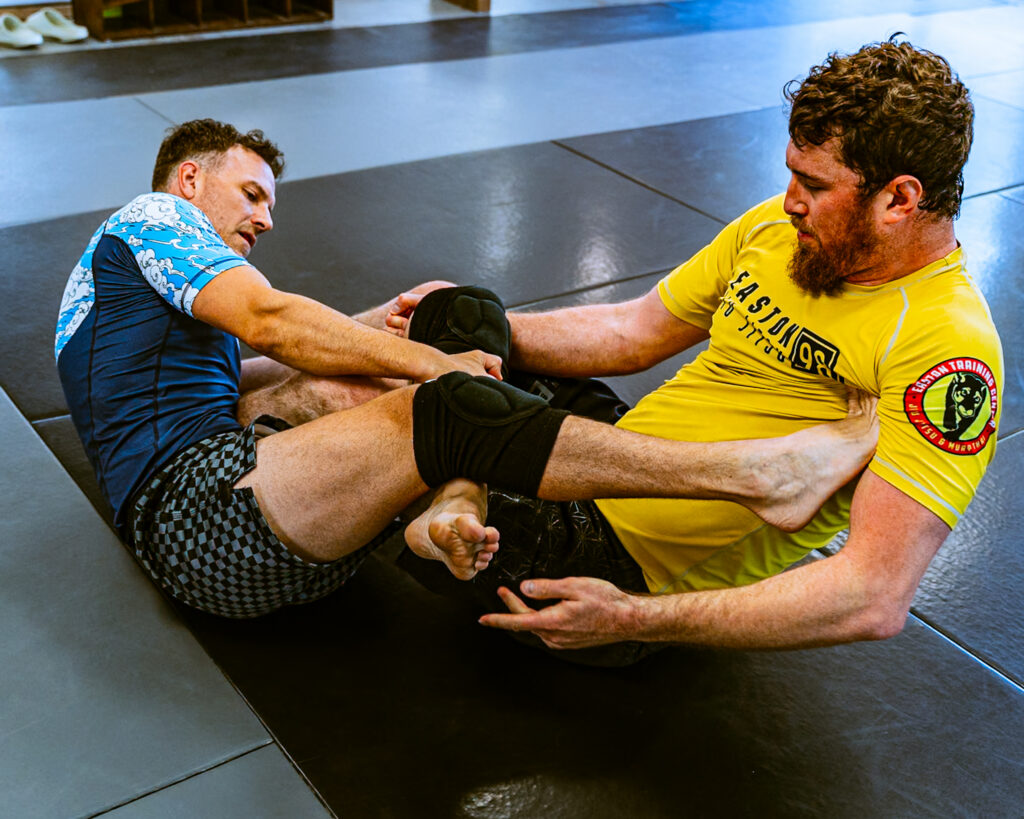
By the second half of the 2010s, it was clear the Ashi Garami system was having a massive impact on Jiu Jitsu and was becoming incredibly advanced and technical. Danher, Cummings, and the rest of the squad had built an interconnected system of entries, entanglements, controls, transitions, heel exposure and breaking mechanics.
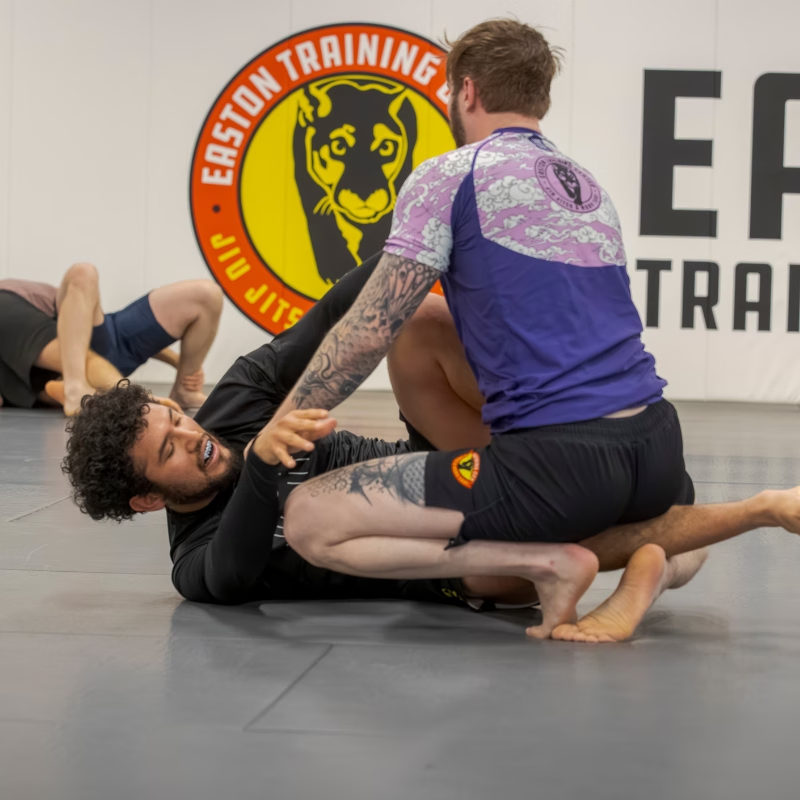
Gone were the days of grabbing feet and falling back from top. Instead, the vast majority of these leg attacks came from the bottom, using aggressive grip fighting from a seated guard to obtain inside position with the feet.
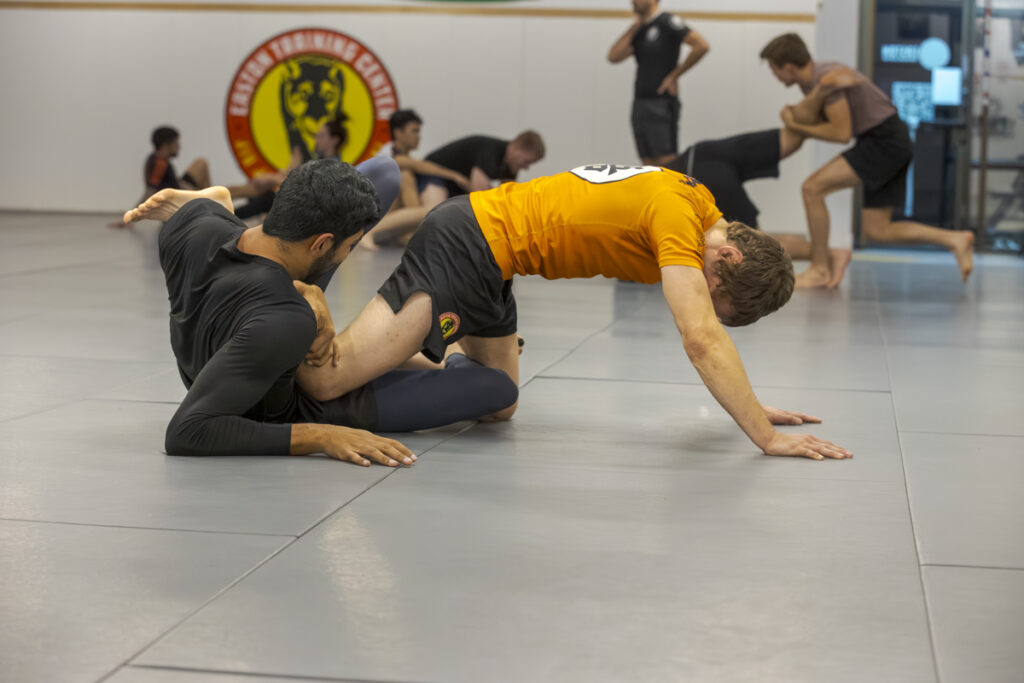
From either a butterfly guard or butterfly/half guard hybrid the squad would pull themselves underneath an opponent and elevate them with butterfly hooks into finishing positions such as Irimi Ashi often referred to as Ashi Garami, Cross Ashi, aka “Saddle,” and DOA or “Double Outside Ashi” accessing an opponent’s legs and looking to finish with inside or outside heelhooks.
For perhaps the first time, leglocks were being taught with the same level of respect and detail that had long been solely devoted to traditional guard play, guard passing and back attacks. The results completely changed the landscape of modern no-gi grappling, especially when it came to how the guarded position was both utilized from bottom and dealt with from the top.
The results also had an extremely polarizing effect on Jiu Jitsu in the coming years, with one side openly embracing the change and devoting time to catching up while the other side still dismissed them as “too dangerous,” “ineffective” or simply “not real Jiu Jitsu.”
An open-minded professor
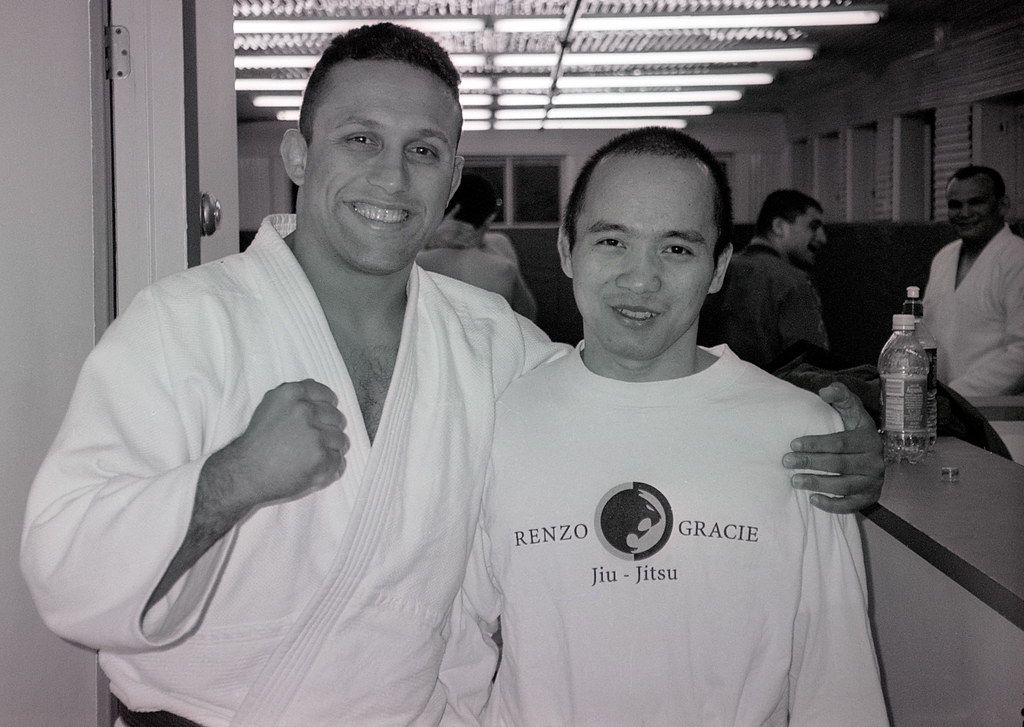
I would like to take a quick moment here towards the end to give a huge shout out to John Danaher’s Professor (and our very own Professor Amal’s Professor) Renzo Gracie. While I am sure some members of his family were disparaging heel hooks, he remained extremely open-minded.
Danaher always said Renzo was ok with his students practicing really anything, so long as they could prove it worked. When Danaher told Renzo he was working on a new leglocking system, Renzo’s response was simply, “Cool! Let me know what you find!”
That, to me, is a sign of an amazing teacher. Imagine if Renzo had reacted like some of his friends and family members. Who knows if leglocks in BJJ would even exist today.
The evolution continues
In the coming years many more innovations in leglocking emerged. Lachlan Giles stands out for his famous ADCC openweight/absolute run in 2019. Giles submitted three world champions who all outweighed him significantly using entries from outside leg positions like K Guard and finishing heel hooks in 50/50 instead of DOA or The Saddle.
Moments like these showed there were still plenty of ways to control and shred an opponent’s knee without relying on the traditional Ashi Garami inside position game the Danaher Death Squad used.
A young Polish competitor named Mataeusz Szczecinski managed to make waves in early 2022 with his innovations on the straight footlock. This was the one leglock that, while effective, relied more on causing pain to get a tap by putting pressure on someone’s Achilles tendon and ankle joint, something most competitors would just eat.
By refining body positioning, controlling the knee line, improving wedge mechanics and emphasizing rotational pressure that turns the foot outward instead of inward while applying powerful extension through the ankle, Mataeusz helped popularize a version of the straight ankle lock capable of creating genuine structural breaking pressure rather than simply discomfort.
Once again, an old submission that was once ignored and disrespected had everyone adding it to their games and making adjustments. Chris Wojcik, a competitor from B Team (rebranded as Simple Man Martial Arts), shook up the grappling world as recently as 2025 with his new patented “Woj Lock,” essentially a reverse Aoki Lock from 50/50.
Flow and grow to stay relevant.
In many ways, the evolution of leglocks perfectly summarizes Jiu Jitsu, and really life in general. Things are constantly evolving and shifting, whether we want them to or not.
The more we dismiss new techniques or ideas and limit ourselves to what we feel comfortable with, the more we get left behind. Experimenting and innovating, even if it means looking foolish or struggling for a period of time, is how we grow.
Sticking to the same old habits or techniques will only hold us back. Don’t get left in the dust.