The History of the IBJJF: From Challenge Matches to the World’s Most Prestigious Tournament
For a few days each year, the Jiu Jitsu world seems to pause for a moment as we all focus on one single event: the IBJJF World Championship. The sport’s best competitors battle for gold, future stars emerge onto the international stage and lifelong dreams are either realized or postponed for another season.
For many athletes, becoming an IBJJF World Champion is the ultimate achievement in gi Brazilian Jiu Jitsu. But where did the IBJJF come from?
How did a martial art that once revolved around challenge matches and academy rivalries evolve into a worldwide sport with brand sponsorships, rankings, major championships and thousands of competitors traveling across the globe to test themselves?
To answer that question, we have to go back long before the first IBJJF tournament ever existed.
Before there were tournaments
The early history of Brazilian Jiu Jitsu (as I’m sure most practitioners know) looked very different from the sport we all know and love today.
In the early 1900s, Japanese judoka Mitsuyo Maeda, who traveled the world competing in challenge matches, arrived in Brazil and eventually met a young man named Carlos Gracie.
Carlos and his brothers began practicing Judo with Maeda, and eventually moved on to developing and promoting what would later become known as Brazilian Jiu Jitsu. (A very oversimplified explanation I know, but this article is about the creation of the IBJJF, bear with me.)
At the time, there were no brackets, no points systems, and no tournament schedules. No one was looking to win a match with an advantage off of a double guard pull after arguing with a referee for five minutes. There were no sponsorships or registration fees.
Instead, Jiu Jitsu was often tested through brutal challenge matches. Practitioners would face wrestlers, boxers, capoeira fighters and pretty much anyone else willing to step onto the mat.
Success wasn’t measured by medals. It was measured by whether your style worked against resisting opponents in a real fight.
This culture of testing techniques against live resistance became one of the defining characteristics of Brazilian Jiu Jitsu and remains a core part of the art we all know and love today.

The growth of competitive Jiu Jitsu
As Jiu Jitsu spread throughout Brazil during the 1960s, 70s and 80s, challenge matches and tournaments became much more common. Different academies competed against one another, rivalries developed and athletes began looking for ways to determine who was truly the best.
The problem was that there wasn’t a single unified structure that was agreed upon by everyone. Rules often varied widely between different events. Weight classes weren’t always standardized.
Different organizations ran competitions in different ways with different rule sets. Some allowed strikes and slamming, while others looked closer to modern grappling matches.
As participation grew, the sport desperately needed consistency – a common standard that was universally agreed upon. This was increasingly important as the martial art grew and became more popular, attracting more eyes and more practitioners.
Athletes needed a way to compare themselves against the best competitors across the country, especially as it became clear sport was becoming too popular to operate on local gym rivalries alone.
The 1990s: The era that changed everything
If there is a decade that truly laid the foundation for modern competitive Jiu Jitsu, it was most definitely the 1990s.
Of course, there was the first UFC event November 12th, 1993, in our very own state of Colorado. Then came UFCs 2 and 3 in 1994, which really broadcast the effectiveness of Jiu Jitsu and grappling against other styles of fighting to the entire world.
Then, there was also a period when sport Jiu Jitsu was beginning to move beyond its challenge-match roots and toward organized competition.
The level of technical development accelerated rapidly as athletes spent more time preparing specifically for tournaments rather than simply proving the effectiveness of their style. Many of the legends who helped define modern Brazilian Jiu Jitsu emerged during this era.
Competitors such as Rickson Gracie, Royler Gracie, Saulo Ribeiro, Xande Ribeiro, Renzo Gracie, Jean Jacques Machado, Fabio Gurgel and many others helped establish the standard for what elite Jiu Jitsu looked like.
This was also the period when some of the most influential teams in the sport began to grow and establish their identities.
Gracie Barra emerged as one of the first truly dominant competition teams. Alliance would go on to become one of the most successful teams in Jiu Jitsu history. Nova União developed some of the sport’s most technically gifted competitors.
The team rivalries that developed during this era helped push the overall level of competition forward.
For many longtime practitioners, this period represents the beginning of what we now know as modern sport Jiu Jitsu. The techniques themselves became more refined. The tournaments became more organized. And the athletes began treating competition as a serious pursuit rather than an occasional challenge match at their academy or gym.
Many of today’s practitioners are only a few generations removed from this era. Whether you train under Gracie Barra, Alliance, Checkmat, Atos, Renzo Gracie, B Team or Kingsway/New Wave, much of the competitive culture found in modern academies can be traced back to the innovations, rivalries, and technical breakthroughs that helped shape Jiu Jitsu during the 1990s.
[Exploring Jiu Jitsu’s American Roots and Growth of The Art ft. Amal Easton]
The formation of the CBJJ
In the 1990s, Carlos Gracie Jr. helped organize the Confederação Brasileira de Jiu Jitsu (CBJJ). The CBJJ played a massive role in shaping modern competitive Jiu Jitsu.
Many of the things competitors now take for granted, including weight divisions, points, advantages, penalties and organized championships, were refined and standardized during this period. For the first time, Brazilian Jiu Jitsu had a more formal competitive structure, laying the foundation for modern sport Jiu Jitsu.
The first world championships
In 1996, the first World Jiu Jitsu Championship was held in Rio de Janeiro. Names like Marcos Barreto, Royler Gracie, Fabio Gurgel and Mario Sperry cemented themselves in history by winning gold on those mats. At the time, nobody even seemed to know how significant that event would become.
What started as a tournament for elite Brazilian competitors eventually grew into the most prestigious gi competition in the world with many of the sport’s greatest names building their reputations at the Worlds:
– Roger Gracie
– Marcelo Garcia
– Xande Ribeiro
– Rafael Mendes
– Leandro Lo
– Marcus “Buchecha” Almeida
– Beatriz Mesquita
– Michelle Nicolini
Winning a World Championship in Jiu Jitsu became the benchmark by which greatness was measured. While there are many prestigious tournaments in Jiu Jitsu today, there is just something about Worlds that attracts and creates the best Jiu Jitsu players in the world when it comes to the kimono.
The birth of the IBJJF
As Brazilian Jiu Jitsu exploded internationally throughout the late 1990s and early 2000s, a new challenge emerged: How do you run and regulate a worldwide sport?
The answer, of course, was the International Brazilian Jiu Jitsu Federation, better known as the IBJJF.
The goal was straightforward: bring the same structure that had been successful in Brazil to the rest of the world which, of course, meant standardized rules, standardized rankings and standardized tournaments.
Whether you competed in Brazil, the United States, Europe or Asia, the experience needed to be largely the same. This consistency is what helped fuel the sport’s growth.
As more academies opened around the world, competitors could test themselves under the same rules regardless of where they trained.
As the years turned into decades, having a universal governing body meant someone who grew up training in Warsaw, Poland would have more or less the same experience and be able to prepare for the same tournaments as someone from Raleigh, North Carolina, creating a sense of cohesiveness.
Why the IBJJF matters
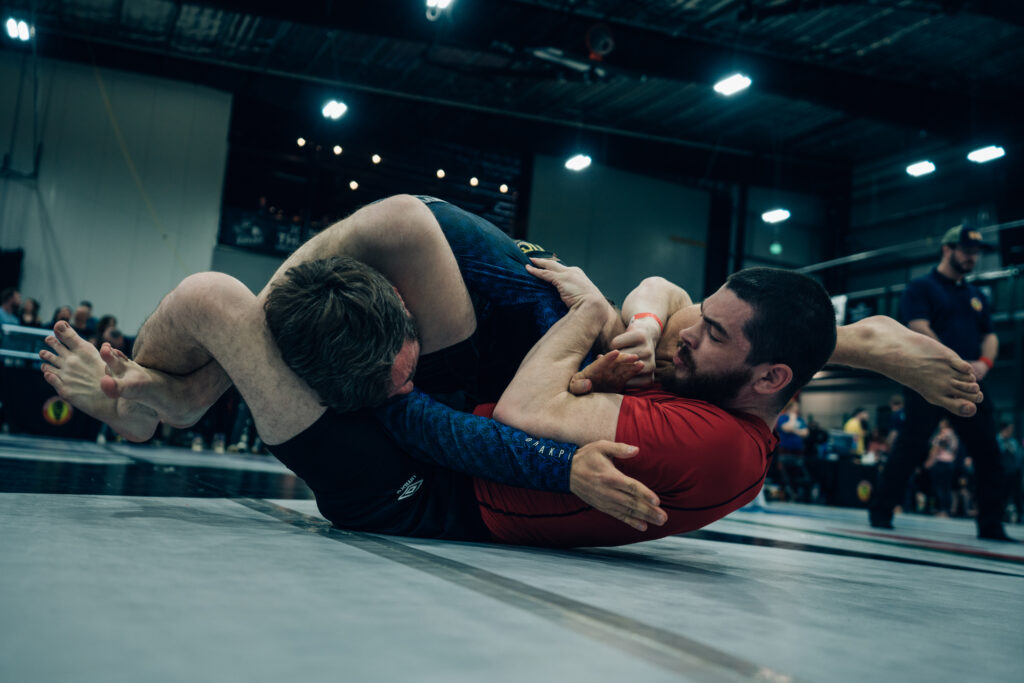
It’s easy to criticize rules, advantages, penalties, or tournament fees. Not to mention the politics and alleged “favoritism” of referees and officials. Believe me, if you’ve spent enough time in a tournament bullpen, you’ve probably heard every IBJJF complaint imaginable. But it’s also important to recognize what the organization accomplished.
The IBJJF helped create a pathway for competitors. It also created a sense of professionalism for the sport, allowing more and more practitioners to earn a living off just competing in the sport and teaching seminars.
Back in the day, if a practitioner wanted to make a living off of Jiu Jitsu, they would either have to A) start doing MMA and face potential brain health consequences down the line, or B) open a school and hope it did well financially in a world where more and more BJJ schools were opening and becoming established.
Nowadays, even a white belt can:
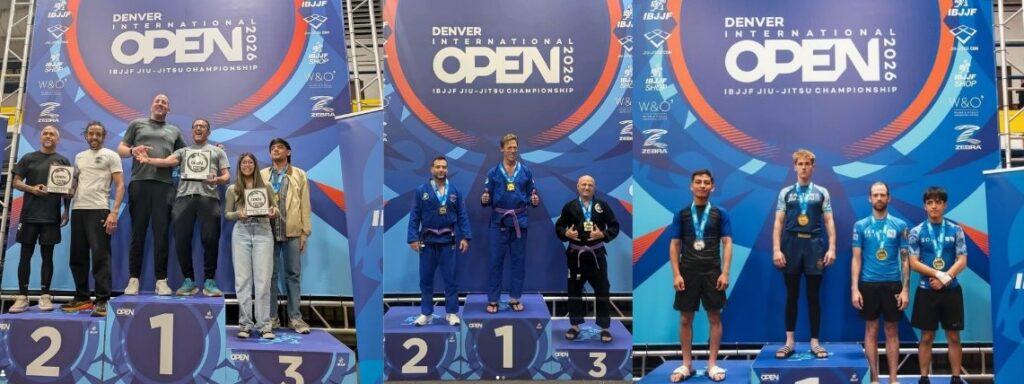
Enter a local Open. Then maybe a major Open. Then a National Championship. Then the Pan Championship. Then the European Championship. And eventually, perhaps, the World Championship. That competitive ladder did not always exist.
Today, athletes can spend years climbing through a structured system while measuring themselves against increasingly difficult competition.

The tournaments every competitor dreams about
When most competitors think about events associated with the IBJJF, a few immediately come to mind:
The World Championship
This is of course the most prestigious gi tournament in the sport of Jiu Jitsu. For many athletes, this is the ultimate goal. World champions are forever connected to a small select group of competitors whose names become part of Jiu Jitsu history.
The Pan American Championship
Often considered the second most important gi tournament in the world (depending on who you ask).
Winning Pans is a major accomplishment at any belt level, and many future world champions first announce themselves on the international stage through strong performances at the Pan Championship as they continue climbing the ladder towards greatness.
The European Championship
Commonly known simply as “Euros,” the European Championship has grown tremendously since its early years. What began as a regional event evolved into one of the toughest tournaments on the entire calendar, with Poland especially creating some phenomenal competitors in the last decade.
Today, competitors travel from every corner of the world to compete in Europe, and many divisions are just as difficult as those found at the World Championship. For many athletes, winning the European Championship is a career-defining achievement in its own right.
The Brasileiros
The Brazilian National Championship, often called “Brasileiros,” remains one of the deepest and most respected tournaments in the sport.
Brazil continues to produce some of the world’s best competitors, and winning a national title there has long been considered a major accomplishment. Many legendary athletes earned some of their toughest victories at Brasileiros before ever becoming World Champions.
For decades, success at Brasileiros has served as a proving ground for athletes hoping to establish themselves among the sport’s elite.
The Open circuit
These events allow lower-level competitors to gain experience, earn ranking points, and prepare for the major championships. Some even travel around the country competing in Opens back to back to back to develop their competitive experience.
For many athletes, their competitive journey begins at a local Open before progressing toward larger stages. While they may not carry the exact same prestige of the major championships, Opens play an important role in developing future champions.
Looking back and looking forward
Today, despite the complaints and other organizations popping up all over, it’s extremely difficult to imagine Brazilian Jiu Jitsu without the IBJJF. Throughout the history of the IBJJF, the organization helped transform a martial art once concentrated in Brazil and built off the back of gym wars and “dojo storming” into a truly global sport.
Millions of practitioners now train Jiu Jitsu across every continent and compete nearly every other weekend. Thousands travel all over to compete every year under a common ruleset. And every season, another generation of athletes begins the journey toward the same dream: standing atop the podium at the World Championship.
From challenge matches in Brazil to packed arenas in California, the growth of Brazilian Jiu Jitsu has been remarkable. It continues to expand as actors, celebrities and CEOs of tech companies sign themselves and their kids up for classes at their local academies.
The history of the IBJJF is really the history of competitive Jiu Jitsu itself, a story that is still being written every time a competitor steps onto the mat.