The Art of Skill Development in Brazilian Jiu Jitsu
Often described as a thinking person’s martial art, Brazilian Jiu Jitsu rewards leverage over strength, timing over speed and patience over chaos. Yet despite this, many practitioners approach skill development in a chaotic way. They collect techniques like trading cards — a berimbolo here, a new lapel guard there — without ever stepping back to examine how skills actually build.
Skill in BJJ doesn’t happen by accident or simply as the byproduct of showing up and sparring hard. It develops deliberately, carefully layered and refined over time. While BJJ consists of countless techniques, the art of skill development itself follows a few simple principles. The five concepts outlined below can help you approach your Jiu Jitsu growth with more intention and ultimately, more success.
[Finding Balance: Technique Over Intensity in Martial Arts]
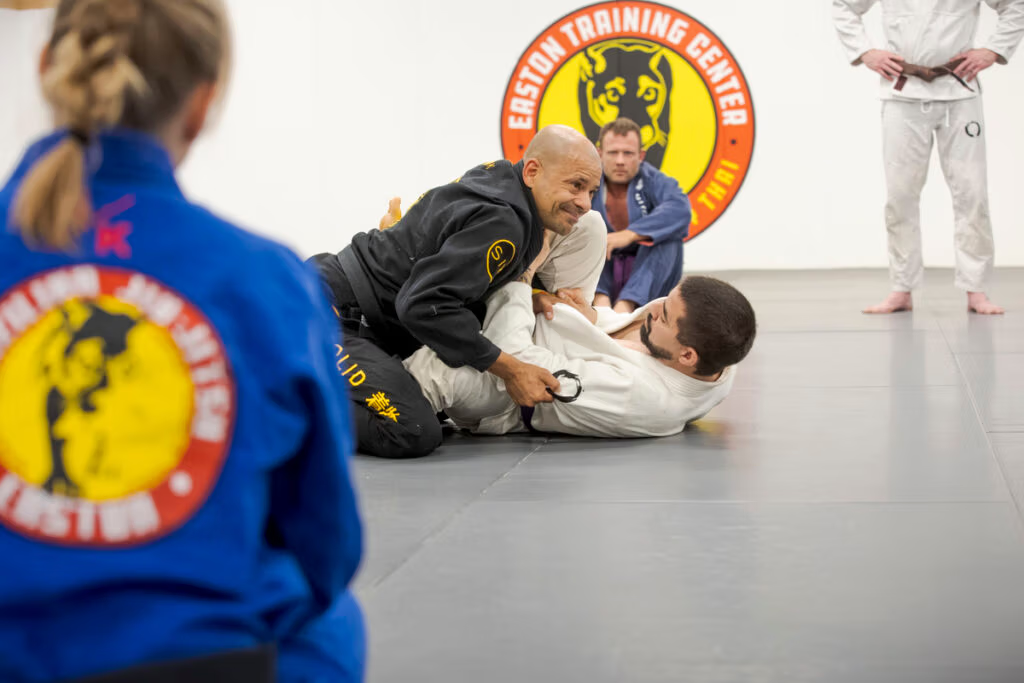
Build from movements, not moves
It is easy to become enamored with techniques. A slick submission you saw online or a highlight-reel sweep from a major tournament can quickly become the focus of your training. But techniques are built upon movements, and movements are built upon fundamentals.
If you have an inefficient hip escape, your guard retention will suffer. If your ability to frame and create space is lacking, your escapes will always feel one step behind. High-level practitioners are not magical because they know more moves — their efficiency stems from foundational movements that have become second nature.
Instead of asking, “What technique should I learn next?” consider asking, “What movement pattern needs improvement?”
Spend time refining your bridges, your inversions, your posture in closed guard, your base when passing. The athlete who sharpens their movements will find that techniques begin to feel easier across the board.
[The Power of Mobility: How it Stands Apart from Exercise]
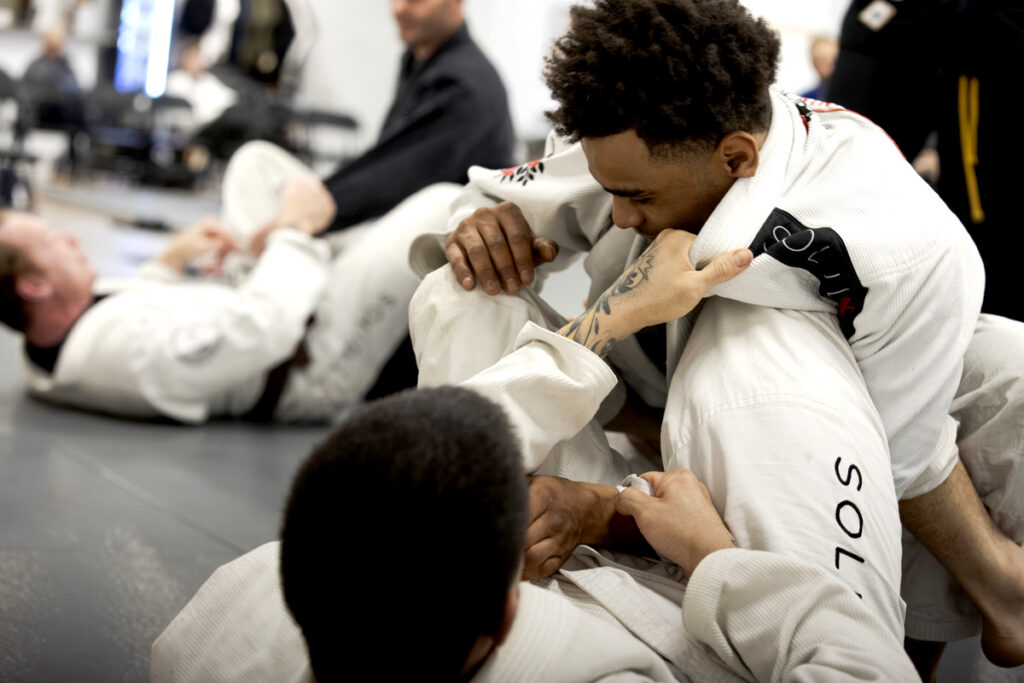
Slow down to speed up
When first starting BJJ, we often tend to equate speed with skill. When newer students see advanced belts flowing effortlessly from position to position, they often try to mimic the pace rather than the precision. This is a mistake.
True skill development often requires slowing things down. Drill at a tempo where you can feel each shift in weight. Notice where your balance gets compromised. Identify the exact moment your opponent begins to escape. When sparring, resist the urge to scramble through transitions just to “win” an exchange.
When you slow down, you create awareness. Awareness leads to correction. Correction leads to refinement. And refinement, over time, leads to speed that is effortless rather than frantic.
The irony is that the smoothest and fastest practitioners are often the ones who spent the most time moving deliberately.
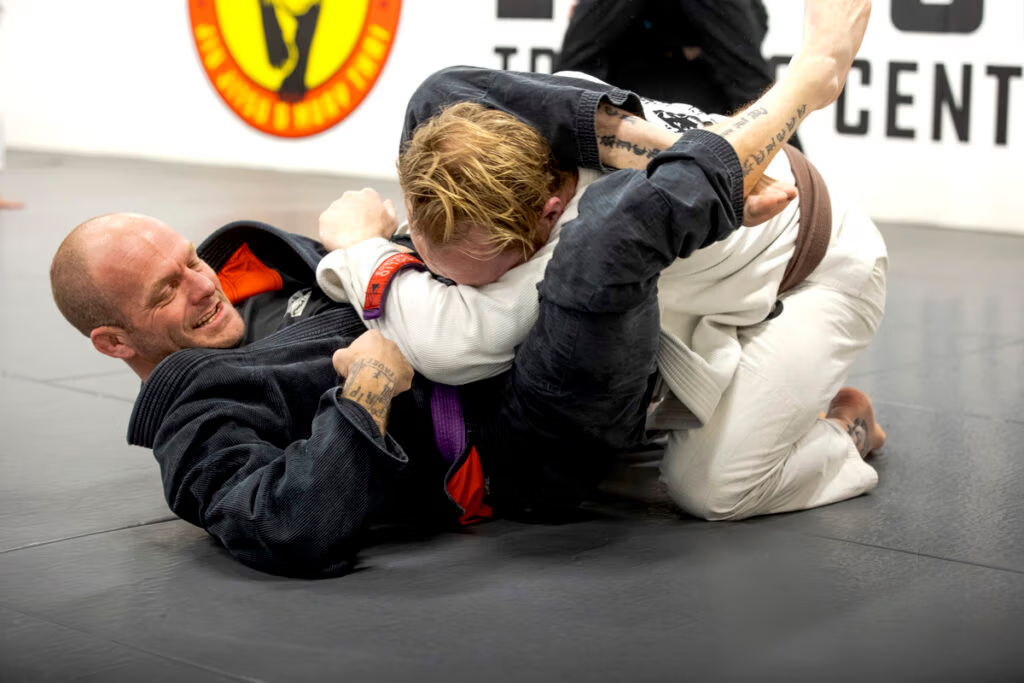
Train with constraints
One of the most effective ways to develop skill is to limit your options. Constraints force adaptation and creativity. If you always allow yourself to retreat to your best position, you rob yourself of growth opportunities.
Try starting every round from your worst position. If side control escapes are a weakness, begin there repeatedly. If you struggle to pass half guard, put yourself in that scenario on purpose. By narrowing the focus of a round, you increase the number of meaningful repetitions you accumulate.
Constraints also apply to offense. Dedicate a week to pursuing one sweep or one submission, regardless of the outcome. Even if you fail repeatedly, you are building timing, understanding reactions and identifying adjustments. Skill forms in the depths of exploration.
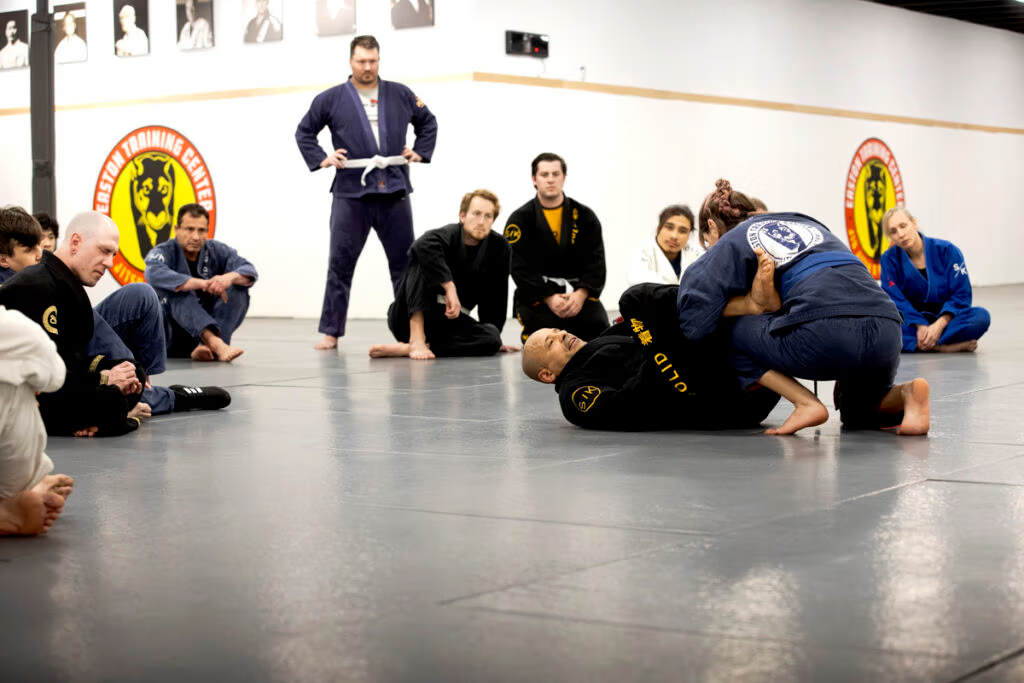
Seek feedback, not validation
It feels good to “win” rounds in the training room. It feels good to catch submissions and impose your will. Skill development, however, rarely aligns with ego gratification.
If your primary goal in training is validation, you will subconsciously avoid risks. You will play your A-game every round. You will hide your weaknesses. And while you may feel competent, your growth will plateau.
Instead, seek feedback. Ask training partners what they felt during a position. Ask coaches where your balance broke down or where your timing was off. Watch competition footage of yourself if available. Feedback — especially when uncomfortable — is a roadmap for improvement.
The athletes who progress the fastest are not the ones protecting their reputation on the mat. They are the ones willing to look incompetent in pursuit of long-term development.
[Turning Up The Heat: Embracing Challenge for Ultra Personal Growth]
Consistency over intensity
There is a common misconception that dramatic leaps in skill come from dramatic increases in effort. In reality, progress in Jiu Jitsu usually looks subtle — a product of consistent exposure, consistent drilling and consistent reflection.
Training five days in one week and then disappearing for two weeks will not build momentum. Nor will going to war every round and accumulating injuries. Sustainable training habits trump heroic efforts.
Approach each session with a small objective. Perhaps today you focus on posture in guard. Tomorrow, on maintaining inside position with your feet. These small, consistent targets compound over time. Months later, you may not remember the individual sessions, but you will notice that your timing has grown sharper, your reactions calmer and your confidence higher.
Skill development in Brazilian Jiu Jitsu centers less on chasing complexity and more on mastering simplicity. It requires patience, humility and a willingness to zoom out from the daily grind. Techniques will come and go. Trends in the sport will evolve. The process of building skill remains constant.
If you focus on refining movements, slowing down your training, applying constraints, welcoming feedback, and staying consistent, you’ll create an environment for inevitable growth. The art is not just in executing a perfect armbar or guard pass—it is in how you choose to build yourself as a practitioner.
Jiu Jitsu is a long journey. Embrace the process of skill development itself, and the results will follow. Stay safe and train hard!