
Eliot Marshall: Evolving as a Leader and a Dad
Twenty-five years after he first began training with Amal Easton, Eliot Marshall is in a very different stage of his life than when he first started. He’s still a UFC vet and dedicated Jiu Jitsu practitioner, sure. But he’s also a husband, a dad to two teenage sons, an instructor and mentor to hobbyist Jiu Jitsu students and professional competitors alike, a boss and the owner of a youth basketball club.
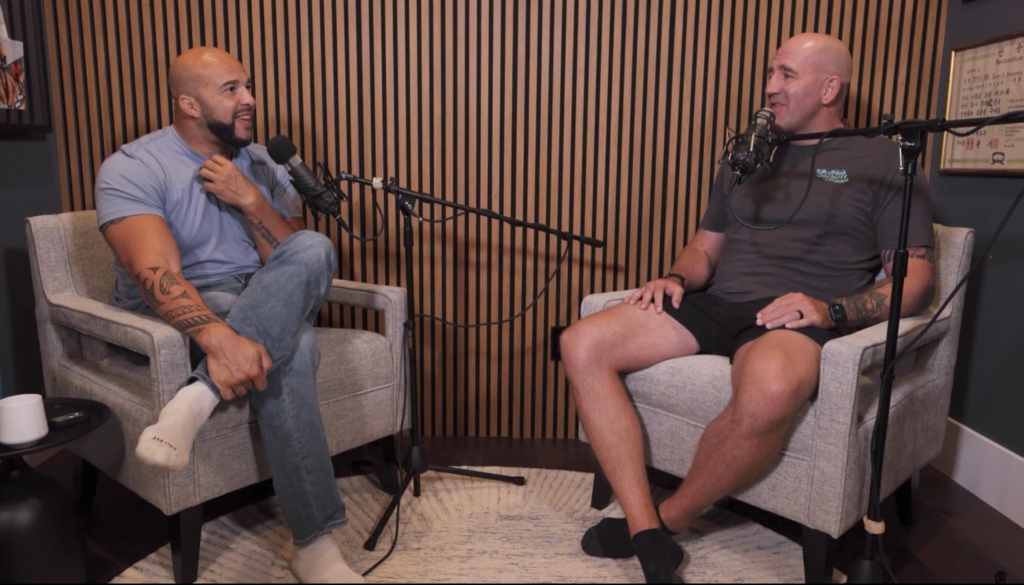
In his recent appearance on the Easton Community Podcast, Eliot talked with Mike Tousignant about the ways he works to empower others, what he strives for as a leader and a parent and the latest developments in the world of no-gi Jiu Jitsu.
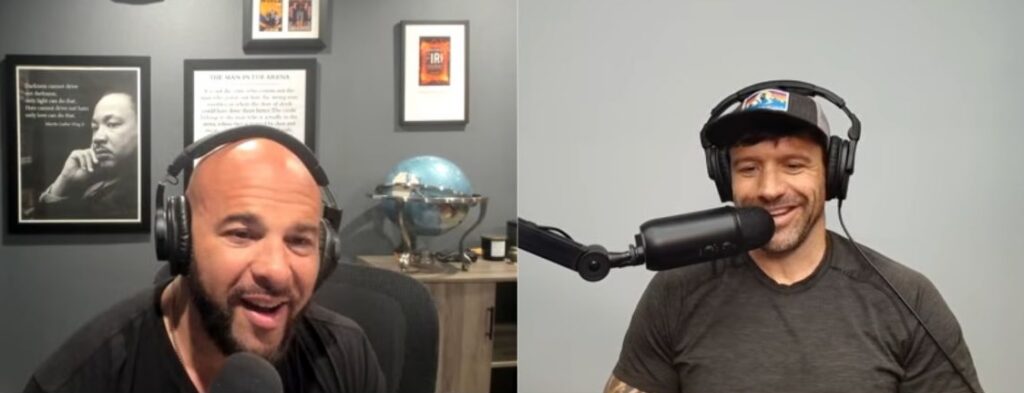
This article focuses mostly on Eliot’s perspectives on parenting and coaching. To hear Eliot and Mike’s technical deep-dive on the value of “backtracking” in no-gi, make sure to check out the full episode.
“We don’t hold onto anything. Just like in your life, right? Anything you try to hold onto, you eventually lose. You have to be willing to let it go and see if it comes back to you. This is the concept. You have to be able to flow.”
Parenting through all the stages
These days, Eliot spends just as much time around basketball courts as on a Jiu Jitsu mat. The day before recording the podcast, he’d spent a 12-hour day with his sons Kanen and Simon, watching them play in multiple basketball games.
He says the long days are tiring, but in a decade, he knows these are the days he’ll miss. Likewise, he looks back at his sons’ early childhood, and wishes he could go back.
When the boys were young, Easton was also in its early development. Eliot looks back on the stress and uncertainty of those early years of the business and compares it with the stability and calm that he feels now. “I would love to be there now for a day,” he muses. “Sitting down playing Legos…and just to truly be in that moment.”
At the same time, he’s grateful for the ways parenting has become easier as they’ve grown up. “I’ve been able to keep it calmer. You can really just lay out consequences and not get mad,” he says. “One, they can do it. Two, they understand it more.”
Mike’s sons are about ten years younger than Eliot’s, and the two dads also compared notes on discipline, brothers who brawl, and the challenges of raising their kids with the right balance of struggle and comfort.

A multi-faceted teacher
Within Easton, Eliot says he has three big points of focus:
1. Staying in his lane to empower the staff.
2. Being a good ambassador for Easton.
3. Being a good ambassador for Jiu Jitsu.
He’s most in his element when he’s teaching. Whether he’s on the mat, leading a no-gi Jiu Jitsu class in Denver, or onscreen sharing business insights with the Easton Online community through courses and the Blackbelt Business Podcast.
People know Eliot for his booming voice and big personality, but in his conversation with Mike, he talks about how he consciously scales that intensity. As an instructor and a coach, he calibrates it to the context of his students and athletes.
Athletes forged in the fire
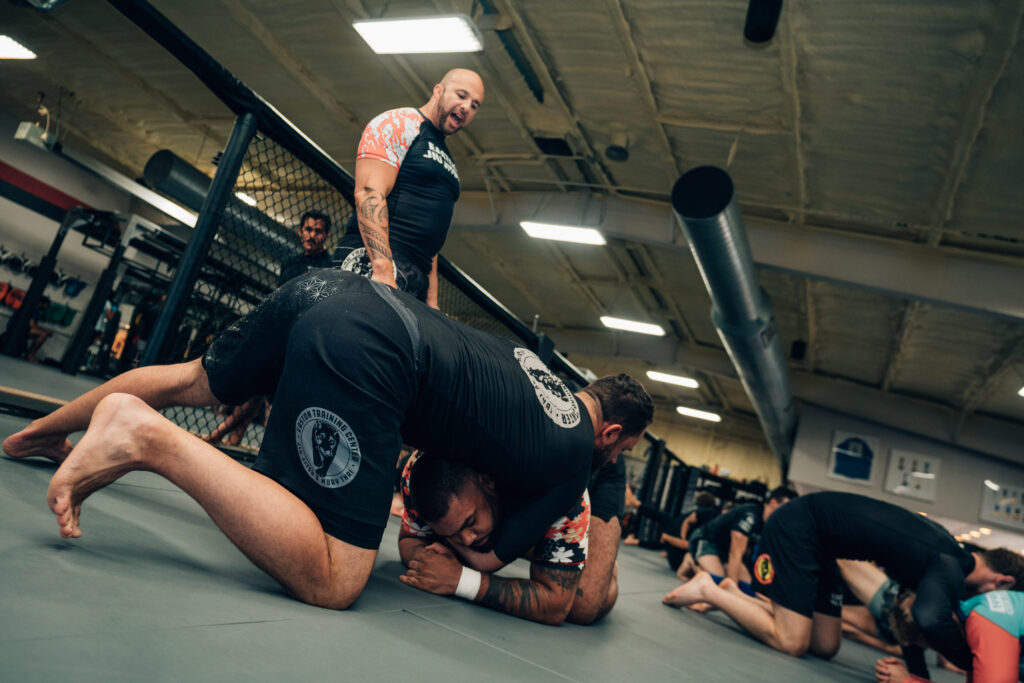
When he’s coaching UFC fighters or high-level Jiu Jitsu competitors, Eliot intentionally turns up that intensity. Beyond hard Jiu Jitsu rounds, he says strenuous conditioning is essential.
“You have to be ready for chaos,” he asserts. “You have to put people through hell in other types of conditioning… where they want to quit.”
The shared struggle creates camaraderie and bonds the athletes together. Quoting a concept from Tribal Leadership, Eliot tells Mike that he is “creating a common enemy,” namely himself as the coach. The athletes may not like it in the moment, but he sees it as very necessary for building their strength and resilience.
He sometimes plays himself as a foil to Carlos Espinosa, the Denver academy’s GM and other head Jiu Jitsu instructor. When Eliot is the harsh professor, pushing athletes to their physical and mental limit, Carlos can be the professor they turn to for support. “That has always been a role in competitive sports,” says Eliot.
Calibrating for context
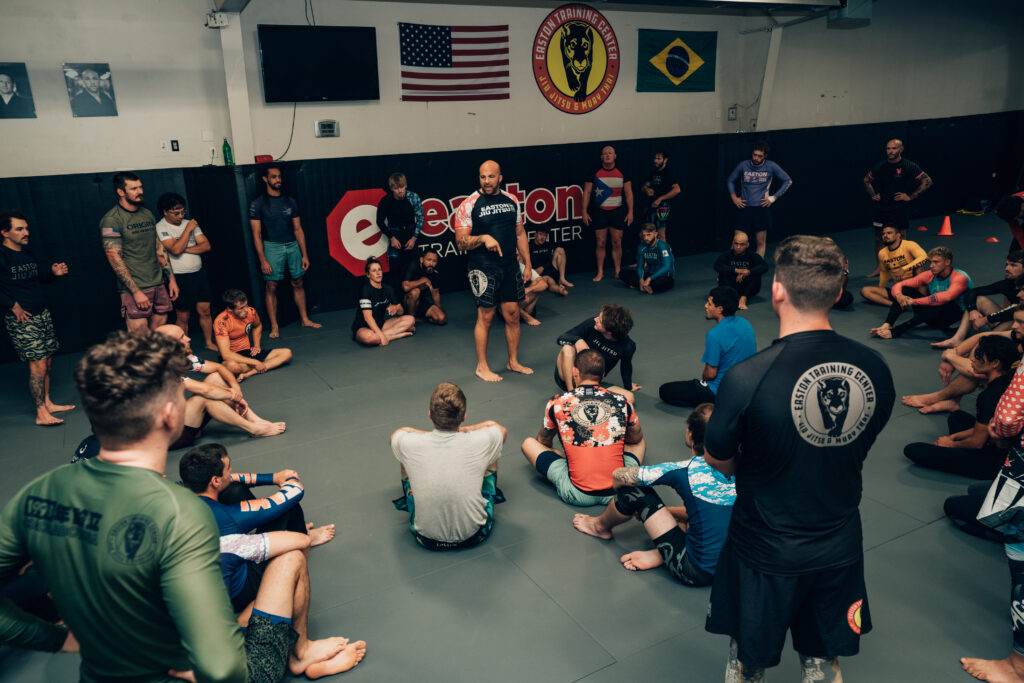
But with years of experience, he’s learned the importance of gauging the appropriate dose of intensity. Most of his students aren’t professional fighters.
To successfully use that harsher coaching style, there needs to be trust, understanding and context with the students.
Eliot knows that his personal style takes some getting used to. People who mostly know him as a picture on the wall sometimes hear him yelling and hear anger where he doesn’t intend it.
So he tones down the intensity for his regular classes in Denver, and especially when he teaches in other academies. He knows the power he has as an ambassador for Easton and for the sport of Jiu Jitsu, and he strives to cultivate the welcoming environment that Easton is known for.
What makes a successful coach-athlete relationship?
Eliot also takes his role as a coach very seriously and has clear ideas about the boundaries needed for a successful coach-athlete relationship, especially when it comes to the high-level competitors.
“They can’t be your friend. None of my guys are my friends,” he says matter-of-factly. “I love them all deeply, but they don’t come to my house. We don’t hang out.”
“It’s mostly a one-way street,” he acknowledges. “You always have to be there for them. You can’t expect nor want them to ever have to be there for you.”
He also recognizes that being a good coach for someone is often a question of fit. Eliot is a long-time mentor to Ana Mayordomo, who recently took home a mess of gold medals from high-profile tournaments at black belt after recovering from being seriously injured in a car accident.
He says that Ana is one of his greatest successes as a coach, and the coach-athlete compatibility has always been a key factor in how well they work together. “You have to have all of the tangible skills as a coach, but the intangibles have to match with your athlete,” he explains.
“You have to realize you’re not for everyone, and that’s ok,” he says. “You have to let people see who you are for.”