
Why Footwork Wins Fights in Muay Thai
Footwork, the foundation of effective Muay Thai, may not seem like the highlight of a fight, but it always comprises one of the reasons competitors win. Good technique, careful timing, and effective footwork play a fundamental role that everyone who practices Muay Thai should master.
Good footwork gives you the balance, power, and skill to win your fights in Muay Thai, regardless of who you find yourself fighting against. Without good footwork, your Muay Thai game will never improve past a certain level.
Tips for improving your footwork in Muay Thai
Cutting angles. One way to improve your footwork involves utilizing angles, a key element of Muay Thai. Angles allow you to find openings where you can strike your opponent more effectively while avoiding being countered. Sometimes, all it takes to create an effective angle is a slight pivot or small step.
Cutting angles also allows your attacks to remain unseen, forcing your opponent to turn and face you while you have the opportunity to strike more subtly. If you always fight your opponent straight on, they’ll have a very easy time landing their strikes. Learning to use angles will improve your footwork and your fight game!
[How to Train Muay Thai Outside of Class: A Beginner’s Guide]
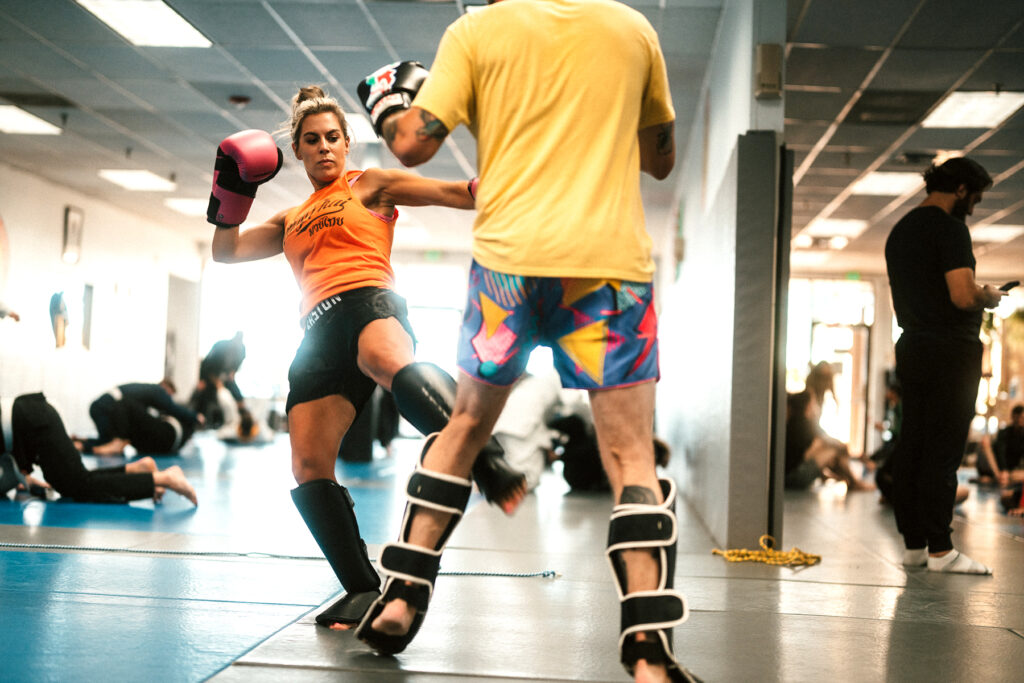
Maintaining distance and range. Another aspect of footwork that athletes use in fighting strategy involves distance and range. Good footwork helps you move smoothly into the appropriate range for a variety of different attacks.
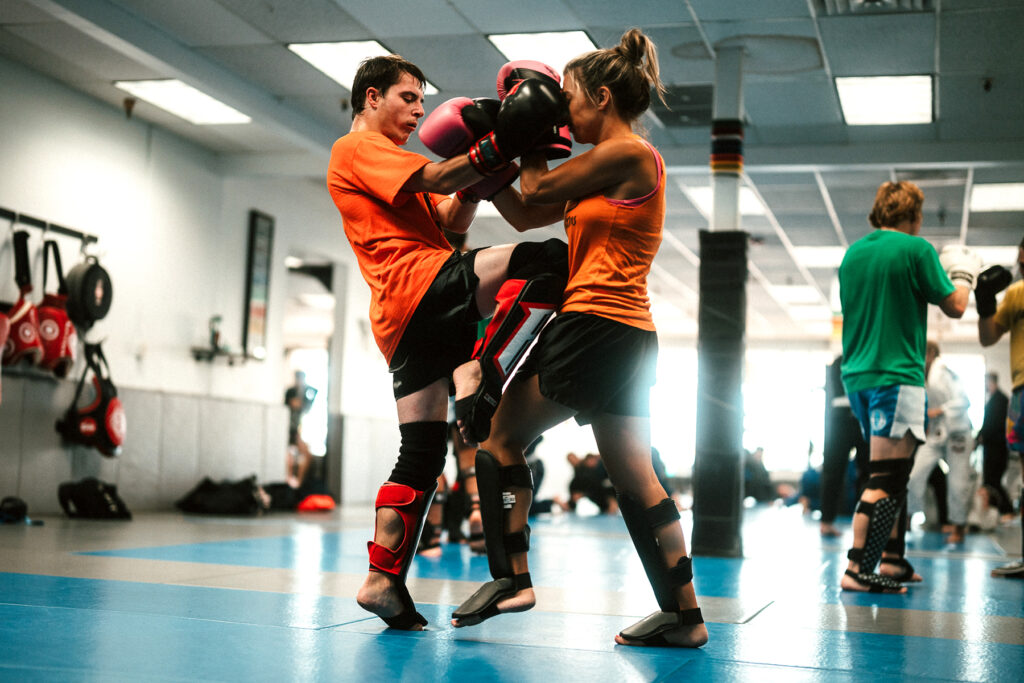
For example, your long-range weapons, such as teeps and round kicks, should come from a farther distance, keeping you out of range of any weapons the opponent may throw back. On the other hand, you’ll want to move in for closer attacks, such as knees or elbows. Pro tip: throwing fake teeps or round kicks can cause your opponent to try to defend, giving you a chance to step in and find an opening for your attack.
Throwing feint strikes. Building feint strikes into your fight plan creates openings to land kicks and punches, and footwork is one of the best ways to set these up. Moving forward or backward helps shape the range to set up your strikes.
When feinting, it helps to throw a few real strikes to get your opponent to defend. After you throw a feint, such as a round kick, when they go to check the kick, follow up with a different combo.
[The Benefits of Muay Thai: Fitness, Flexibility and Mental Resilience]
Know your steps. With footwork essential for defense and evades, it helps to have a variety of moves under your belt. The slide step makes a great evade for punches and kicks. Many fighters, for example, effectively avoid teeps with a quick slide step backwards.
The pivot step is another way to evade attacks and look for an opening in your opponent’s defense. This step allows a fighter to quickly change angles, set up attacks and evade strikes. To do a pivot step, the fighter will rotate on the ball of their foot and turn their guard in another direction.
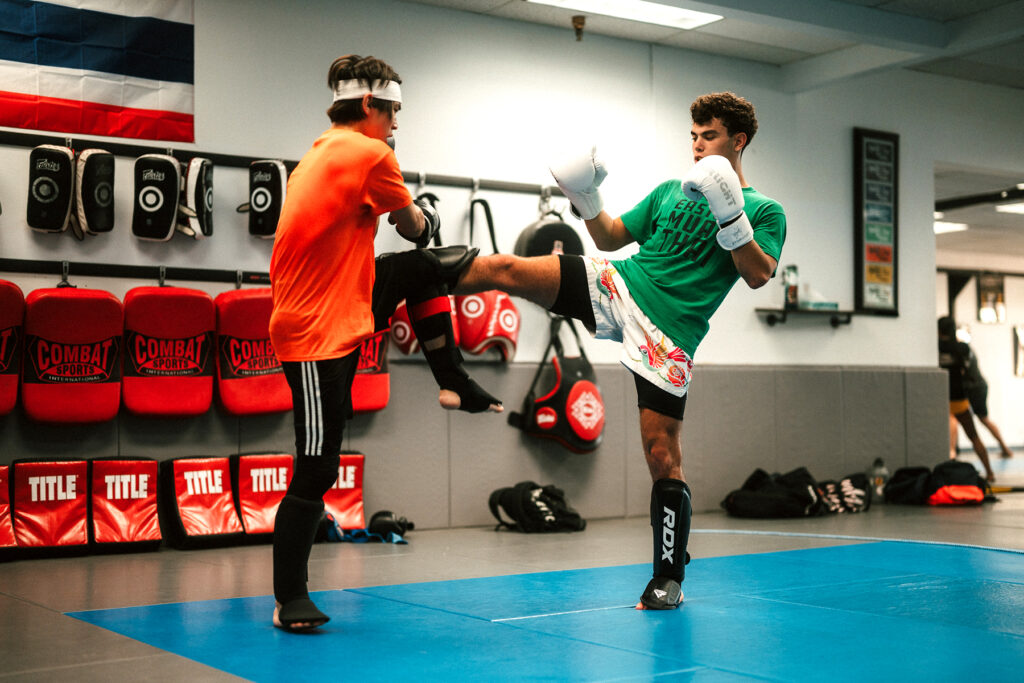
The switch stance. Adding the switch stance to your footwork gives you another move tricky for an opponent to counter. This involves switching your stance from orthodox to southpaw or vice versa. Knowing how to switch stances opens up new angles of attack for you and disrupts the other fighter’s rhythm and flow. It can also help change up your range and create new striking opportunities.
You will want to try to mask your footwork when switching stances so that your opponent doesn’t notice you doing it. You can do this in many ways, but one effective one includes using strikes such as punches to distract from your feet.
Just like everything in Muay Thai, improving your footwork takes time. Staying consistent, following advice from coaches and training partners and actively working on technique will all help you improve. Try to pick at least one thing to work on every class or sparring session to improve with intention!