
Hit The Road: One Family’s Experience Traveling to Compete in Jiu Jitsu
The cavernous convention center feels refreshing after the scorching Las Vegas summer heat. The iconic yellow and blue mats stretch out, with eager competitors sprinkled across them, each seeking a gold medal.
Coaches and onlookers yell and cheer, the loudspeaker crackles in occasionally, and without fail, an açaí booth does brisk business.
This is an IBJJF tournament. The IBJJF, International Federation of Brazilian Jiu Jitsu, was founded in 1994 by Carlos Gracie Jr. It is one of the highest levels of competition available in the world of Jiu Jitsu.
The local competition scene
At home in Colorado, we have a rich scene of local competitions. Almost every month, there are a variety to choose from, including our own homegrown Solid Series. Each tournament has its own nuances of rules and expectations, but they give aspiring competitors a chance to push themselves in their martial arts practice.
Each year we also have an IBJJF comp, the Denver Open, in our neck of the woods. This is always a high-level tournament, and one where Team Easton BJJ shows up in full force. However, for now, they only offer adult divisions.
Our youth athletes are mighty, and they are always looking for a challenge. My son competed for the first time at eight years old at one of the first tournaments held after the pandemic.
Since then, he competes regularly. He has now participated in around 125 matches. Local tournaments are still a great learning experience, but for those young competitors dedicated to refining their skills, the larger out-of-town tournaments beckon.
[How Competing in Martial Arts Benefits Your Kids]
Traveling is a different beast
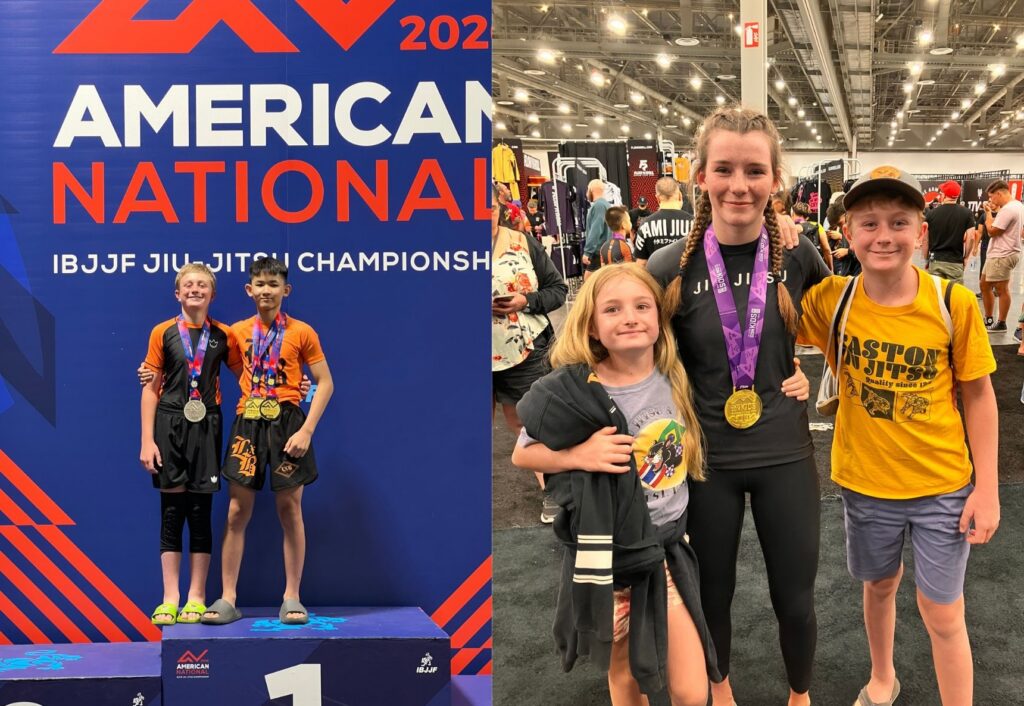
For the last three years, our family has been traveling to compete in Jiu Jitsu tournaments over the summer. Most recently, we participated in the 2026 American Nationals in Las Vegas. We went out there with a whole Easton team, and spent the weekend supporting one another, cheering the successes and applauding the effort of everyone who stepped onto the mats.
These experiences inspire our practice and give us goals to strive for. The caliber of Jiu Jitsu we experience motivates our training. We prepare for the challenge of the summer competition season all year long.
For competitors and families looking to step into this world, there are a few key things to know.
Competing with the IBJJF
The IBJJF is known for having a more professional feel, but they are also strict, and this begins before you even register for the tournament.
You must have an IBJJF membership to compete, and in addition to filling out the paperwork, your membership application requires approval from a Black Belt. This can take a little time to figure out, so start well in advance.
Uniform requirements are strict, and it is critical to make sure the gi, belt, and no-gi kit fit the IBJJF guidelines.

Tournament logistics
One of the major differences between IBJJF events and local tourneys is the single-elimination format. This means as soon as they lose a match, the competitor is out of the competition.
At local tournaments, we are used to double-elimination or round-robin formats, meaning we get a lot of rounds even with an early loss. There is more pressure to win at the IBJJF.
As a parent, this is a key piece to realize. We must prepare to support our children emotionally for the experience, and to take away all the lessons from the comp.
They always learn, whether they made it to the podium or lost within the first two minutes. The caliber is so high. Each win is celebrated, and the losses are fuel for future growth.
[What to Say if Your Kids Lose Their Match]
It is hard to discuss the IBJJF without talking about the bullpen. Once competitors weigh in, they stay within a fenced-off area. They can talk with parents or coaches and drink water, but they stay in that space throughout their entire bracket.
This can feel intimidating, but is simply one more layer to get used to. It is a great space for reflection and to visualize the upcoming matches.
Know the rules
The IBJJF continuously amends and updates their rules. It is challenging to stay abreast of these changes, but as a parent, knowing the rules for the age group of your youth competitor is extremely helpful.
Many of the submissions they regularly practice in the training room are not permitted in competition. In our family, for three months leading up to an IBJJF event, we restrict ourselves to only using the IBJJF-legal techniques as another area of preparation.
[Competitive Madness: Tips for Youth Athletes]
Travel logistics
Of course, traveling to compete in Jiu Jitsu involves… traveling. Flights, lodging, food, rental car or Uber, these add up quickly.
We like to find a house rental close to the venue, but in a quiet neighborhood. We prefer to rent a house versus a hotel in order to cook our own food. With the inevitable nerves of competing, keeping as many factors as familiar as possible helps. We find that our diet is the easiest piece to control.
My son loves competing, but always gets super nervous beforehand. We try to arrive a day early, to go to the venue and feel out the space. This can help him to focus on his competition preparation without being overwhelmed by the space.
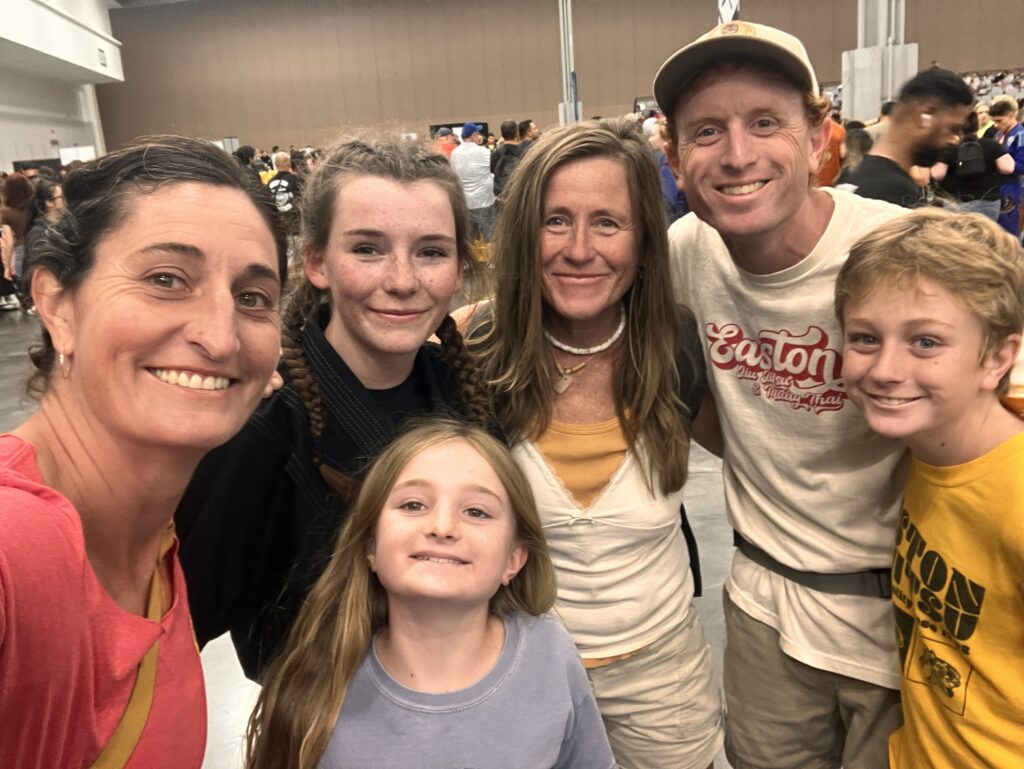
Two out of the past three years, we have shared rental houses with other families. This is our preferred approach. Hanging out with friends can help ease the nerves and remove some of the unnecessary pressure around competing. Economically, we also get a better value splitting a larger house with others.
A different kind of learning
In martial arts, we learn continuously. This is key to staying engaged along the journey. The physical outlet is amazing, but that combined with the problem solving piece is a powerful combination.
We have all of the resources to develop high level martial arts at Easton, but preparing for a high-level competition changes the intention we bring to the training room. We train with the goal to hone our strategy. We eat with care to stay in our weight class, and problem solve with teammates to prepare.
Watching the kids help each other prepare is inspiring. They encourage one another, train hard, and show up consistently. At the competitions, they all gather to watch one another, cheering wholeheartedly, win or lose. Watching them connect after their matches, deepening their friendships through these intense challenges is what will bring us back again and again.
[More Than Medals: The Powerful Impact of Childhood Jiu Jitsu Friendships]