What Competition Is Actually For: Why Winning Isn’t the Goal
People’s motivations and mindsets for competing can vary widely. You might decide to compete just because you want to get a win. If you ask for advice, many people will tell you to just have fun. But if I’m honest, neither of those approaches has helped me perform at my best.
When I focus on winning, everything in my body tightens. I start rushing, forcing movements that aren’t there and abandoning the very game I’ve built in training. On the other hand, telling myself to “just have fun” sounds good in theory, but in the middle of a match, when your heart is racing and someone is actively trying to submit you, it feels vague and disconnected from reality. It doesn’t give you anything tangible to anchor into or to guide your decisions.
Competing with intention
What has made the biggest difference for me is shifting away from both of those mindsets and focusing on competing with intention. That shift moved me out of an outcome-based approach and into something more grounded and actionable.
Competing with intention, for me, means controlling the pace of the match, choosing the direction of the exchanges, committing to executing my system, and observing what’s happening without reacting in panic. It gives me something to return to no matter what unfolds and allows me to stay connected to my training instead of getting swept up in the moment.
Sticking to the plan at the IBJJF Denver Open
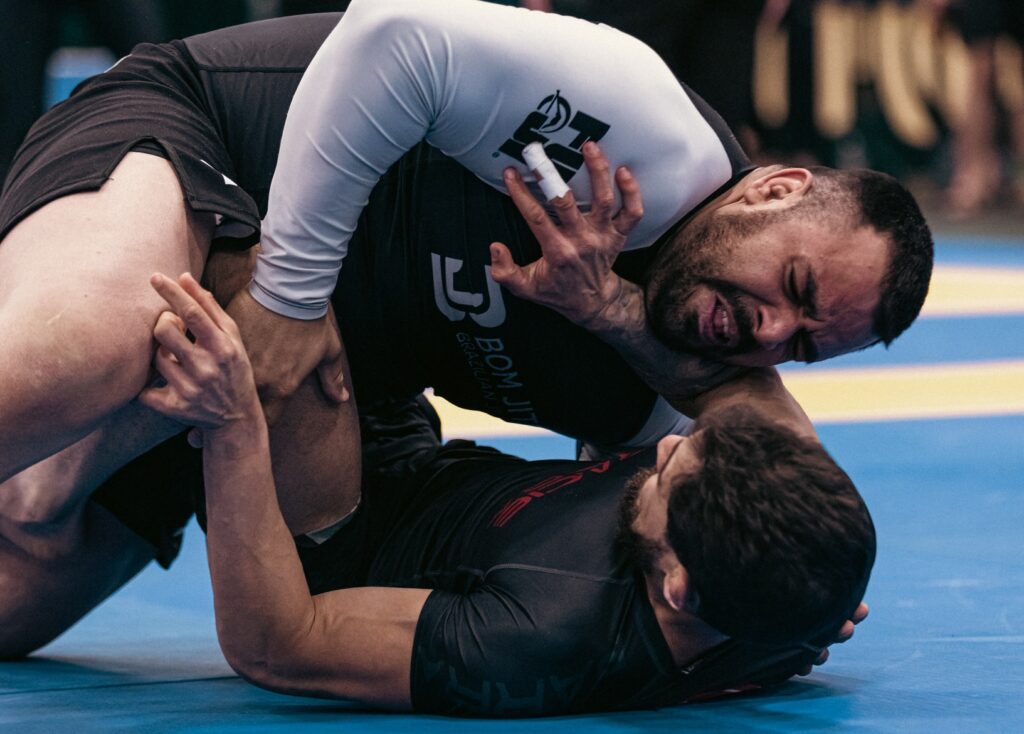
I felt this shift clearly at the IBJJF Denver Open. For the first time, I went into a competition with a simple and clear plan: pull guard, control and sweep. Instead of scrambling to win or chasing points without direction, I focused on executing that plan.
As the match unfolded, I controlled the majority of the exchanges. I didn’t allow my opponent to pass my guard, and I hit a lasso sweep I had been working on. At one point, I came on top and hesitated instead of continuing to impose my game. My opponent capitalized on that pause, attacked a kimura, and used the opportunity to sweep me back. She won the match by an advantage for the submission attempt.
On paper, that match counts as a loss, but it didn’t feel that way to me. For the first time, I walked off the mat knowing I had imposed my game rather than simply reacting or trying to survive. That distinction mattered because it reflected progress that doesn’t always show up in the final score. It showed me I could stay composed, execute what I’ve practiced and maintain clarity even against a high-level opponent.
A new level of intensity
One of the unique aspects of competing under the International Brazilian Jiu Jitsu Federation rules is that there is no coach’s chair matside, so you can’t rely on someone guiding you through every moment. With the level of noise and intensity at the Denver Open event, I could barely hear anything from the sidelines anyway.
The level of competition felt noticeably higher than what I had experienced at local tournaments, and I had to rely on my own awareness and decision-making. Instead of letting that overwhelm me, I stayed focused on my intention, which reinforced the idea that this is what competition is actually for.
Competition is a catalyst for growth and reflection
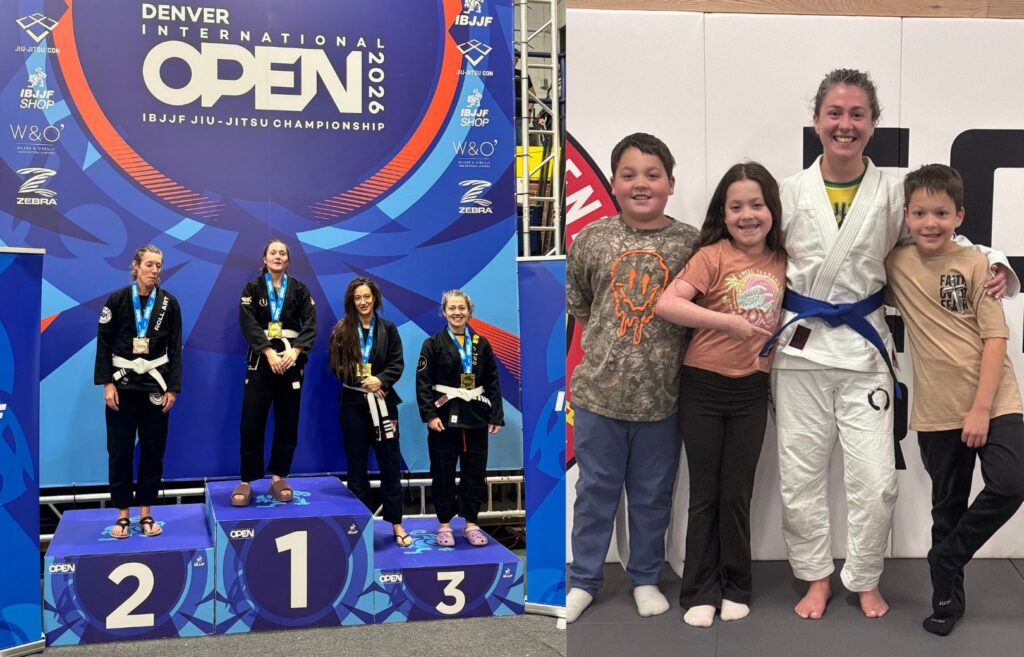
A couple of days after the tournament, my professor promoted me to blue belt, which felt both humbling and surreal. When I think back, it’s hard to believe that just two years ago I walked into an Easton Training Center to enroll my triplets, and now I’m the one progressing through the ranks. That moment wasn’t just about the belt. It reflected everything the journey has required: showing up consistently, navigating discomfort, and learning to trust the process.
More than anything, what stayed with me from that experience was a deep sense of gratitude. I felt it for my professors, my coaches, and my teammates who were cheering me on, even when I couldn’t clearly hear them. I felt it for the opportunity to test myself in a completely different environment and for the version of me who chose to step into something new without knowing where it would lead.
Competition, in that sense, isn’t just about proving something or chasing a win, and it isn’t only about enjoyment either. It acts as a mirror that reflects how you respond under pressure. It shows you where you rush, where you hesitate, and where you begin to take control. If you allow it, it becomes a tool that helps you stay present and intentional when it matters most. And ultimately, that ability to remain focused, composed, and deliberate under pressure extends far beyond the mat.
[Lessons from Jiu Jitsu: What it Means to be Unbeatable in Life]