3 Types of Sparring to Practice for Maximum Growth
Battle testing your skills in any field can feel very daunting. There is a vulnerability in putting your work on display for others to view and critique. This is especially true of Muay Thai, because when you start to spar for the first time, your mind hasn’t yet learned the difference between training and a real fight.
The bell goes off, and suddenly your heart drops into your stomach, every combo you’ve drilled for months disappears from your brain and what few strikes you do throw simply don’t land. You worry about how silly you must look, and in doing so, you distract yourself from the spar even more. You don’t do well.
But that’s part of what is so great about sparring. It isn’t about “doing well,” or winning or protecting your ego. Instead, you focus on learning to time your strikes properly and to recognize the holes in your game so you can continue to improve.
Sparring is defined as going through the motions of fighting, but with rules or agreements in place to minimize injuries, such as not landing heavy blows.
The purpose of sparring varies from situation to situation. It can also shift depending on your experience level and goals. It could be for education, to sharpen instincts, to improve cardio or just for fun. Each type of sparring, from the most playful light spar to the most intense rounds, will help you along your Muay Thai journey.
Touch sparring
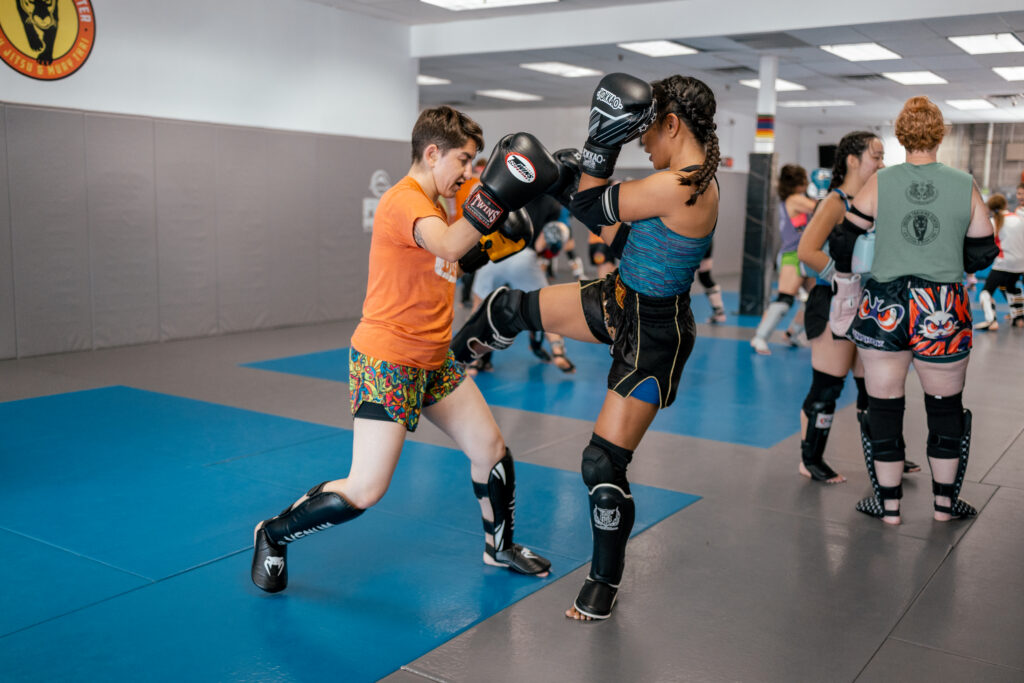
Of all the types of sparring, touch sparring is the least intense and the only one suitable for beginners. Partners should move as if they’re underwater, and strikes should be thrown lightly enough that even without gloves or shinguards, neither person hurts the other. The practitioners focus on precision, control and proper technique.
One of my favorite mantras that I’ve picked up along my martial arts journey applies perfectly to touch sparring: “Slow is smooth, smooth is fast.” It makes you recognize weaknesses, especially in defense, because if you can’t check a kick or parry a jab here, then you likely won’t be able to in hard sparring or competition.
In touch sparring, partners often agree upon constraints such as “clinch only,” “boxing only” or “kicks only.” These types of sparring rounds develop specific parts of your game by forcing you to work with limited tools. They also break down the different aspects of Muay Thai, which can prevent beginners from feeling overwhelmed.
Light sparring
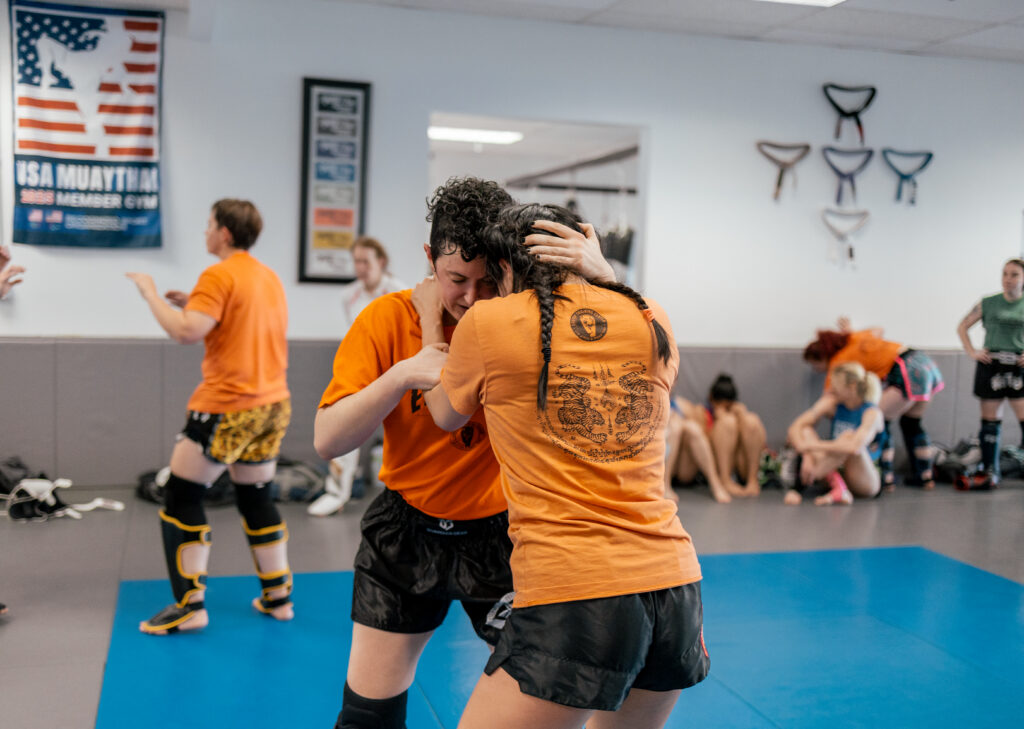
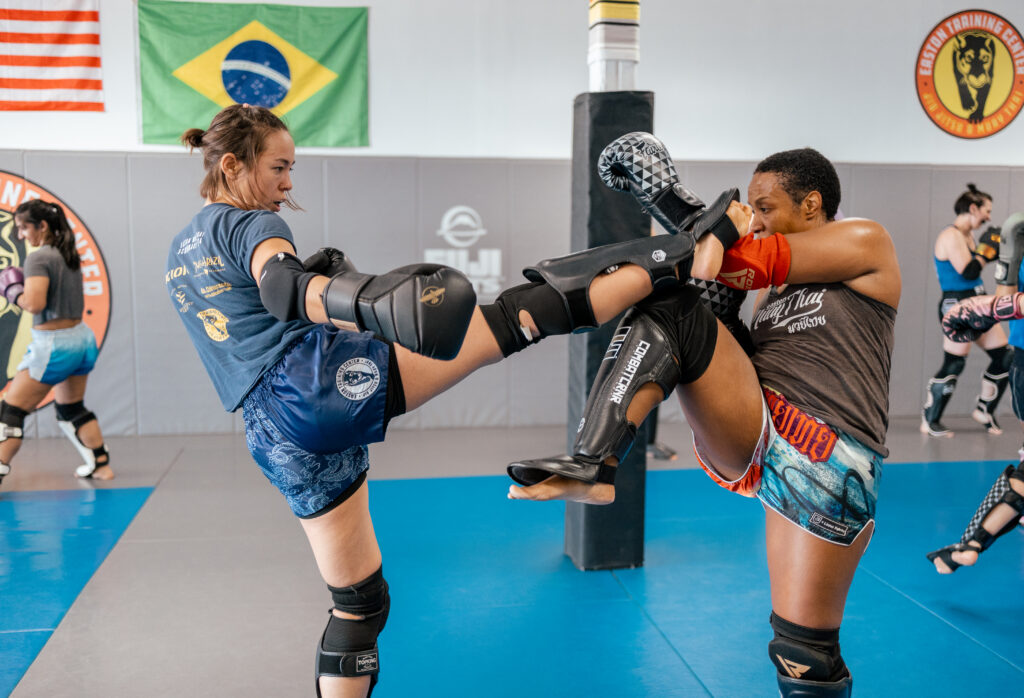
Light sparring is a more moderate and faster form of training. Easton Training Center allows students to engage in this sort of sparring upon earning the rank of orange shirt. This ensures that you understand the fundamentals of Muay Thai enough to spar safely before you apply your knowledge in higher-risk situations.
Timing and rhythm start to play a larger role at this point. Distance management becomes more important. You and your partner will often start to find a flow, rather than feeling like you are taking turns and only going through the specific combos you have been taught. It introduces consequences for failing to defend strikes as the power level increases.
[Finding Balance: Technique Over Intensity in Martial Arts]
Hard sparring
Hard sparring is done at or near full power and speed, and of these three types of sparring, it represents the closest simulation to an actual fight. The goal here is the realistic application of techniques and the building of mental toughness under pressure.
When your adrenaline spikes, your vision narrows, you tense up, and you gas out more quickly. Under these conditions, your “true” technique is revealed. You don’t rise to the level of your expectations; you fall to the level of your training and your habits.
You must take all of this into consideration, especially when preparing for a scrimmage or fight, or if you want to be able to use Muay Thai in self-defense situations. Hard sparring shows you what you will remember during the real thing.
Control, trust between partners and proper supervision are essential. Hard sparring too often, or without discipline, increases the risk of injury, including long-term issues like concussions. Because of this, it should be used sparingly and with clear intent, not as an everyday practice.
Learning from every round
All types of sparring serve a purpose. As you continue to train, the higher levels of sparring become available to you—but that doesn’t mean you outgrow the lighter, slower rounds. Controlled sessions retain their value over time because they give you space to refine technique and experiment without the added stress of intensity. Variety is key. Not all of your rounds should feel like wars, but they shouldn’t all be comfortable either.
There is no such thing as “winning” a sparring match. Your performance is measured only by how much you learned. It doesn’t matter if you threw a kick with bad form, or if you got caught with the same punch over and over. What matters is that you came back ready to adjust and run it again. Each round gives you a clearer picture of where you stand and what you need to improve, and that’s what keeps you moving forward.