
Using Small Wins to Combat Negative Self Talk
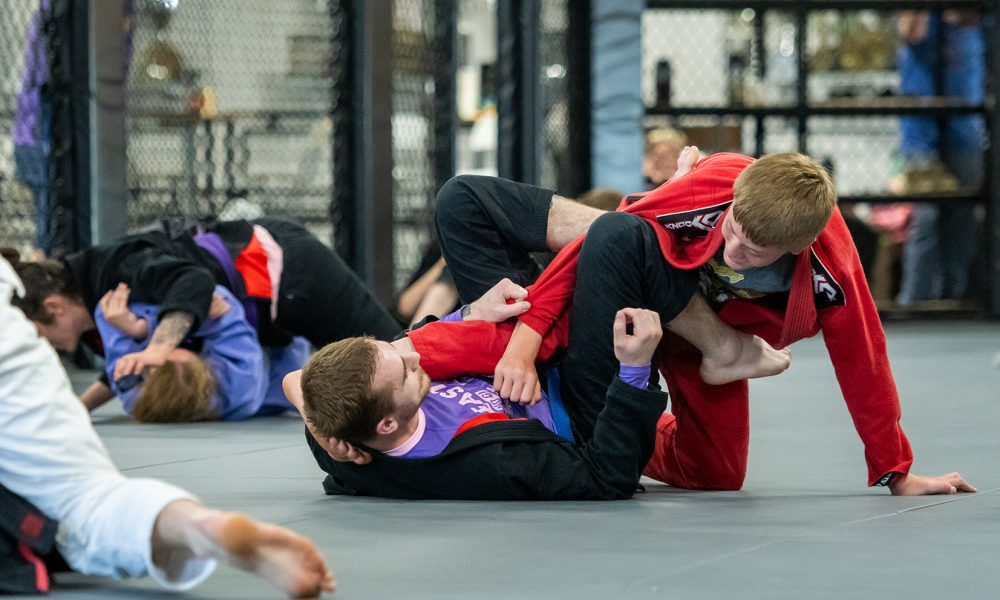
A while ago, I decided that I wasn’t any good at Jiu Jitsu, even though I’d been doing it for almost five years. Despite what the well-meaning people around me said, I told myself over and over that I couldn’t do any of it right.
Any time a coach would teach a new technique, I’d get frustrated when I didn’t catch on fast enough. I found myself taking live rounds way too seriously, getting mad every time someone submitted me. Eventually, I began to dread going to Jiu Jitsu because I knew that I’d just get mad at myself.
What I didn’t seem to realize was that I had missed the point of Jiu Jitsu. I went into the academy with the idea that I needed to win. That mindset might work for competitions but not for everyday training.
Contrary to what may seem true, the real point of training Jiu Jitsu doesn’t lie in winning, but rather in improving yourself. It’s a gradual process full of ups and downs. But how can you improve when you’re always mad at yourself for losing? That’s the problem I faced for quite some time. Instead of getting better, my perfectionism had created the opposite effect. I was actually degrading.
By the time I realized what I’d done to myself, negativity had become ingrained as my mindset. Breaking out of that mindset would be difficult, but I had to break it if I wanted to keep moving forward.
[Denver’s GM, Professor Carlos Espinosa: Competition, Self-Trust and a Manager’s Mindset]

I’ve tried various methods of escaping the negative self-talk mindset, but I’ve found one in particular to be the most effective. I figured that the best way to stop getting mad at myself was to convince myself that I had no reason to get mad. Instead, I picked up a habit of highlighting all my good accomplishments.
Every time I did something right, I would make a mental note. If a move we were learning clicked for me, if I managed to take someone down or sweep them, I would remember it for later. Some time after each training session, I took a second to write down as many of those little wins as I could on a piece of paper, while everything I hadn’t done very well went unrecorded. After some time of this practice, I soon found it a lot harder to get angry at myself for failure when I had proof of my success.
Since I stopped focusing so much on winning, I’ve actually started to do better because I’m now focused on improving. The more I train, the better I get. I still think about where I could improve, but I make sure not to let my faults become my focus.
Whether or not you struggle with negative self-talk, the practice of tracking small wins can and will help you improve. If you feel that your Jiu Jitsu has stagnated and you aren’t getting any better, paying attention to the little things you do well can motivate you to keep going. At the very least, you can focus on the fact that you haven’t gotten any worse.
If you feel great about your Jiu Jitsu, then tracking small improvements can only make you feel better. And even if you feel that you’ve somehow gotten worse, trust that you’re definitely better than when you first started.
Remember, there’s no way to fail at Jiu Jitsu. As long as you make it a goal to get even just a little bit better every day, then you’re doing it right. Keep showing up, and your little improvements will stack up to become bigger and bigger victories.
The key to long-term improvement comes down to maintaining a healthy balance between considering your shortcomings and your strengths. You can’t improve if you feel like you have no hope, but you also can’t improve if you don’t think you need to. Once you’ve nailed this principle for Jiu Jitsu, you can adapt it to other areas of your life as well.
Knowing when you can do better and also being able to congratulate yourself when you do something well becomes helpful in everything, from other martial arts and sports to school or work. As I’m finding out, the things you learn on the mat can have a very beneficial effect on your life off the mat. Once you figure something out while getting beat up, it suddenly feels easy to use it during everyday life.