Helping Kids To Adult BJJ Training
“Black belts presented significantly higher mental strength, resilience, self-efficacy, self-control, and life satisfaction.” — de Lorenco-Lima et al., 2025, from Rank-Based Psychological Characteristics in Brazilian Jiu-Jitsu.
Martial arts in general, but Brazilian Jiu Jitsu in particular, embodies a lifelong journey with well-documented physical and psychological benefits that will carry practitioners throughout their entire lives. Unfortunately, the numbers are staggering. According to data from recent studies:
- Up to 80% of BJJ students quit before reaching blue belt.
- Teenage years represent a critical dropout window, especially around ages 13–16, when social shifts, academic pressure, and identity exploration peak.
- A survey of 221 white belts at 10th Planet San Diego found that only 24% continued to blue belt, with most quitting within 6–12 months.
This data reinforces my own observations as a coach, where I have seen less than 10% of teens continue training BJJ once they get too big to train in kids’ classes.
How can we help kids stick with training once they reach this pivotal age? Let’s look at some practical guidance, scientific insights, and real-life stories to help coaches and parents support young athletes through this shift.
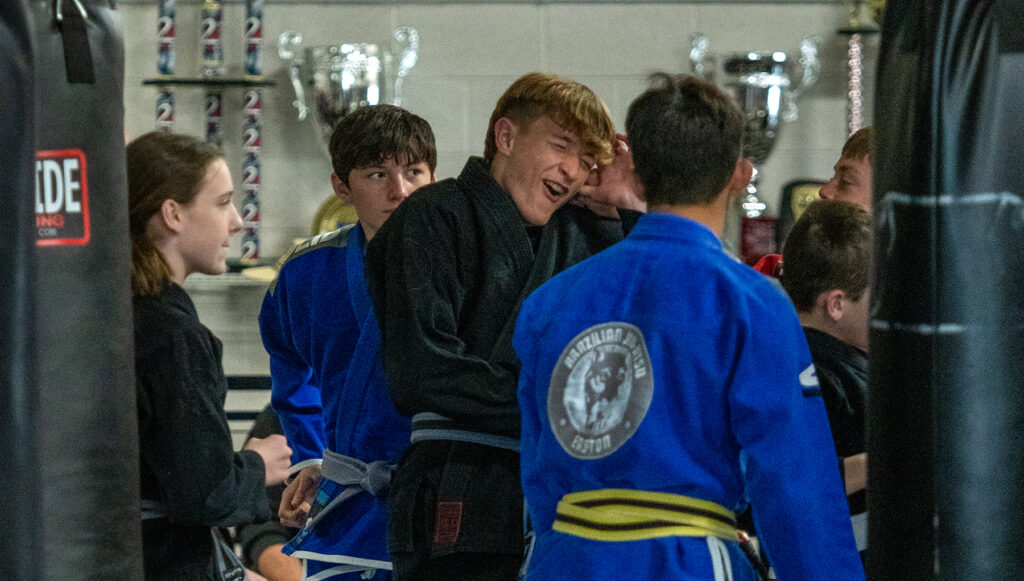
Why the transition matters — and what’s at stake
In many cases, parents require their kids to train BJJ, whereas adults train because they WANT to. This means that adult training will look much more focused and challenging, as adults want to maximize their sizable investment in both time and money – a far cry from the rounds with the kid who doesn’t really want to train in the first place.
In addition to the significant increase in the challenge of training with adults, teens also have to deal with a whole new set of developmental changes in their own minds and bodies, making training even more difficult. Younger teens often seem physically awkward as they learn to control their bigger and stronger bodies. Teens also struggle with new emotions and the natural desire to “fit in” within their social hierarchies, so they become hypersensitive to anything that could make them an outlier among their friend groups.
If we don’t handle this time well, we risk driving our teens permanently out of the practice of BJJ, and they will miss out on all the incredible benefits that come with it – right at a time they need it most.
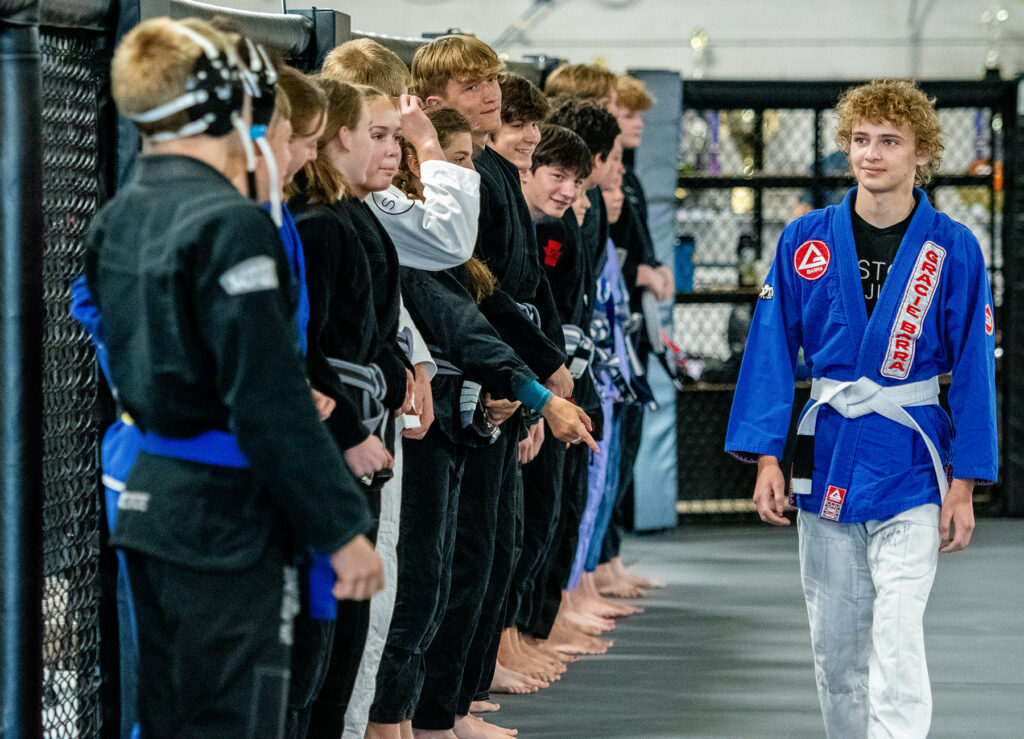
Sources show staggering data on teen mental health, with depressive symptoms among US teens doubling between 2011 and 2021. Emergency room visits for self-harm among teen girls have been rising drastically from 2010 to 2020, and globally, one in seven adolescents (ages 10-19) experiences a mental health condition of some sort.
These facts point exactly to the importance of teens sticking with BJJ training!
“BJJ helped participants develop patience, humility, and stress management — skills used in parenting, work, and personal growth.” — APA PsycNet, 2016.
[Mindfulness and Mental Resilience in Martial Arts]
Signs your child can benefit from adult classes
Consistent BJJ training can make a big difference for teens, but when should your teen advance to adult classes? Consider these points!
Physical readiness
Do they seem larger than others in the kids’ class and ready for peers of comparable size? This could mean your child may benefit from working with new, larger body types that will challenge them in different ways.
Emotional maturity
Do they seem resilient enough for a more challenging environment? Alternatively, would moving up feel overwhelming rather than sufficiently challenging? Sometimes, physically, a child may seem ready, but emotionally, they still feel attached to their kids-only cohort.
Technical proficiency
Decide which adult class fits their skill — often this means fundamentals before intermediate. Check to see what their kids’ coach recommends, and ultimately, the coach of the adult class will make this assessment.
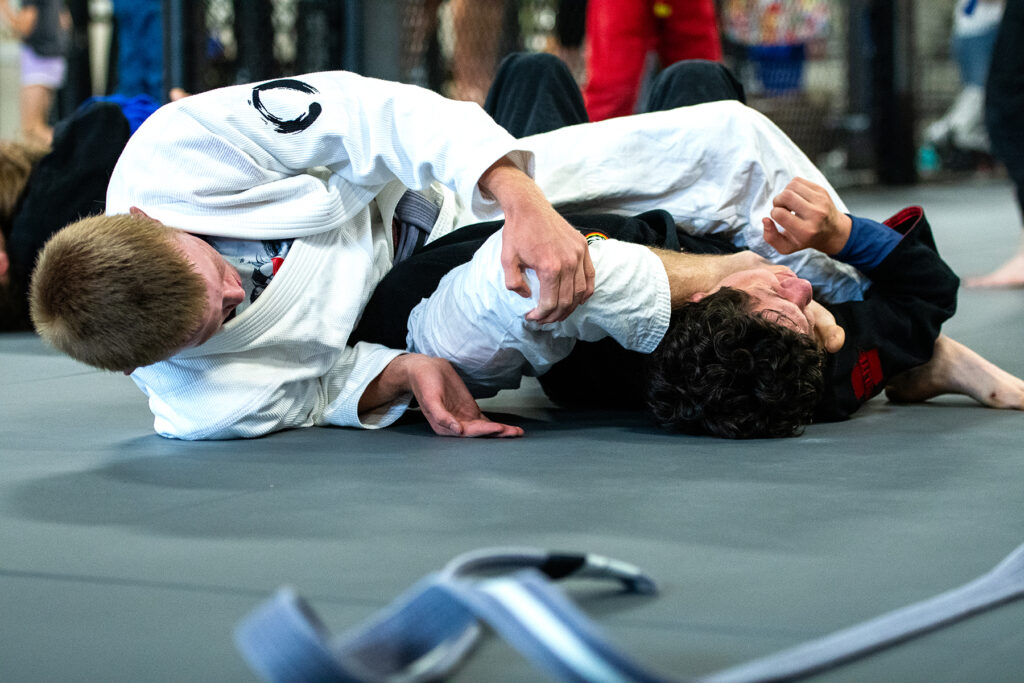
Character development
Does your child consistently show focus, respect, energy and discipline? These four things, known as “FRED,” make up the four key elements of Easton’s Kids Program. Before advancing to the next level, we want to make sure these have ingrained themselves into your child’s practice.
Coach + parent tips
Coaches, watch for safe rolling habit`s and eagerness to learn. Parents, look for signs of internal motivation and emotional resilience!
[Kick the Sugar, Optimize Your Training Fuel and Feel Better]
Prepping for transition
Now that we have a student who we have identified as ready to transition to adult classes, let’s discuss some strategies to ensure they stick with it.
Hybrid exposure
Let your child attend both kids’ and adult classes. I use this strategy with my 14-year-old daughter, Gwynie, attending my adult intermediate class. She has really enjoyed the transition so far, but the key has been that she has a friend who also made the jump at the same time. This approach has really helped Gwynie’s Jiu Jitsu: she gets challenged in the adult classes and gets to practice and refine her skills with the kids and teens.
If done well, the hybrid approach seems to be really effective at improving Jiu Jitsu, and your child gets the benefits of training in both classes!
Coach-parent alignment
Discuss timing, goals, and emotional readiness with your child’s coach. Most likely, the coach has already flagged that your kiddo seems ready to move up to the next level. If not, they will have some solid feedback with things your child can work on to get to there.
Mentorship
Pair your child with a trusted older teen or adult. This may mean making sure that your teen student has a partner in that adult class close to their size for drilling. Alternatively, you can partner them with a parent or other trusted adult who trains in the absence of a peer.
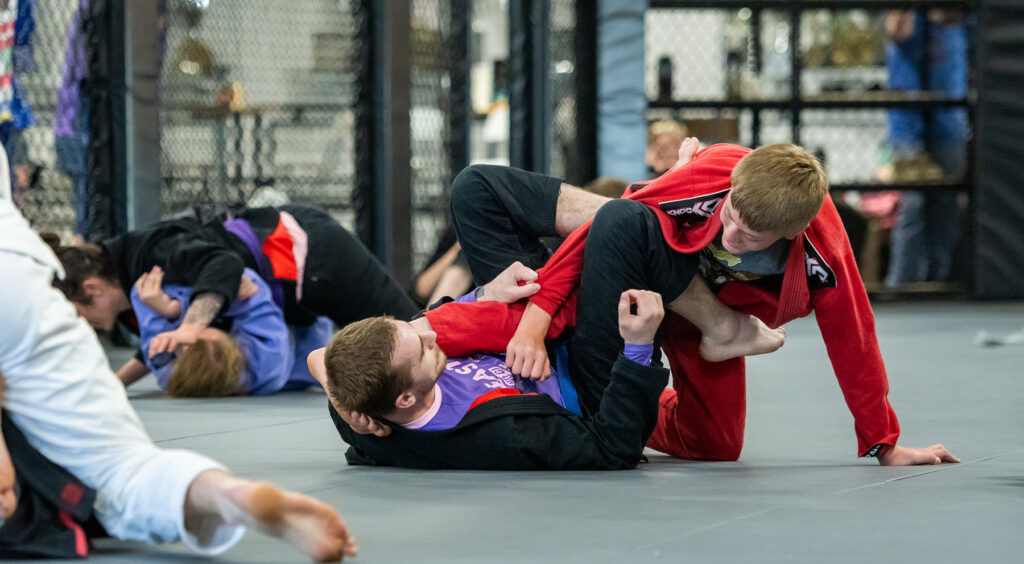
Avoiding common pitfalls
Aside from whether your child seems ready to level up, at the end of the day, we must also watch for and avoid common pitfalls that both students and parents fall into.
It can feel tempting, but try to avoid pushing too early. Remember, some of the most successful BJJ champions didn’t even start training BJJ until their late teens. It serves nobody to push before they feel ready.
Maintain clear communication. Deciding your child should move up to the next level without a proper conversation can make things confusing for everyone. Always consult with their coach before moving them up to the next level. Likewise, coaches should always speak with both you and your child before placing them into an adult class.
Avoid the comparison trap. This trap can sneak up on anybody — but especially teens moving up from kids’ to adult classes. Your teen will likely move from the biggest and strongest in the room to one of the smallest and weakest. If they can see this transition as an opportunity to practice patience and humility, it will feel like a much more gentle shift. Ideally, both coaches and parents teach kids early on that skill acquisition and the journey of learning matter much more than how many rounds they “win” in class.
[How Competing in Martial Arts Benefits Your Kids]
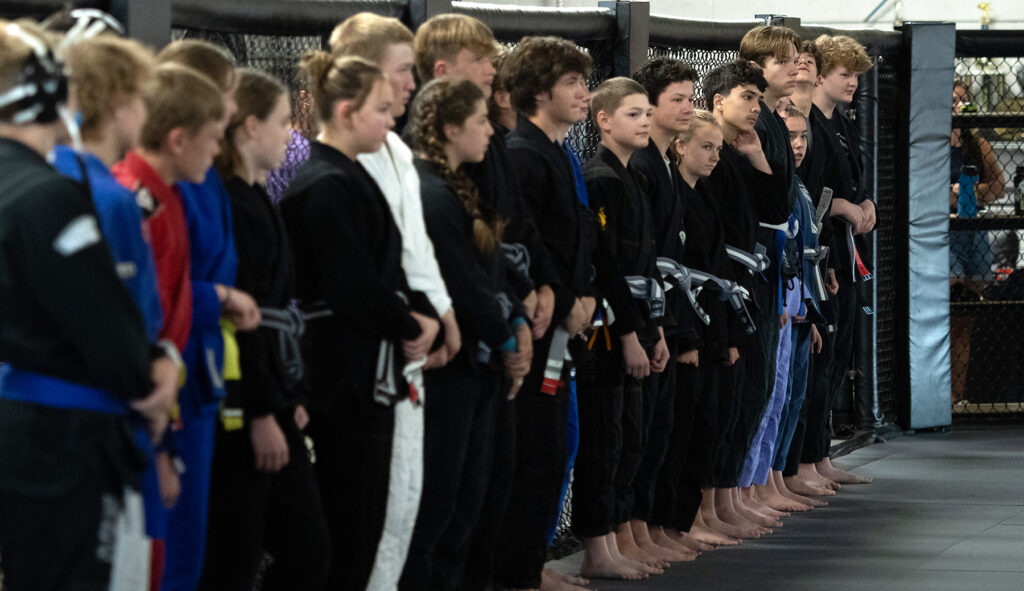
What if they quit? The power of the comeback
A moment every coach or parent dreads: a teen who’s trained for years suddenly wants to quit. Maybe it’s burnout, social pressure, or just the natural turbulence of adolescence. But here’s the truth — quitting doesn’t always mean the end. In fact, it might be part of the path.
Rana Willink’s story shows a powerful example. She grew up training Brazilian Jiu-Jitsu under her father, Navy SEAL and leadership coach Jocko Willink. As a child, she immersed herself in the discipline and structure of BJJ. Then, like many teens, she hit a wall.
“I stopped training for a while,” Rana shared on Jocko Podcast 461. “I just didn’t want to do it anymore. I was tired, and I didn’t feel like I was getting better.”
Instead of forcing her back onto the mat, Jocko took a different approach.
“You don’t need to push them every day,” he said. “Just keep the door open. Let them know they’re always welcome back.”
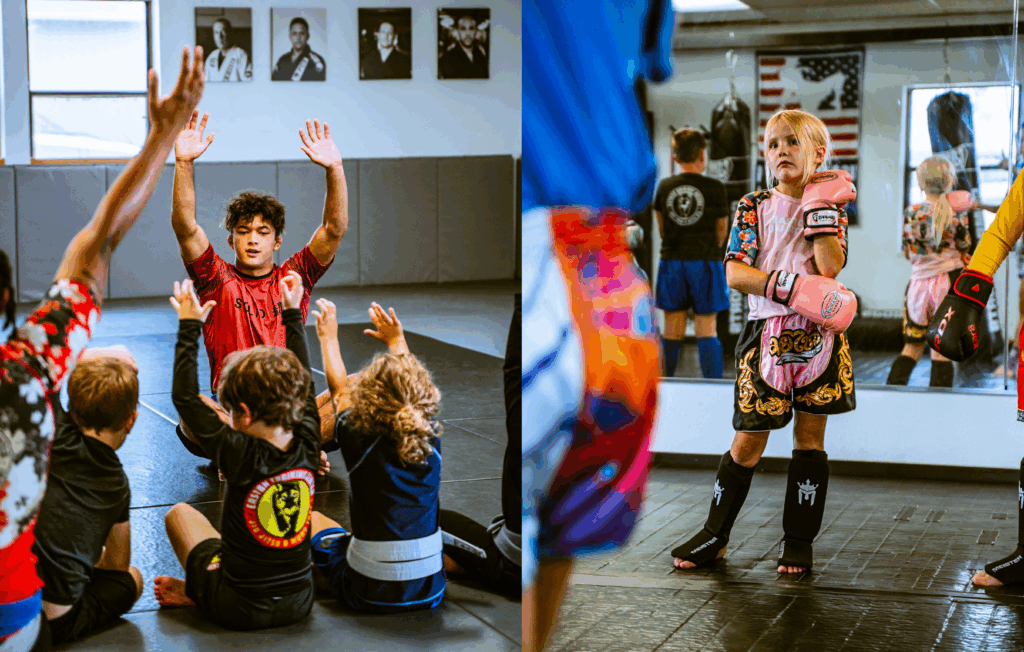
That open-door policy made all the difference. Rana eventually returned to training — not because of external pressure, but because she rediscovered her own drive. She earned her blue belt, began competing in IBJJF tournaments and now teaches BJJ herself.
“Coming back was hard,” Rana admitted. “But I realized I still loved it. I had the foundation, and once I got back into it, everything started clicking again.”
For coaches and parents, this offers a clear takeaway: don’t write teens off when they step away. Maintain the relationship. Invite them to drop in occasionally. Celebrate their identity as martial artists, even if they stop training full-time. Teens are more likely to persist in hard things when they feel autonomy, relevance, and progress.
In other words, let them own their journey. If they’ve built a foundation in BJJ, it’s still there — waiting for them to roll back in when they’re ready.
Sometimes, the comeback becomes stronger than the first chapter.
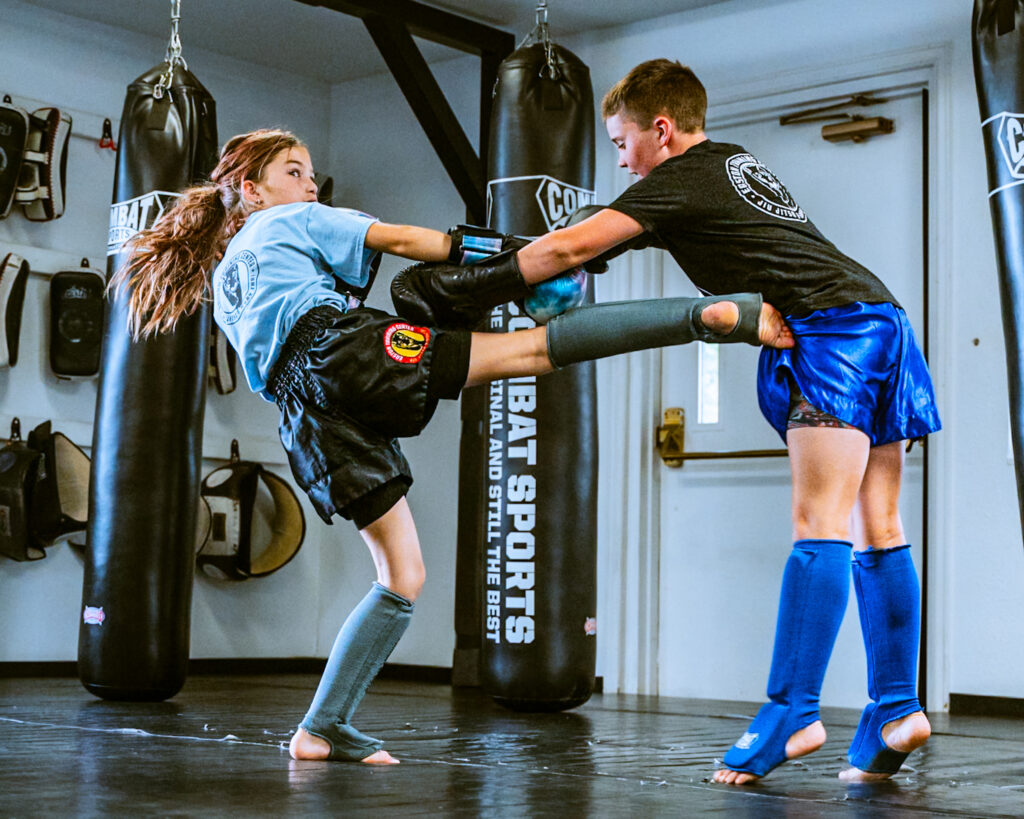
[Options to Help When Your Child Doesn’t Want to Train]
Supporting the first few months
Your teen has made the leap to adult class – how do we make sure they feel successful?
While they work on the training, you can work on reinforcing their efforts, not results. Honor your kid for their character (see my other article, Honoring Inputs Over Outcomes), not JUST for their successes in rounds. And of course, keep communication open.
Coaches, stay patient during performance dips and emotional swings. You may find that the energy level your teen student had in kids’ class looks very different now when surrounded by adults. Remember what we learned about teen development earlier in this article: give them time and space to find their place in this new world.
Most importantly, normalize discomfort, encourage reflection, celebrate small wins and watch for burnout.
While transitioning teens from youth to adult Brazilian Jiu Jitsu classes can seem challenging, with unique physical, emotional and social hurdles that lead to high dropout rates, it can also feel like a success. With intentional support, teens can thrive and gain lifelong benefits from BJJ.
Remember, Jiu Jitsu requires HARD work, and it may not always yield the results we want, but as we learn from practicing BJJ ourselves, oftentimes, the hardest things deliver the best rewards.