The Hidden Value of “Useless” Jiu Jitsu Drills
If you’ve been training long enough, you’ve probably experienced this: You’re in class drilling something that feels oddly specific (maybe even abstract). You can’t help but ask yourself what the point is, or how it might actually help your daily training.
It might be a variation of a knee cut that doesn’t resemble anything you’ve ever successfully hit when someone’s going crazy and framing on your face. Or maybe a side control escape that looks like it might work, but only if your partner 100% cooperates.
In the moment, the drill feels disconnected from reality — like you’re spending time on something that won’t actually help you, and you’re wasting time.
Then, weeks or months later, you notice a sweep or a positional escape that previously required a lot of conscious effort (when it worked at all) feel effortless. Your timing feels sharper, your reactions smoother, your movements more connected. Without your realizing it, that “useless” drill quietly did its job — it just didn’t do it in a way that was immediately obvious.
Why small movements create big changes
We have all probably heard our Professors and Coaches say that Jiu Jitsu isn’t just about memorizing techniques. Professor Eliot once said, “Moves don’t work — you have to keep moving.” We’ve also most likely had the experience of training for the first time and never getting close to hitting the submissions or sweeps we’ve been practicing in class for what feels like months. Our first rounds often feel like a chaotic storm, and we’re just struggling to navigate a fast paced environment.
In these first few months of live training, it can be helpful to look at Jiu Jitsu as not just a collection of “moves” but as our body learning how to organize itself under pressure. Oftentimes we don’t get better at a technique in one class or “rep to rep” — we get better “sleep to sleep.”
Our body needs time to catch up to what our mind is still processing, but we will never fully learn how to move the “correct” way unless we spend time drilling the correct patterns and techniques first.
The illusion of direct application
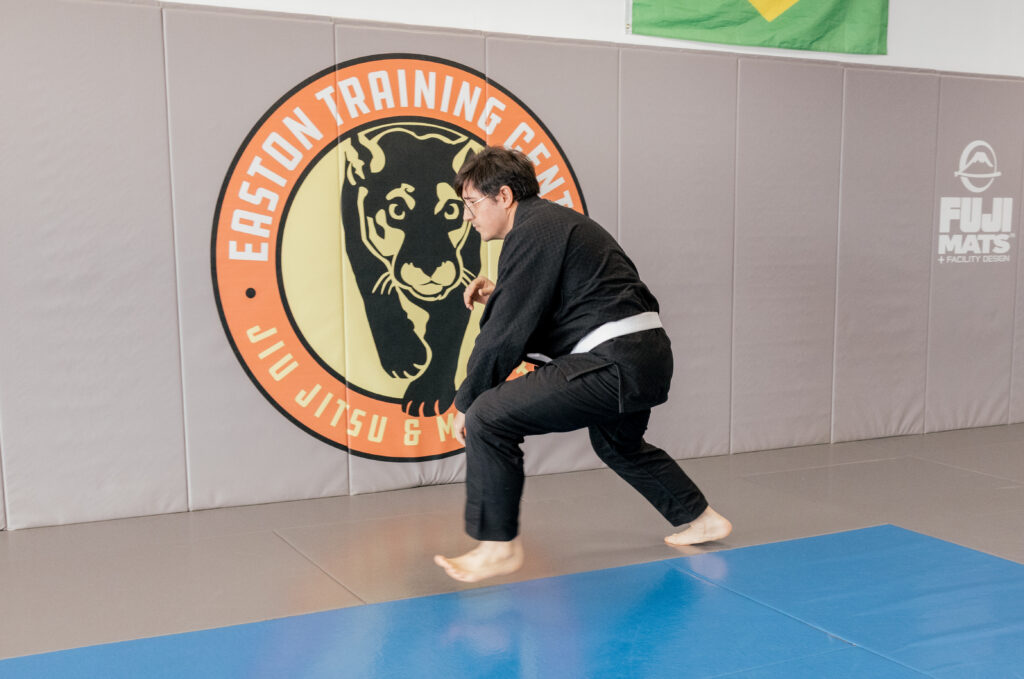
A common mistake I see when students learn a technique for the first time is judging everything by whether it has immediate, obvious application in live rolling. It’s natural to want to say, “There’s no way this position would come up or this technique would ever work when someone is actively fighting to not let me do it.” But that couldn’t be further from the truth.
Let’s understand that many Jiu Jitsu drills aren’t meant to be copied and pasted into a roll. Instead, they develop underlying attributes: timing, sensitivity, balance and awareness. They expand your movement vocabulary rather than giving you a fixed script. The transfer is real, but it’s indirect.
Plus, the more techniques you develop from a given position — take closed guard for example — the more you learn how to put them together into a “system.” The techniques by themselves don’t always work. It’s the combination of techniques working together feeding off your opponent’s reactions.
[The Student’s Job: Tools to Help You Learn Jiu Jitsu]
Where the ecological approach comes in
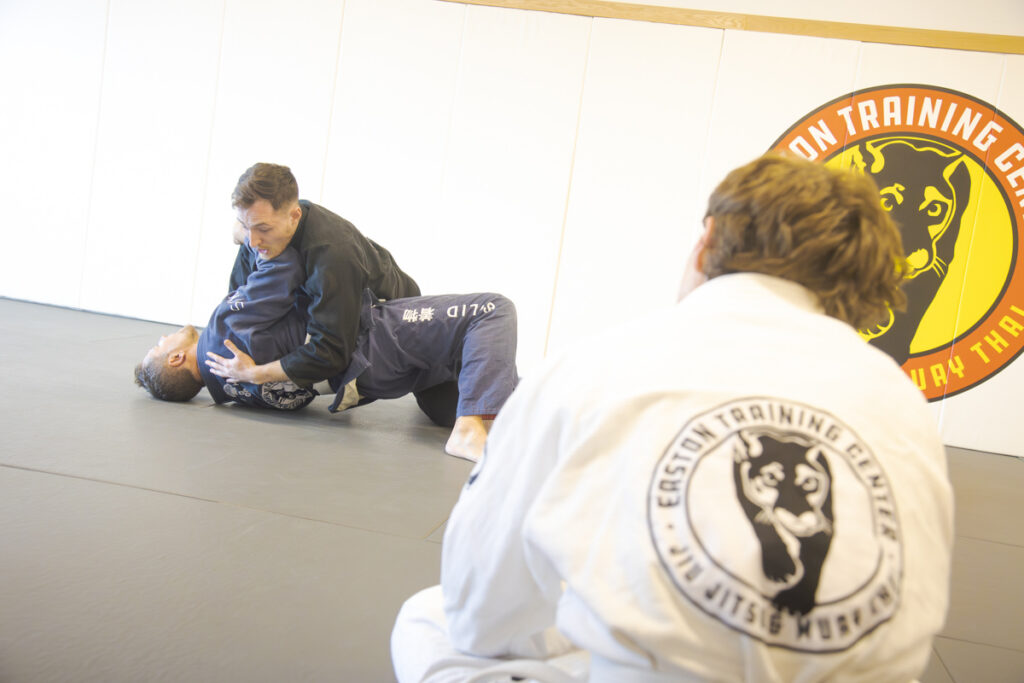
Coaches like Greg Souders promote an ecological approach to reshape how we think about training. Instead of focusing on perfect repetition, this perspective completely discards “drilling” in the conventional sense and emphasizes interaction, problem-solving and adaptation. It shifts the question from “Am I doing this move correctly?” to “What problem is this helping me solve?”
When learning Jiu Jitsu with the ecological approach, sometimes referred to as the Constraints-Led Approach (CLA), students learn through the use of “games.” Instead of learning an armbar step by step and drilling it 50 times on each side, two students might play a game where the bottom player works to isolate one of the top player’s elbows — and the top player is not allowed to fully stand up out of the position.
This approach has become popular in the last several years. It grew from the idea that when we train at full resistance, we rarely apply techniques the way we practiced them in class.
An ecological practitioner might ask, “How would you get good at armbars? Learning 50 different variations of an armbar? Or practicing controlling the elbow line, separating hands, creating angles and breaking our opponent’s posture?” They learn the mechanics of individual yet interdependent components, so they can later put them together in unscripted situations.
Why Jiu Jitsu drills don’t feel useful at first
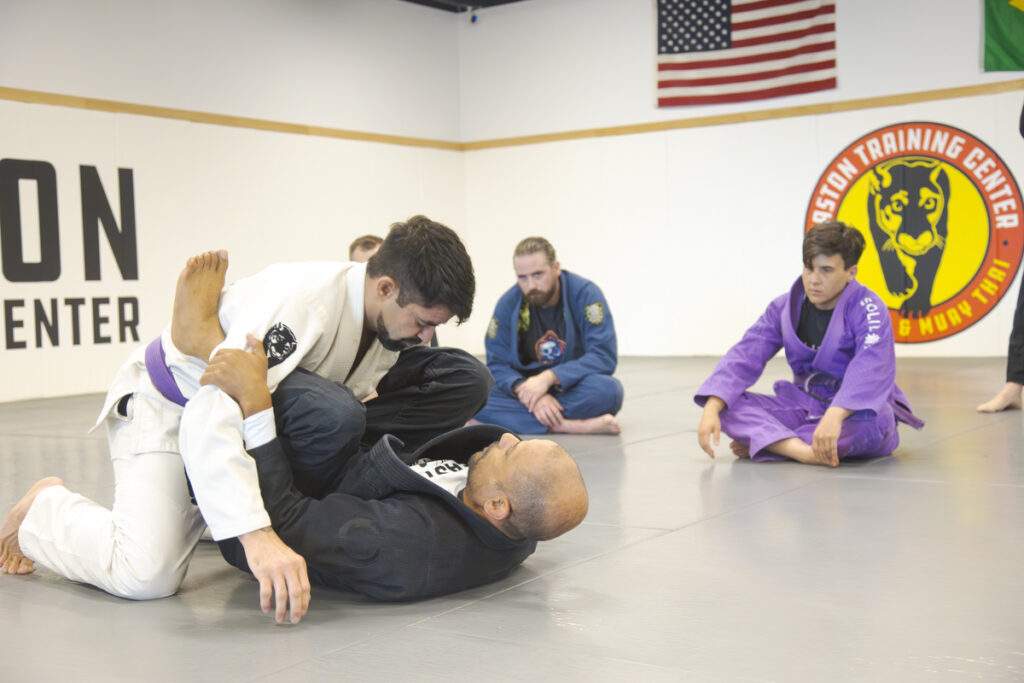
The biggest reason people abandon drilling (or abandon Jiu Jitsu completely) is simple: the payoff is delayed. It’s much easier to just show up and train. Not everyone has the time or wants to spend an hour repping out a foot sweep, or a setting up to a triangle or a combination of guard passes. Those all require real time, concentrated effort and attention to detail commit to muscle memory.
For most new students, live training feels like the most productive time in class because they can attempt to put their techniques into practice. However, those techniques wouldn’t be there if they didn’t get developed first through “useless” drilling.
Some students “skip warm-ups,” only showing up to class after the technique/drilling portion is done and live training begins. But for those who put real time into practicing new skills, the benefits may show up slowly, but they compound over time.
Because these changes are subtle, they’re easy to overlook. But they drive long-term progress. The athletes who stick with this process are often the ones who, months later, seem to have made huge leaps — when in reality, they’ve been building steadily the entire time.
From Technique to Skill
It’s easy to think of Jiu Jitsu as a linear process: Learn a technique; apply it; get results. But in reality, development is much less direct. It often looks more like exploration first, then skill development and finally the emergence of reliable techniques.
Those “useless” Jiu Jitsu drills exist in that first stage to expand what your body is capable of, giving you more options and more adaptability. Once that foundation is in place, a student can “pressure test” their techniques against live resistance and make adjustments. Over time they begin to emerge naturally and adjust to the situation.
The Long-Term Payoff
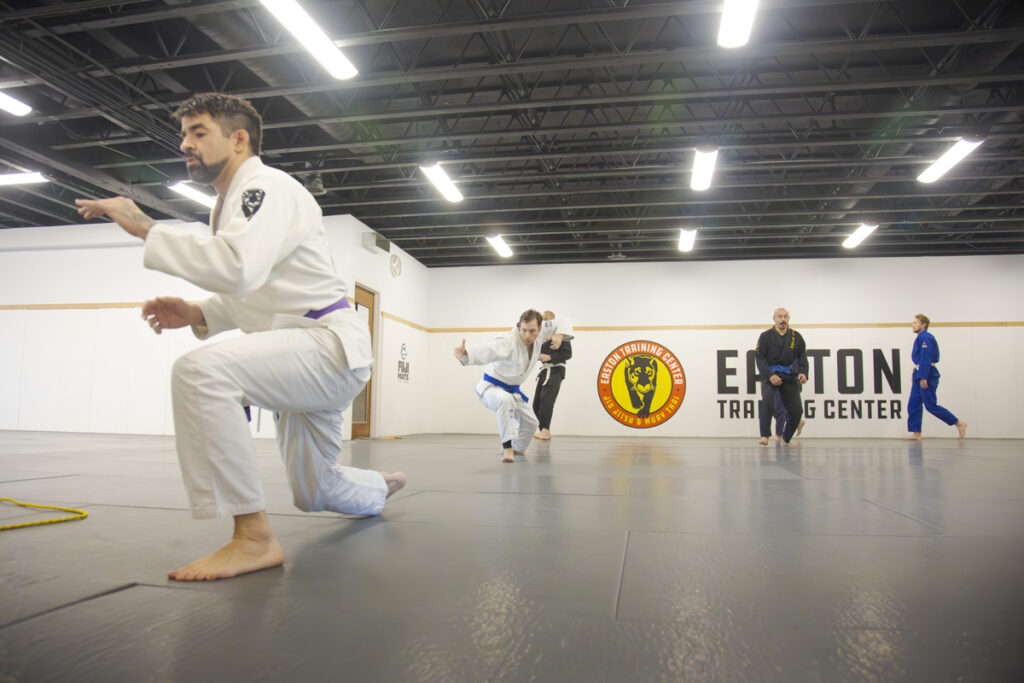
After we’ve spent some years in this sport, the value of these drills becomes clear. Athletes who embrace them and dedicate the effort tend to move more fluidly, adapt quickly, come out on top in scrambles and recover from bad positions easily. They seem to just create opportunities for attacks instead of forcing them.
Their Jiu Jitsu becomes less about memorized sequences and more about real-time problem-solving. And that’s ultimately what separates good practitioners from great ones.
Trust the Process, But Stay Curious
Whether you believe drilling is nonsense and the ecological approach is the wave of the future, or you’re on the grind dragging friends to the academy to use as grappling dummies so you can hit your 10,000-armbar-a-month goal, the message is clear. Both approaches have their value and develop different aspects of a practitioner’s overall “game.”
It’s important to stay curious and think critically about what you’re doing. But it’s just as important not to dismiss something simply because it doesn’t produce immediate results.
The next time a drill feels pointless, take a step back and ask what it might actually be developing. You might not see the payoff right away, but that doesn’t mean it isn’t happening.
In Jiu Jitsu, some of the biggest improvements come from the least obvious places.
And more often than not, the Jiu Jitsu drills that feel the most useless are the ones quietly building the skills that change everything.