
The Internal Season: What Jiu Jitsu Exposes
As a mom, a business owner, and someone who cares deeply about growth, I’ve learned that training has seasons. Some seasons feel loud and competitive. Others feel quieter, more internal, and less obvious from the outside – but they matter just as much.
Training needs to adapt during certain seasons for logistical reasons: family schedules, holidays and travel, work demands, preparing for a competition, recovering from injury or fatigue.
In those moments, adaptation looks practical: fewer classes, more intention, different priorities.
That part is easy. It’s visible. It makes sense.
But then another season shows up – one that feels less obvious, more confronting, and often more transformative: the internal season.
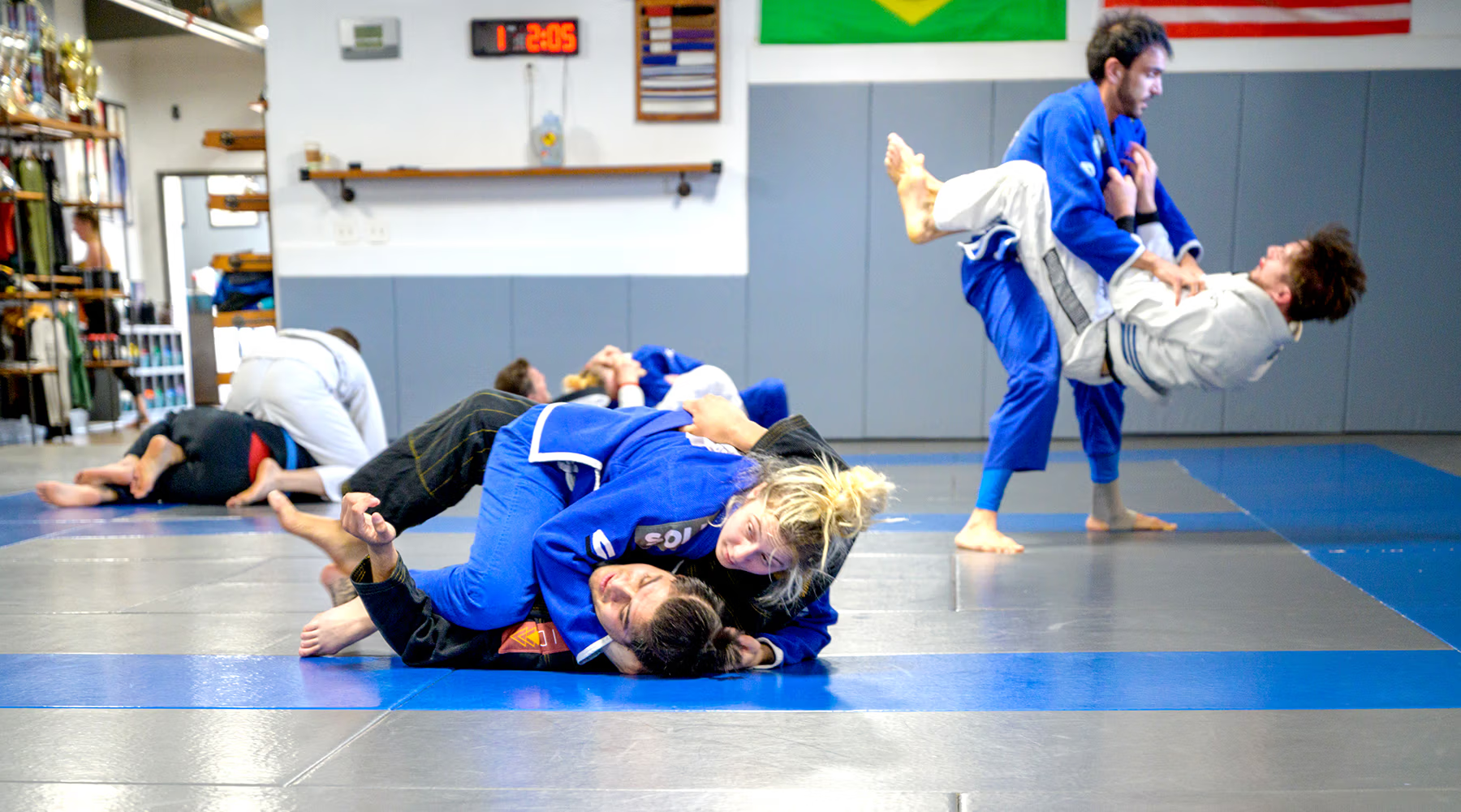
In these moments, Jiu Jitsu becomes a mirror. The lines between what happens on the mat and how I show up in life begin to blur and I begin to recognize that Jiu Jitsu doesn’t create my mindset patterns; it reveals them.
[The Other Half of Training: Mobility and Flexibility]

Here are some patterns that show up on the mat but that Jiu Jitsu tends to expose in our personal lives too:
1. The need for control
On the mat, control feels immediate and tangible, but Jiu Jitsu keeps reminding me: control is temporary. And that mirrors how many of us live off the mat – trying to control outcomes, people, and situations.
2. The need for validation
Some days we can train because we truly love the sport, but at times training can get overpowered by a need to feel seen, recognized, or “good enough.” When results slow down, the mirror shows what the motivation really was.
[Why We Leave Our Egos at the Door]
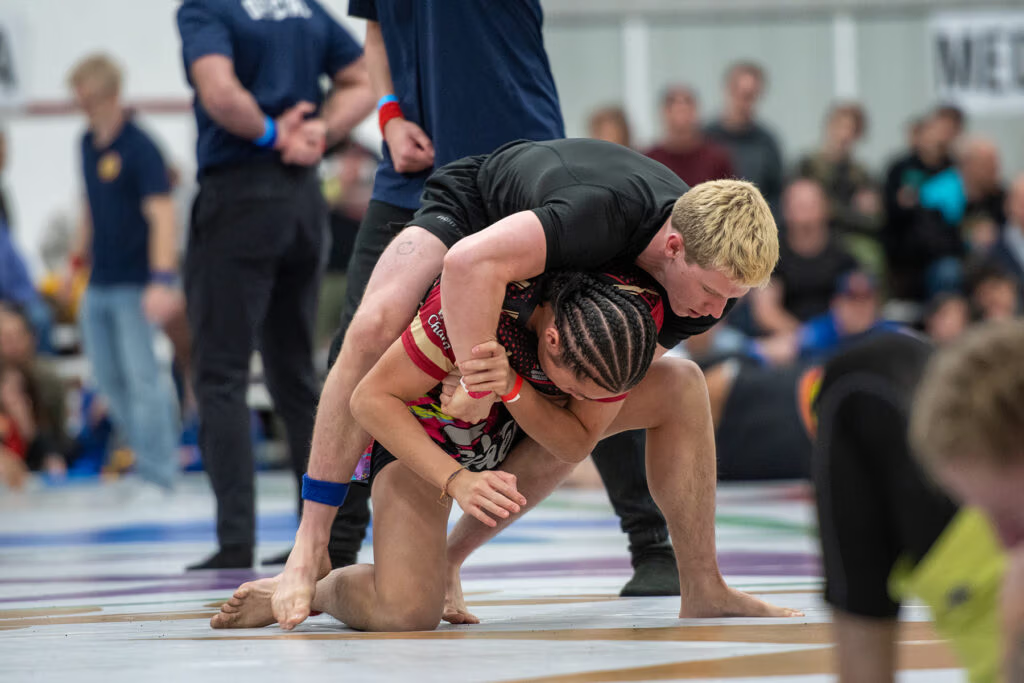
3. The tendency to quit when things get unclear
Jiu Jitsu is a slow-burn sport: improvement is often subtle and progress can feel invisible. So the question becomes: Do I only stay in situations where I get rewarded fast and clearly?
4. The fear of not being enough
Because Jiu Jitsu is hierarchical, sometimes I find myself asking: Am I worthy if I’m not advancing quickly? And I know this is a pattern many people carry in other areas of life too.
This internal season comes and goes – especially during moments of maintenance, or in between the other seasons – and it requires different goals: staying regulated, protecting joy, moving with presence, letting my level settle instead of forcing it.
This season feels quieter. Less dramatic. Less performative. And honestly? It might be the most important one.
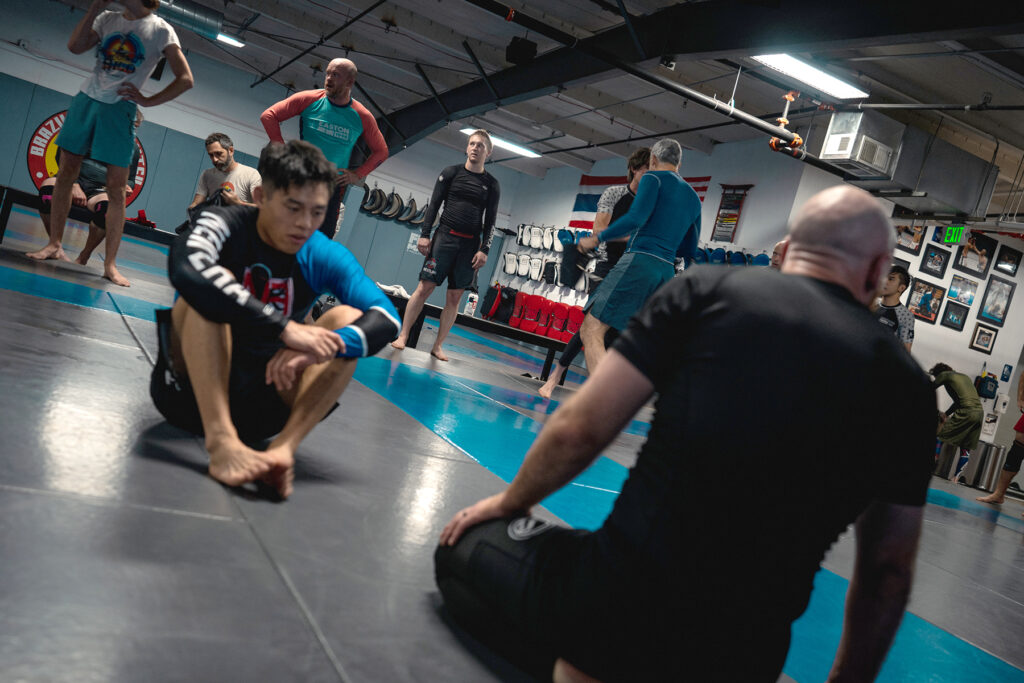
It is wild to think that grappling in class at a gym can ask the same question life asks in relationships, business, parenthood, and personal growth: Can you stay when you don’t control the outcome?
The difference is that Jiu Jitsu strips away the distractions. You can’t negotiate with it. You can’t intellectualize your way out. You can’t rush the process. You either stay or you don’t.
[Tapping Out or Tapping In? A Lesson In Perseverence]
Honoring Your Current Season
Adapting your training doesn’t mean lowering standards. It means listening honestly.
Some seasons call for expansion, others call for intensity or rest – and all of them count. None of them are a waste.
The ability to stay even when you don’t control the outcome isn’t just a Jiu Jitsu skill – it’s a life skill. Most of us don’t realize how much of our growth builds in the “boring” seasons, the ones without applause. And in this season, the most important lesson becomes less about recognition and more about who you become while you train: not someone waiting for a reward, but someone who stays anyway.