The Subtle Art of Grip Strength
If you’ve ever finished a Brazilian Jiu Jitsu class and felt your forearms burning more than your legs, you’re not alone — and that sensation tells you something important. Grip strength in BJJ isn’t just about squeezing sleeves harder or winning a tug-of-war with your training partner. It’s a nuanced, sport-specific component of performance that quietly influences nearly every exchange on the mat.
Grip strength can determine the difference between maintaining control and losing position, securing a submission or getting shrugged off, lasting through multiple rounds or fatiguing early. You might not see it emphasized in every strength program, but for grapplers — whether training in the gi or no-gi — grip strength deserves intentional attention.
[Should I Incorporate Strength Training Into My Grappling Routine]
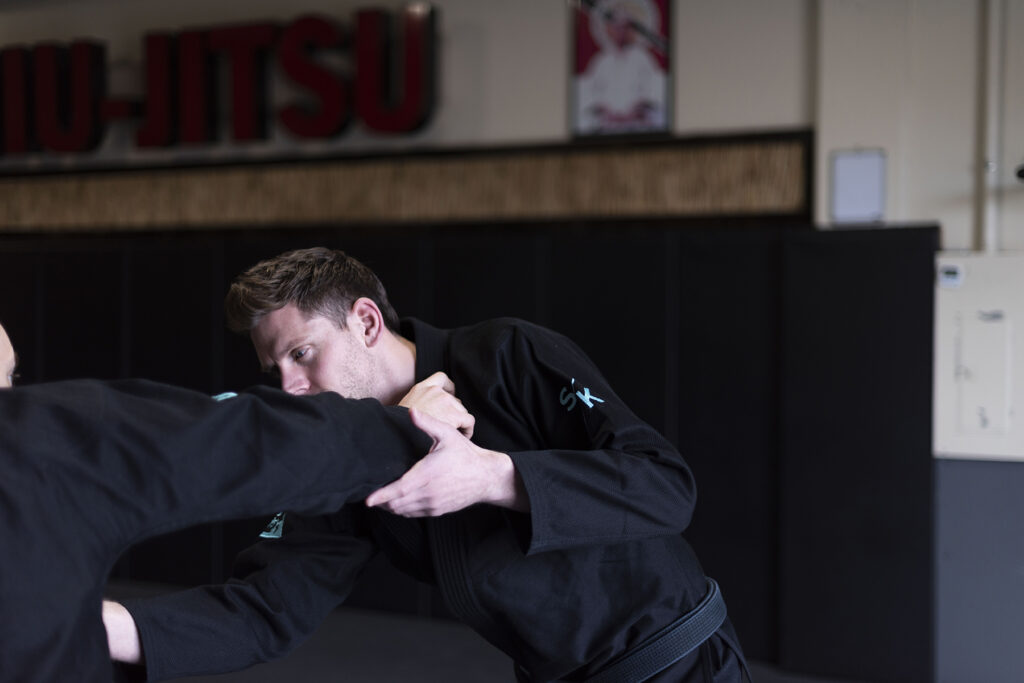
At its core, Brazilian Jiu Jitsu represents a grappling art built around continuous contact. Unlike striking disciplines where engagement comes in bursts, BJJ requires constant connection through the hands. In gi training, grips become the foundation for posture control, guard retention, sweeps, transitions, and submissions. In no-gi, the fabric disappears, but the demand on your hands remains, shifting toward wrist control, underhooks, neck ties, and limb management. Control still begins with your ability to connect and hold effectively.
However, many practitioners go wrong assuming that a stronger grip always means better Jiu Jitsu. While raw hand strength can be helpful, it’s only part of the equation. Grip endurance, efficiency and timing matter just as much — if not more. A death grip that burns out your forearms in the first few minutes of rolling doesn’t serve you nearly as well as a relaxed, sustainable grip that stays effective deep into training.
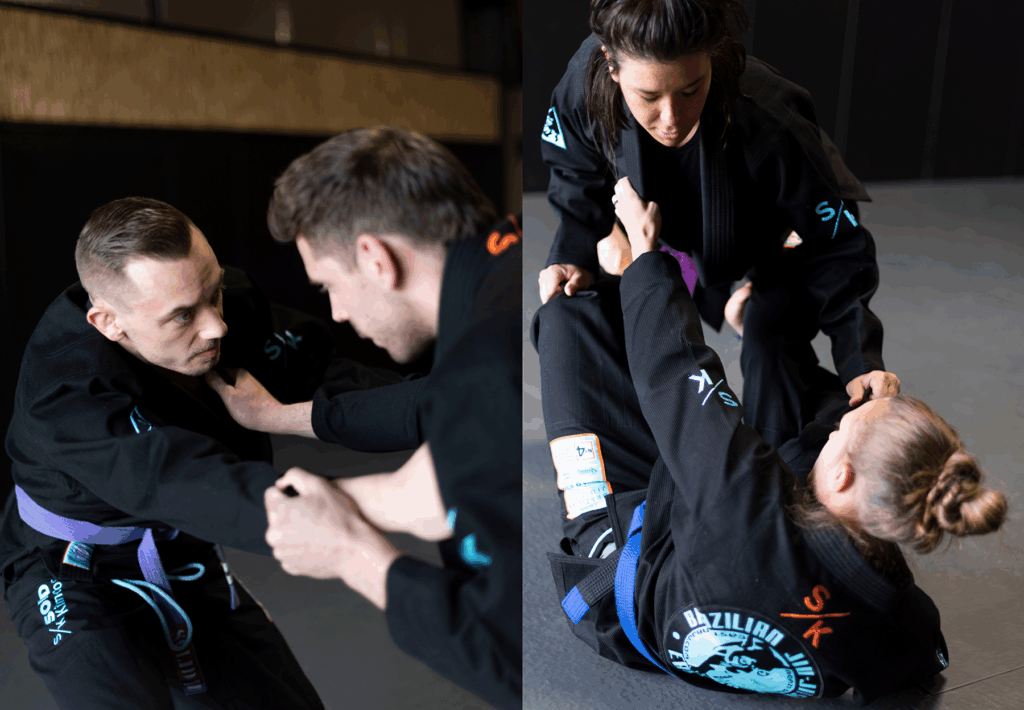
Grip strength in BJJ can be thought of in two distinct ways:
- Maximal grip strength — how hard you can squeeze in a single effort
- Grip endurance — how long you can maintain effective tension while your opponent is actively trying to break free
Most exchanges on the mat fall into the second category. Matches and live rounds rarely require one all-out squeeze, but they constantly demand moderate-to-high effort gripping with little rest. This is why endurance-focused grip development often carries over more directly to performance on the mat.
Strong, reliable grips influence every phase of your game. They help you establish control early, feel your opponent’s balance during sweeps, maintain dominant positions, and finish submissions with less strain. Defensively, good grip awareness allows you to slow down passes, prevent your opponent from setting their own grips, and create small windows to recover position. Over time, this turns gripping into less of a strength contest and more of a tactical exchange.
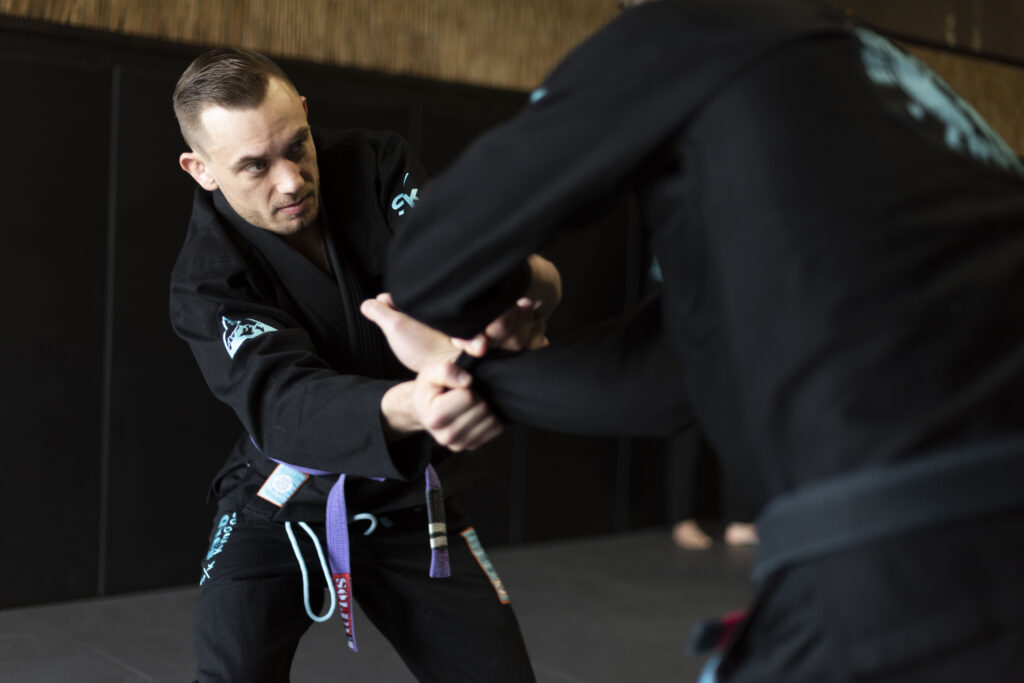
Improving grip strength
Improving grip strength doesn’t require complicated equipment or long training sessions. Many of the most effective methods integrate naturally into your existing routine.
- Gi pull-ups: using sleeves or collars to replicate real gripping positions
- Grip-fighting drills that build timing and endurance simultaneously
- Static gi holds during drilling to condition the forearms without extending class time
Outside of class, simple strength work can complement mat training:
- Dead hangs from a pull-up bar to build passive grip endurance
- Farmer’s carries to challenge sustained tension while moving
- Towel grips added to bars or handles to improve hand engagement for gi and no-gi
Optional supplemental tools can be useful, but should support (not replace) mat time:
- Hand grippers for isolated strength
- Forearm rollers for wrist and forearm development
- Rope climbs or climbing sessions for dynamic grip endurance
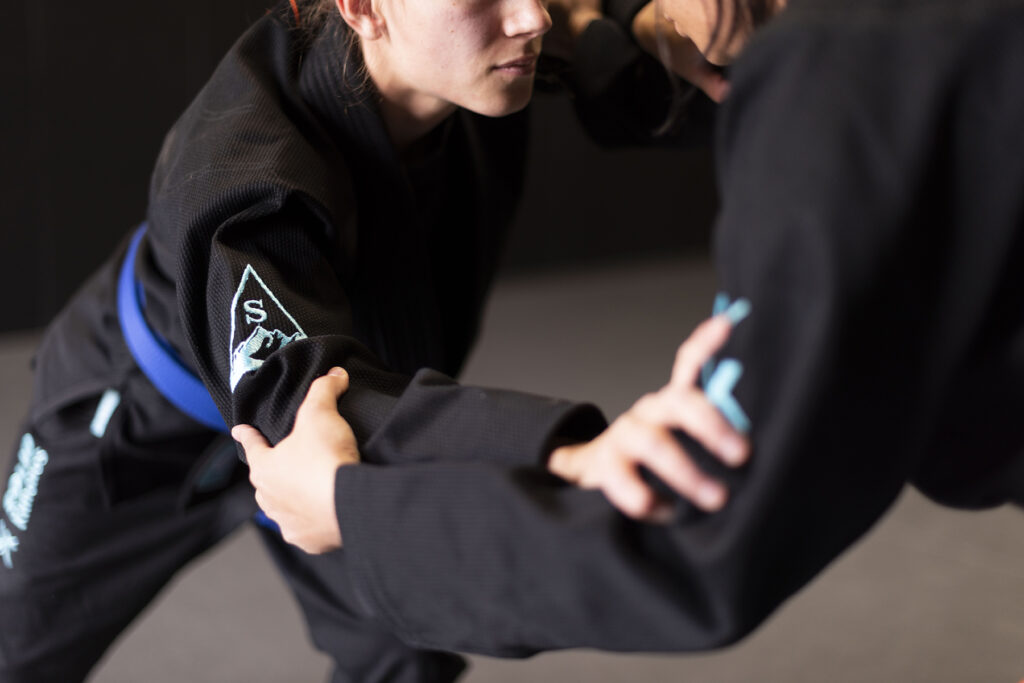
As with any form of training, grip work should enhance your Jiu Jitsu, not leave your hands constantly beat up. Over-squeezing, refusing to release grips, or stacking too much extra grip training on top of regular classes can lead to finger, wrist, and elbow issues. Smart grip training balances effort with recovery, includes mobility work, and allows time for adaptation.
Ultimately, grip strength in Brazilian Jiu Jitsu is less about overpowering your opponent and more about control, efficiency, and awareness. It’s a subtle skill that develops quietly but pays off everywhere — in smoother transitions, stronger control, and more reliable finishes. Whether you’re new to the mats or refining an experienced game, investing in grip strength with intention can make your Jiu Jitsu feel calmer, more connected and far more effective.