Denver’s Muay Thai Department Head, Daniel Amaro: Preparation Meets Opportunity
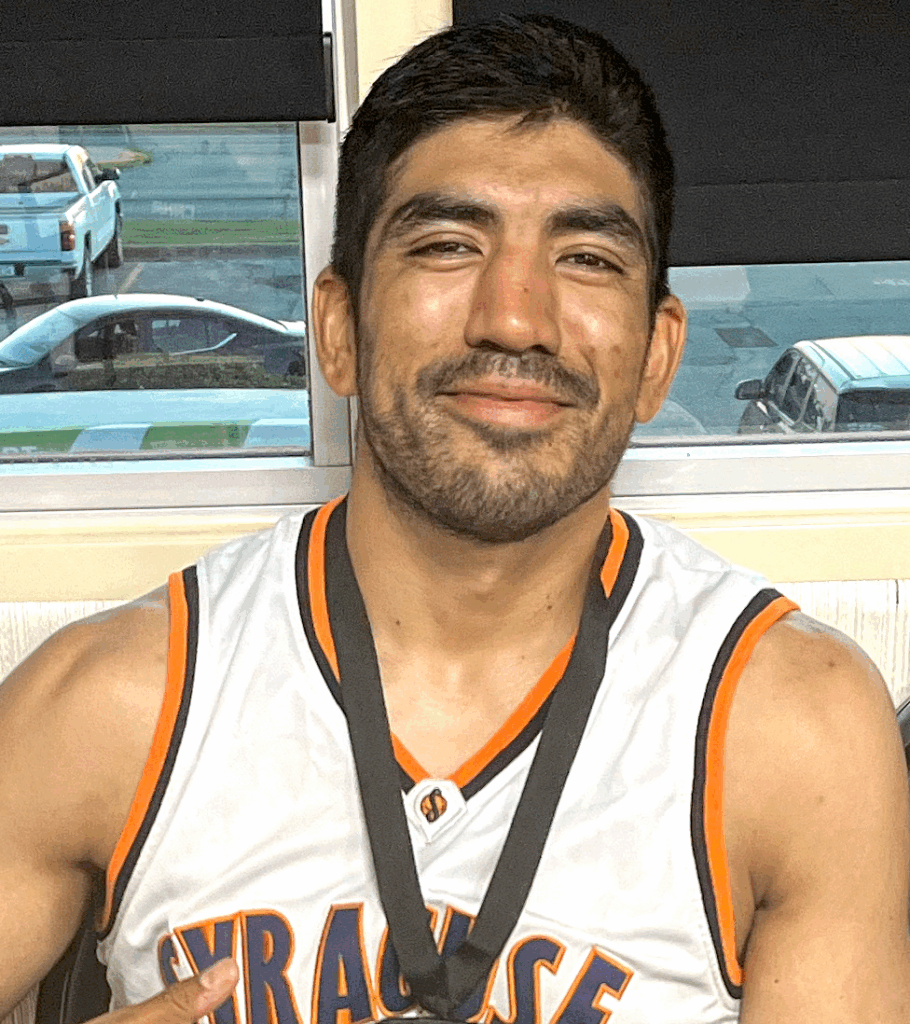
If you ask Denver’s Muay Thai Department Head, Daniel Amaro, when martial arts entered his life, he’ll tell you it started the same way a lot of great stories do: in a chaotic living room.
Growing up in the East Bay of California, every holiday meant a house packed with relatives, roughhousing on the floor. With all of his cousins eight to 15 years older than him, Daniel did whatever he could to keep up. One cousin — who shares both his name and his birthday — had a black belt in Brazilian Jiu Jitsu. Though not a large guy (“135 lbs soaking wet”), watching him effortlessly toss grown men around looked almost supernatural to teenage Daniel. That December, his cousin brought him to his first Jiu Jitsu class at Crispim BJJ, and everything clicked.
“I just remember, he was a small dude but everything felt so effortless,” Daniel recalls. “He could pick you up and slam you into the concrete but everything would be soft.”
That academy became his foundation. He trained nonstop, earned his blue belt early and reached purple before moving to Denver in late 2020. But martial arts didn’t just offer skills; it gave him clarity and structure. It taught him what it means to stay calm when everything around feels chaotic.
“Whenever I wasn’t training,” Daniel says, “I found I made worse decisions. I felt ungrounded.”
When training, on the other hand, life made sense. The consequences became immediately clear, the lessons humbling, and the structure grounding. As a big kid who didn’t always have confidence growing up, martial arts offered a safe place to figure out his identity and what it means to feel in control.
The transition to Muay Thai
Daniel first began dabbling in Muay Thai as a teenager, but remained primarily on the BJJ side until college when he began to train at Art of War in Oregon, where Kru Kobb Thongsai led the Muay Thai program.
After six months of boxing and encouragement from Kru Kobb, Daniel began joining the Muay Thai classes and fell in love. Later, in Washington, he trained under a kickboxing-based striking system while pursuing MMA for several years. Since joining Easton, he’s committed fully to Muay Thai, making it his primary discipline.
[Muay Thai Coach Terence Cheah: The Sanctuary of Structure]
Knowing when you’re ready
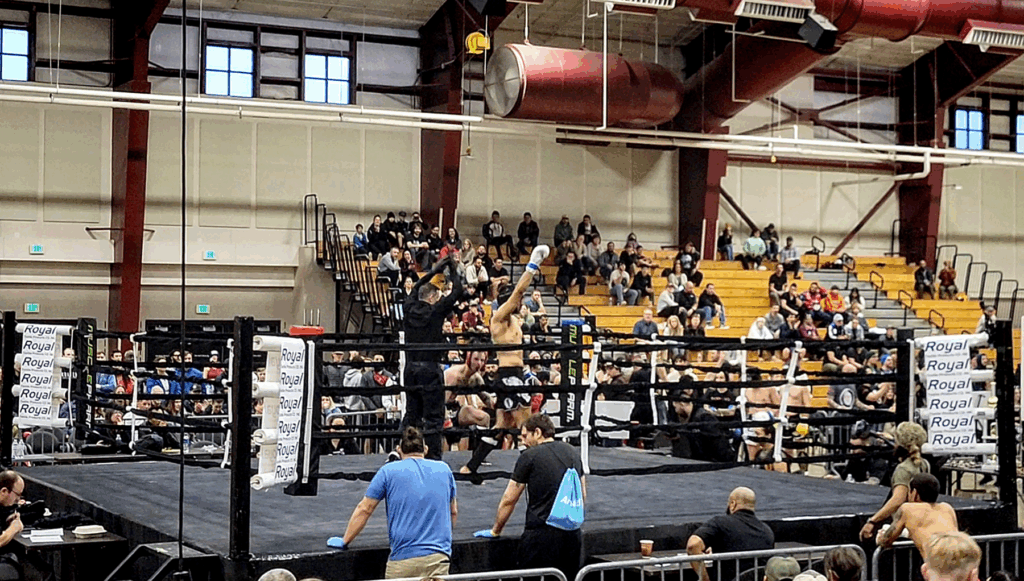
Today, Daniel’s competitive history includes seven Muay Thai fights, one MMA fight, a Washington smoker where he fought twice in one day, and a handful of BJJ tournaments as a teen. Initially, however, he did not enjoy competing.
As a kid, he did three competitions because it felt like the next logical progression and everyone encouraged him, but he didn’t find that experience enjoyable. The visible points, the ref making motions, all of these things confused him and took him out of the moment. It was chaos; he felt flustered and very unsure.
People frequently experience this when they first compete – in class, everything feels good but in competition it falls apart. An important step in everyone’s competition journey, these moments offer clarity and show what you need to work on (both in technique and navigating emotions on the mat), but for Daniel it also indicated he didn’t feel ready to compete.
“A big goal for me in martial arts,” says Daniel, “is to find peace within a chaotic environment, to be able to make rational choices under pressure.”
College brought him to Oregon, where he trained at an Art of War, a 10th Planet affiliate with lots of high-level practitioners. Now training all the time, Daniel even began helping get other athletes ready for fights. Coaches again encouraged him to compete, but Daniel still didn’t feel emotionally or mentally ready.
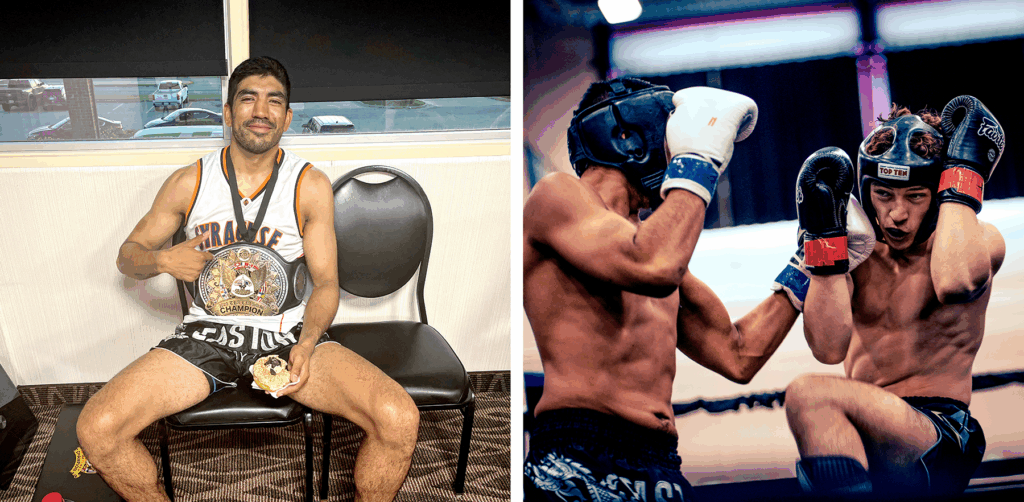
“If you’re not all-in,” he says, “especially in striking or MMA, it’s a dangerous game.”
After college, now living and training in Washington, Daniel woke up one morning with a feeling in his belly: Now is the time. He signed up to compete in striking for the first time. This time, the decision came from within, not from coaches or expectations.
[Training for Competition: A Breakdown]
Easton: when preparation meets opportunity
Daniel first heard about Easton in 2014 while touring colleges in Colorado. His professor back in California, Alexander Crispin, told him to check it out. He visited Easton Boulder with his dad that summer, got on the email list, and for the next six years received Easton newsletters in his inbox before he ever joined the academy.
He finally moved to Denver in 2020 when his girlfriend received a full-ride to law school. Balancing a full-time job in the oil and gas industry and training in Sean Madden’s evening Muay Thai classes, he joined the competition team and had seven fighting opportunities in quick succession. He also began coaching both Kickboxing and Muay Thai.
However, the turning point for Daniel came in 2024. Feeling stagnant in his job and having slowed down competing due to injuries, he asked Denver’s GM, Professor Carlos Espinosa (link) how he made martial arts a full-time career. Carlos explained his progression from front desk to department head to GM.
“You put yourself in a position,” said Carlos, “where you can take advantage of opportunities when they come.”
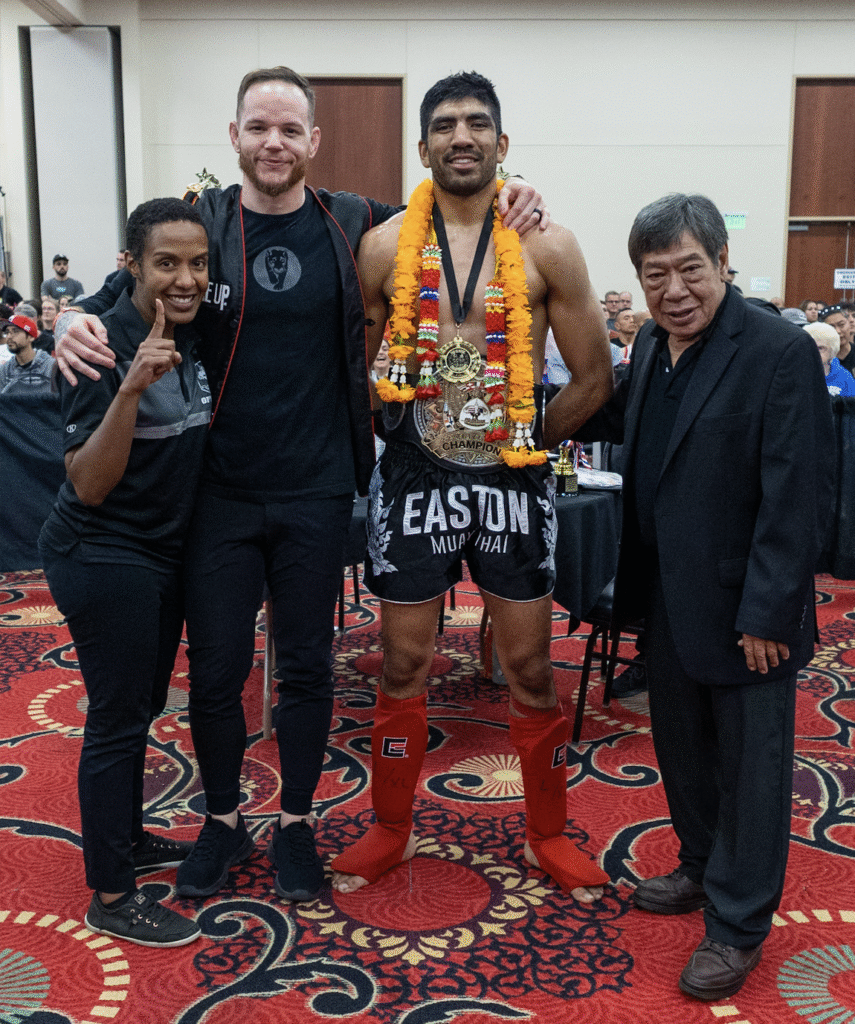
The very next morning, the stars aligned. Arvada needed a DFI, and someone from Denver’s front desk got the job. The door Daniel had only hoped to crack suddenly flew wide open. He started full-time at the Denver front desk that October. A month later, the Muay Thai Department Head position opened. Within three months, he went from environmental compliance to running an entire department at Easton.
He now coaches Muay Thai and Kickboxing, works full-time at the front desk and leads the Denver Muay Thai program.
“I’ve been putting in years and years of work on the martial arts side,” says Daniel, “building that foundation, and when the opportunity became available and it was the right time of life.”
Growth, whiplash and finding your place
After his last fight in 2023, the shift from competitor to coach came abruptly, which can feel emotionally disorienting. Competition demands a degree of selfishness; coaching demands the opposite. Some days Daniel still feels the whiplash in his role.
Having a hand in so many areas means learning how to delegate, trust your team and prioritize your time. It means getting crystal clear on your purpose to find your footing. Daniel went from fighter to coach, coach to front desk, and front desk to department head in under 24 months. That kind of rapid shift can leave anyone conflicted between where they can help best.
Through all the transitions, resets, role changes and injuries, Daniel’s core mission has remained: finding peace under pressure, making a life in martial arts and guiding others along their journeys.