
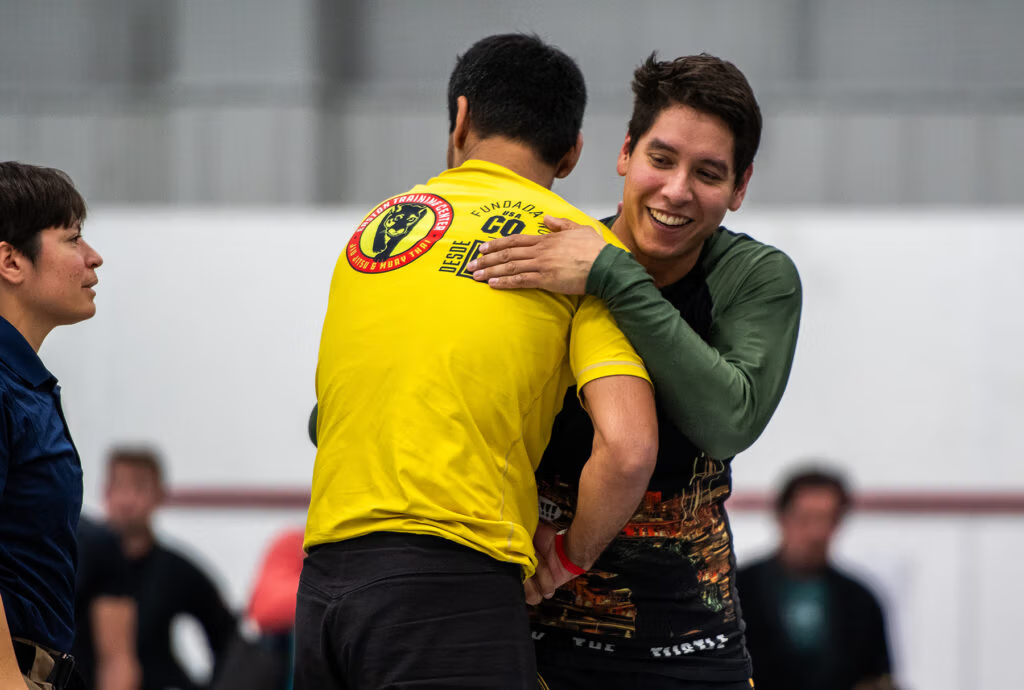
Imagine a place where all races, religious identities, genders, classes, and every other marker that could possibly divide humans could come together. They’d work in a physically demanding and intimate environment, yet despite beating each other up every day, somehow still get along with little conflict.
Does such a Utopia exist? Well, sort of. It’s called Easton Training Center and the martial arts practiced there allow this to happen.
How can such a place exist? And can this place set an ideal for humanity to strive for — and achieve? Easton Training Center, a martial arts school, teaches two combat arts, Jiu Jitsu and Muay Thai. It attracts everyone with an interest in these arts. At Easton, you meet people of all faiths, races, genders and classes, and everyone simply gets along — while at the same time trying to kill each other, of course.
The notion of combative violence being the key to humanity getting along seems ludicrous, yet it works.
[Community: The Heartbeat of Easton Training Center]
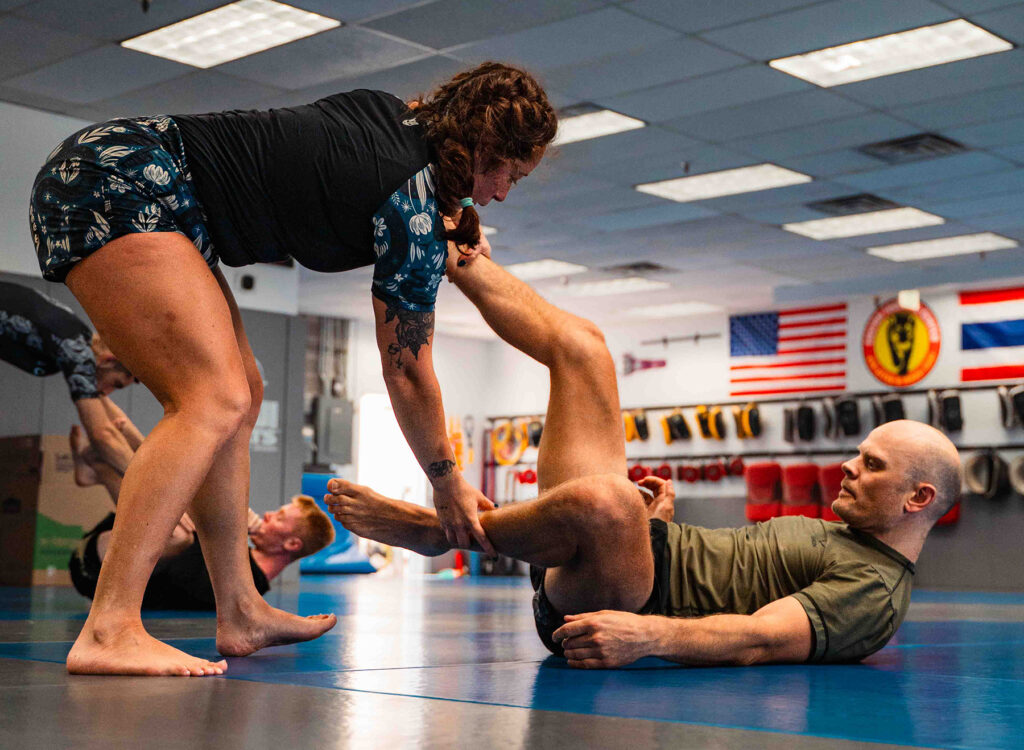
Martial arts impact on society
One way this works, both at Easton and other martial arts schools, is that the culture values merit and hard work. Race, religious identity and political affiliation become superfluous and non-essential in these arts. The only thing that matters comes down to skill acquisition. Once you enter the door, no one cares what you look like, identify with, or how much money you make. People just want to acquire the skills needed to defend themselves against others. That’s literally it.
Now, don’t get me wrong; race, religion, and class are fascinating subjects. In fact, I love talking to people in the locker room about all these cultural aspects because I think that’s what makes humanity so interesting in the first place. And Easton has a HUGE amount of cultural diversity. We have people of Islamic, Judaic, and Christian faiths. We have men and women. We have black and white. We have Hispanic, and we have so many different ethnic varieties of Asian people along with Caribbean tribes. And we certainly have every spectrum of political idealogy. If we tallied up the different identities, we could probably poll at least 103 different cultural identities in Easton Headquarters alone.
[5 [Seemingly Small] Things to Up Your Game in BJJ]
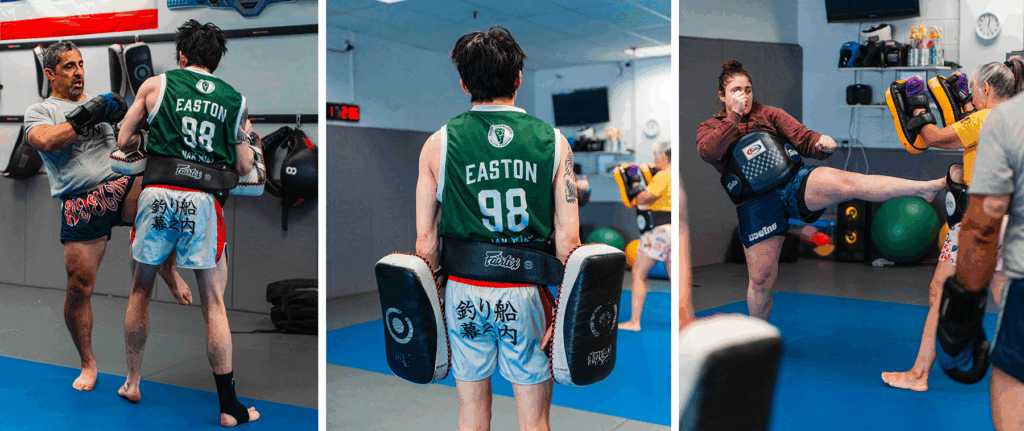
How do we all get along so well? Perhaps it’s because for the hour and half that all these different people are there, we don’t make that the primary focus of our lives. We put aside our unique eccentricities and focus only on the skill acquisition of combat effectiveness. It’s incredible. Literally trying to destroy each other brings out our higher human nature — which includes getting along and enjoying life. Afterwards, we even sometimes invite people over to our houses and have dinner!
Who would’ve thought combat arts like Jiu Jitsu and Muay Thai could be a model for world wide society?
[The People You Train With Become the People You Show Up For]
Impact of martial arts on the individual
That’s one positive for martial arts on the societal level. But society is a collection of individuals, so let’s look at how it exerts a positive influence on the individual as well.
When you go to Easton, you see a huge amount of people who spend extraordinary amounts of time there. Why? Because it’s fun and therapeutic. Jiu Jitsu and Muay Thai offer an often-overlooked form of therapy for the mind and emotions. One could argue it even more effective than traditional therapy (in certain contexts, of course.)
How is this so? The most obvious reason includes the unique training environment. I mean, we’re literally learning skills to either #1, kill the other person or #2, not let the other person kill us.

This type of exercise immediately thrusts the individual into a high degree of mindfulness and concentration. As the practitioner, you cannot afford to think about problems outside the gym while sparring because you’ll either get hit, choked out or submitted by a painful joint submission. Other types of exercise like lifting weights or cardio work don’t require this degree of concentration. You can do these endeavors completely mindlessly. (Just look at the amount of cell phone use during those two excercises.)
Mindfulness, a trending word in today’s current culture, presents itself as a necessity when practicing Jiu Jitsu and Muay Thai. The psyche, fixed on trying to survive or dominate in the arena of fighting, temporarily subdues the default thinking mind. Problems and stress temporarily cease because the practitioner can’t afford to think about them. To me, that is good therapy.
The other obvious therapeutic advantage has to do with the physical exertion and its subsequent positive effects on the mind. Exercise has long held rank as a brain performance enhancer. Why? For one — the influx of dopamine and serotonin to the bloodstream. Simply put, exercise makes us feel good. When we feel good, we perform better. It’s easier to handle life’s stresses from a more positive state of mind.

Lastly, something about the physicality of martial arts has a unique, positive influence on life. We could call these universal principles of martial arts. Now we could write a whole series of books on these principles, like Rener Gracie and yours truly have done, but for now let’s just use the Centerline Principle to illustrate this.
The Centerline Principle is simply the idea that if you control your centerline, or take advantage of the opponent’s centerline, you dominate the match. You can readily see this in closed guard, for example. If the bottom player pulls the top player’s arm across the center line, she or he exposes the top player’s back for attacks. Similarly, in Muay Thai, if the striker can make the opponent go across his centerline, she can attack the so-called “blind” side of the opponent.
If we then apply this idea of centerline on a metaphorical level in life, we could look at it as your deep core values. These values act as your personal centerline, forming your internal axis or foundation. You want to act from a place where your values direct you in every area of life. This helps give you a sense of purpose, and purpose-driven lives have a higher level of fulfillment and prosperity than those that do not.
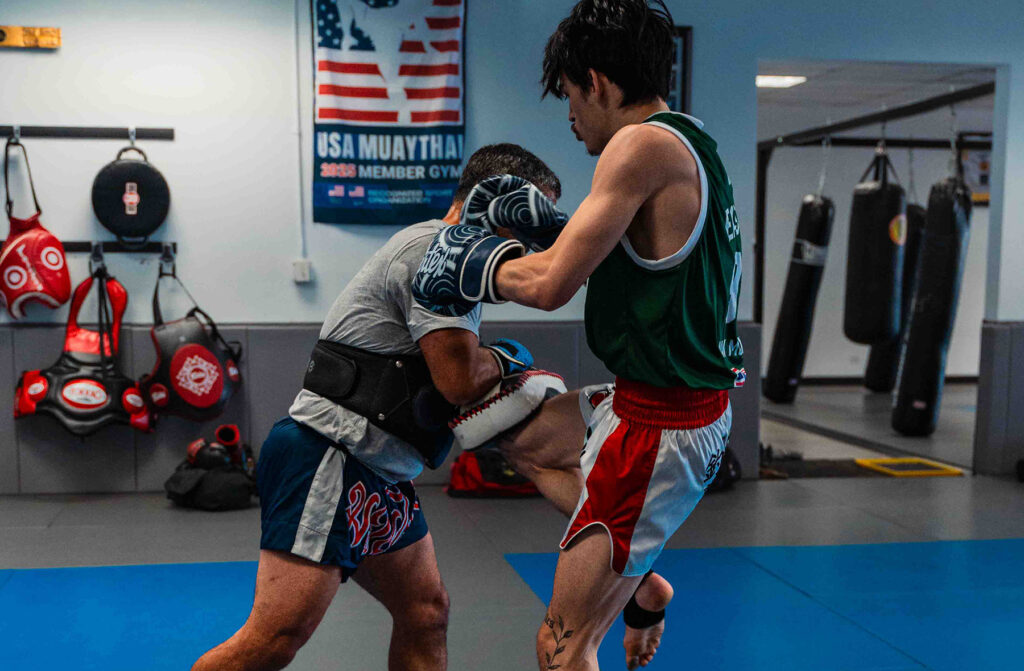
You never want external forces taking you away from your deep core values, so you must defend them with particular skills and thoughts. This requires using the same tactical strategy as defending your centerline in martial arts, but applying it internally for optimal living.
There’s a reason why martial arts have exerted such a profound influence on cultures throughout time and place on our planet. They are a reflection of life, both on the larger, macro level and the inner, individual levels — something all of us experience.