Anger Management in Martial Arts
“Watch where you’re ####### going!”
That’s what I shouted at a boy from my school after I’d dragged him by his backpack and thrown him against a locker. His crime? Bumping into me by mistake. Situations like these weren’t out of the ordinary for me growing up.
For much of my childhood, I lived in a house that normalized aggression, with screaming matches, breaking things and physical fights modeled by the people I looked up to most. I learned early on that rage got you heard. It was how you got your way and how you maintained respect.
When I moved into a healthier home as a preteen, I kept those beliefs with me. My environment had changed, but I had not. I ignored authority figures, lashed out at my peers, and was consistently described as being “snarky,” “nasty,” and having “an attitude.”
Without a doubt, the person who suffered most because of my anger was me. Spending most of my days in fight mode put significant stress on my mind and body. Walking around with my fists clenched and eyebrows furrowed made me miserable. If I couldn’t direct my aggression towards someone else, I directed it towards myself, which led to many destructive behaviors.
When I was 16, I knew that I needed something to help me. I had very few friends left, and my mental health had dipped to a particularly low ebb because of my inability to handle my emotions.
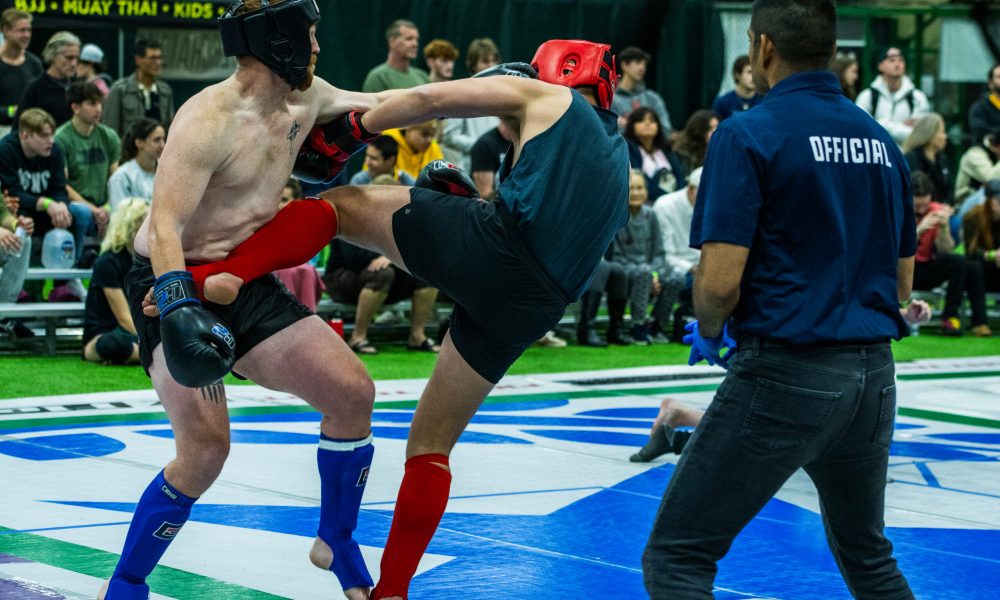
I decided to try Muay Thai to see if it could help channel my anger into something positive. I immediately fell in love with the sport simply for what it was. I didn’t think again about how training was affecting my mindset until months later, when I heard:
“You’ve chilled out a lot lately. You used to be so… mean.”
After people I knew pointed out the change in my demeanor, I realized the correlation.
How Muay Thai can make anger worse
Let me first clarify how Muay Thai does not help manage anger.
You might think transcending anger looks as simple as showing up to train, then punching and kicking a partner or a bag until the feeling passes. Doing so certainly will help you blow off steam in the moment. But when you choose to let anger control you during training, not only do you make a poor training partner, you also hinder your long-term growth. Your technique will become sloppy, and you will invariably make mistakes.
In addition, research has shown that by associating anger with violence, you train your brain to react with it. This means your mind will default to attack mode when something annoys you outside of training. When you channel rage into Muay Thai, you can actually turn yourself into a more reactive and hotheaded person. It’s like taking ibuprofen while running on a broken leg.
[Easton’s CEO + President, Mike Tousignant: From Bar Fights to Black Belt]
So, how does Muay Thai help?
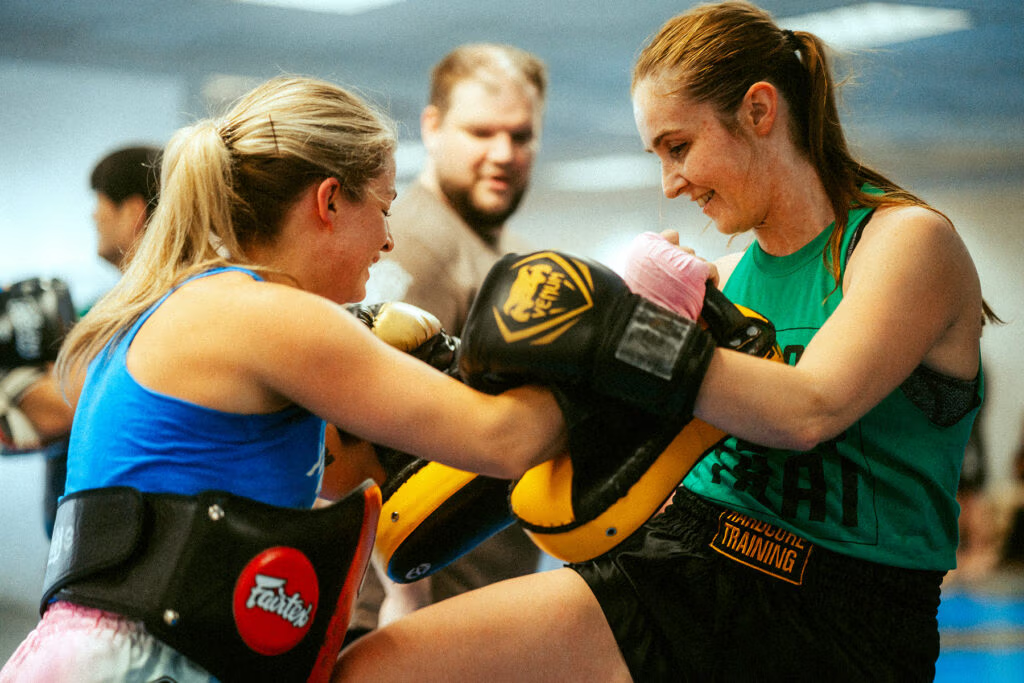
Exercise helps release tension in the body, burns off excess cortisol and triggers the production of endorphins. A full-body workout, Muay Thai serves as both high-intensity cardio and functional strength training. Although you can get the same positive mental effects from going for a run or lifting weights, Muay Thai is much more fun in my opinion! In the short term, training reduces anger and stress through physical exertion.
In the long term, Muay Thai does something that I view as even more important. It trains your brain to think strategically and clearly, even in frustrating situations. You can’t start swinging wildly when you get hit with a good shot in sparring. Many people throw at 100 percent in their first few sessions because they haven’t yet learned to handle the stress — a completely normal and human response! However, as you spar more often and with greater intensity, you learn to stay calm and think logically even in the face of frustration.
Lastly, Muay Thai teaches you to let go of anger readily. In sparring and fighting, either party may feel frustrated or hurt. However, when the bell rings, you have to stop and let go of any negative emotions you may be feeling. You and your partner or opponent show respect, and maybe even affection, for one another. You may touch gloves, slap hands, bow, hug, offer compliments or laugh about your round. The important thing is that you and they are putting aside whatever happened in the round to recognize that you have a common goal.
[Finding Community Through Shared Experience and Struggle]
The ability to think logically under pressure and to let go of anger easily transfers into your life outside martial arts. In the nearly two years that I have been training, I’ve become a markedly kinder and more peaceful person. The first instance that comes to mind happened just a few months back, during an argument with a loved one. I got defensive, brushed them off and went to training later that day, still peeved. I sparred hard and half-jokingly talked with my training partners about how much I needed it.
Taking class calmed and grounded me so much that, when I got home, I said something that would’ve been impossible to say when I was younger.
“Hey, I’m not happy with how I handled that earlier, and I’m sorry. Can we try talking again?”
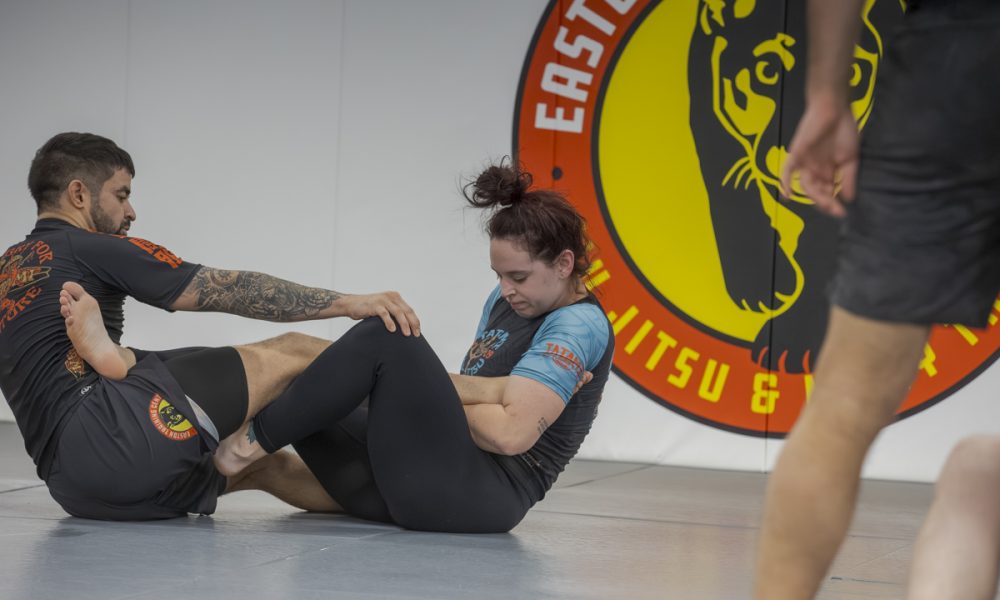
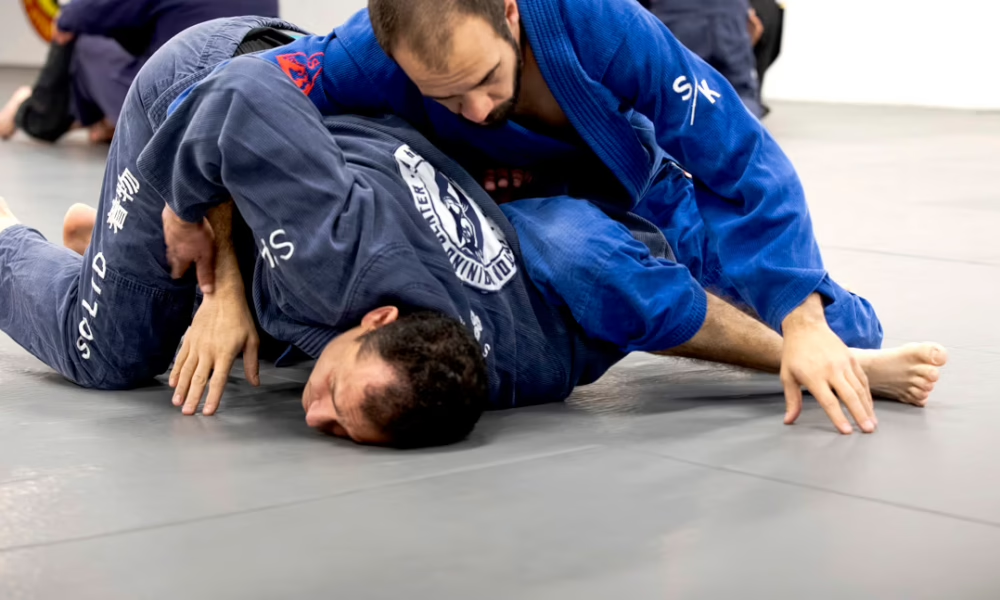
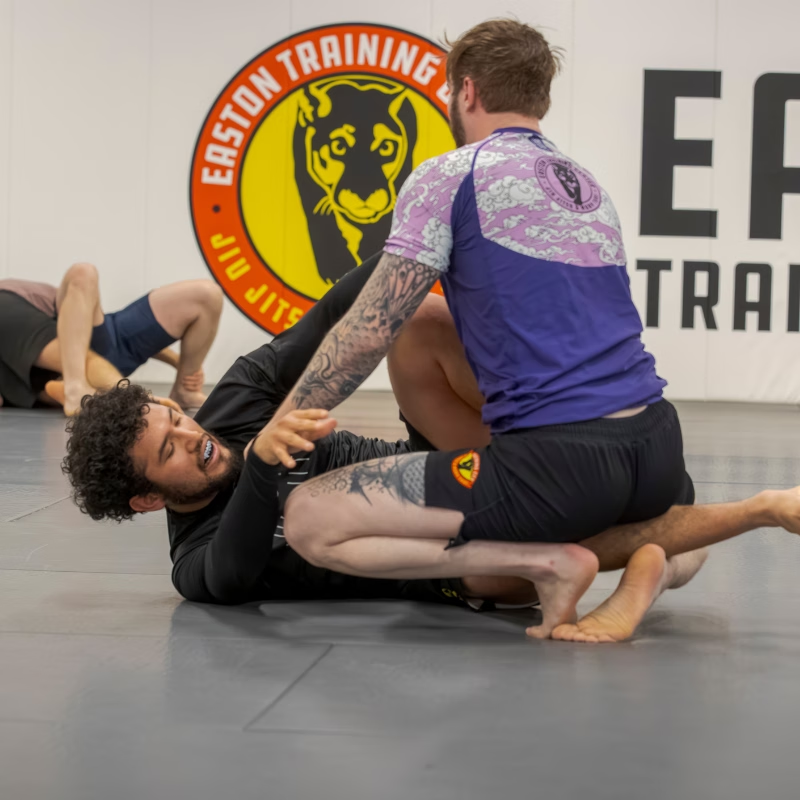
Whether or not we realize it, martial arts teach us to navigate aspects of life, managing anger as one of the foremost examples. Jiu Jitsu, which I also recently started training in, offers the same benefits. If you’re considering trying either discipline to help you navigate your emotions, I urge you to give it a try. It might surprise you just how much it can do for your mindset.