Staying in the Game: 3 Tips for Martial Arts Longevity from Elite PT Matt Smith
In the local physical therapy scene, Dr. of PT Matt Smith has a well-deserved reputation as “the fixer.” He works with a range of patients, from elite athletes to everyday people, but he often picks up the most complex cases, rehabilitating severe injuries.
“I like the challenges. I like the big cases,” he said on the latest episode of the Easton Community Podcast. “When no one can find answers anywhere else, I like to be that guy.”
Originally from Philadelphia, Matt got his first job after graduate school in Denver, where he worked in orthopedics. He spent a few years there, followed by a few years in Vermont. Eventually, he ended up in Boulder, where he began working with endurance athletes, combining his physical therapy and strength and conditioning background to keep them at peak performance.
Over the years as his skills and reputation grew, Matt started helping higher-level athletes with their training and recovery, including Olympians. Today, he’s the Performance Trainer at Longevity Health, where he works with Easton black belt Dr. Vassily Eliopoulos.

Matt’s athletic journey
Matt has always been an athlete himself, and he found his way to Jiu Jitsu after training for many years in other sports. He played college lacrosse and even briefly played professionally. He spent some time in the endurance scene, competing in a half-Ironman race.
But by his early 30s, he was looking for something different. He’d heard about Jiu Jitsu through podcasts and the UFC, and decided to give it a try. He joined Easton Boulder.
“I had such a good initial experience,” he remembers. “It felt really good. It felt welcoming and it was completely different than anything I had done in my adult life, and that felt right.”
Today, Matt is a brown belt. Through his first-hand experience training, plus nearly a decade of working with Easton members and staff, he brings a unique physical therapy perspective to those seeking longevity and sustainability in their martial arts training.
On his recent appearance on the Easton Community Podcast, Matt outlined his top tips for martial arts longevity and how to stay strong and prevent injury at any age.
#1: Master the decade rule for recovery sessions
Young people recover quickly. Optimal hormone levels and healthy connective tissue make it easier to bounce back from hard workouts or even injuries.
But as the years go by, the human body needs more maintenance just to stay functional, let alone to keep performing at a high level. Starting around age 35, most people experience a shift. Setting aside dedicated time for recovery and mobility becomes essential.
But how much time should you dedicate to this maintenance? Matt says that for every decade of life, you should do one session per week of recovery. This means that a 40 year old should set aside time for four sessions of recovery work every week.
The sessions don’t need to be long; 5-30 minutes is enough. They can include self-directed work like static stretching or foam rolling. They can also include sessions with a professional, like massage therapy or dry needling.
Since stretching is the least exciting part of training, it can be hard to prioritize. Matt recommends “habit stacking,” or linking recovery sessions to another activity in your schedule, like watching TV.
He also points out that you shouldn’t only do recovery work when you’re injured or hurting. It’s an important tool for prevention. Consistency beats perfection, so just start doing something and stick to it.
[Elevate Your Recovery: 8 Essential Stretches for Brazilian Jiu Jitsu Athletes]
#2: Apply the “inside-out” biomechanical rule
Joint strain is cumulative. Limited mobility in one joint means that the body must compensate by making the outer joints work harder. For example, elbow pain in BJJ players is often the result of limited shoulder mobility.
Matt says that when restoring mobility to the joints, working first from the core, then outward to the extremities is the best method. That is, work on shoulders before elbows and hips before knees. This way, the mobility gained in the bigger joints assists with the referred stress and pain in the external joints.
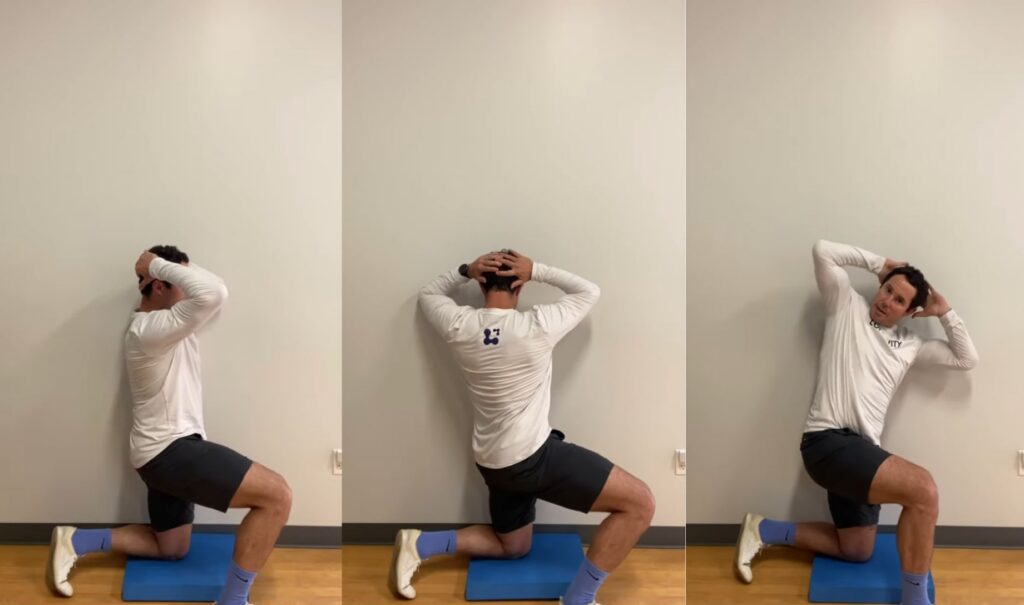
For Jiu Jitsu and Muay Thai practitioners, thoracic spine mobility determines a lot about performance. Many of the twisting motions in both sports originate in the thoracic spine. So, those seeking martial arts longevity should integrate spinal mobility exercises into their recovery sessions.
Matt recommends:
[YouTube Playlist: Matthew Smith Exercise Videos]
#3: Build a supplementary routine
Training for peak performance and longevity in martial arts means doing more than just your usual Jiu Jitsu and Muay Thai classes. In addition to the weekly recovery sessions, Matt recommends incorporating cardio and strength training into your routine.
Three sessions of cardio work per week is ideal. One session can be moderate intensity zone 2 cardio, that is, 60-70% of your maximum heart rate. The other two sessions should be high intensity and target your VO2 max, or the maximum volume of oxygen that your blood can carry.
The VO2 max sessions can be short. Matt recommends a 20-minute session with intervals of 20-second sprints and 40 seconds of rest.
The strength workouts will depend on your current training goals. Two sessions per week of 45-60 minutes each is sufficient for most people.
In all training, Matt emphasizes that listening to your body is the most important way to stay healthy. Wearables like the Oura Ring or WHOOP can give useful data, but they’re often measuring lagging indicators.
So take your subjective experience into account. If you’re starting to feel run down, knowing when it’s time to rest could prevent an illness or injury.
Training sustainably for long-term success
Both 43 now, Mike and Matt remarked frequently during their conversation that their approach to training has changed as they’ve gotten older. Jiu Jitsu and Muay Thai are dynamic and unpredictable sports, and training hard every week takes a toll on the body.
To ensure martial arts longevity, it’s crucial to be intentional both in training and recovery.
Matt’s advice?
“Find a routine. Everyone is always searching for the perfect routine… and I would say create a habit of anything—of mobility, of tissue maintenance—and just start instilling that routine into your life a little bit more. Just get started being proactive.”
Listen to the full podcast here!