
Professor Beth Huddleston: Finding Your Voice + Supporting Others
Community plays a massive role in a healthy martial arts academy, and certain individuals become central pillars on the mats over time. Not necessarily because they’re the loudest voice in the room or the one leading every class, but because they listen, encourage and quietly help hold the community together.
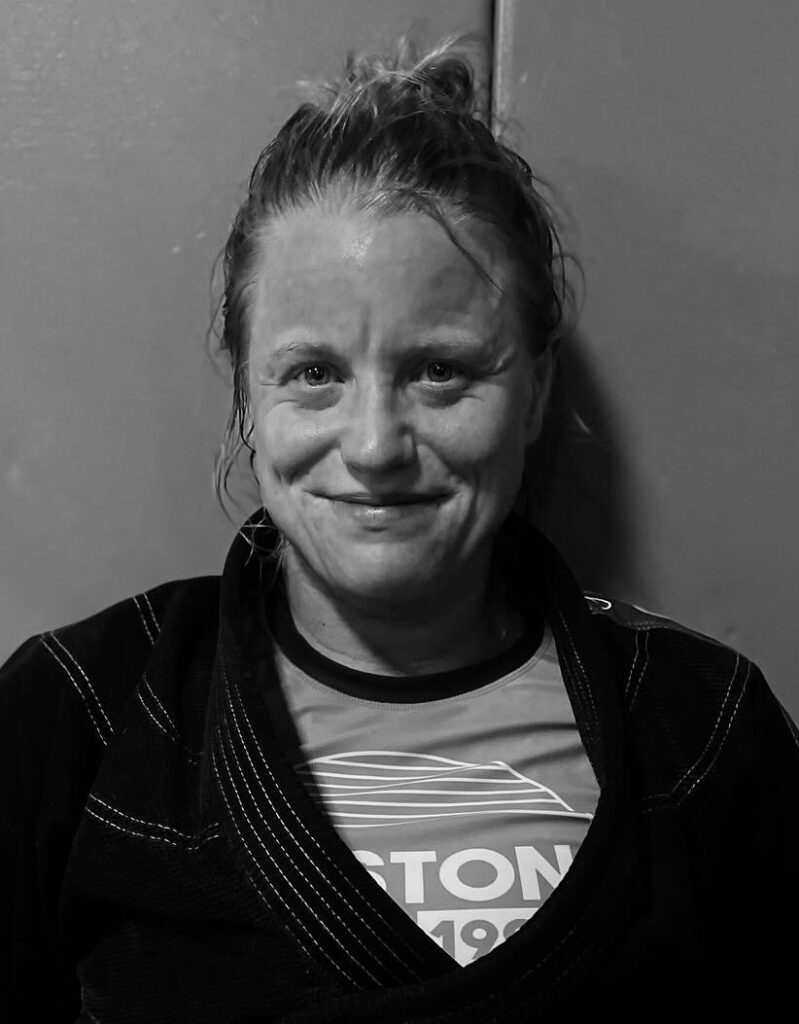
At Easton Training Center, Professor Beth Huddleston has become one of those people. An Easton black belt and longtime competitor, Beth has become someone many students trust as a sounding board, helping them find their voice and keeping them honest.
While she doesn’t technically work for Easton, she has a steady presence on the mats and in the academy. Beth describes her role simply: part of the supporting cast.
“I’m a big cheerleader,” she says. “People come to me with different issues and I try to listen.”
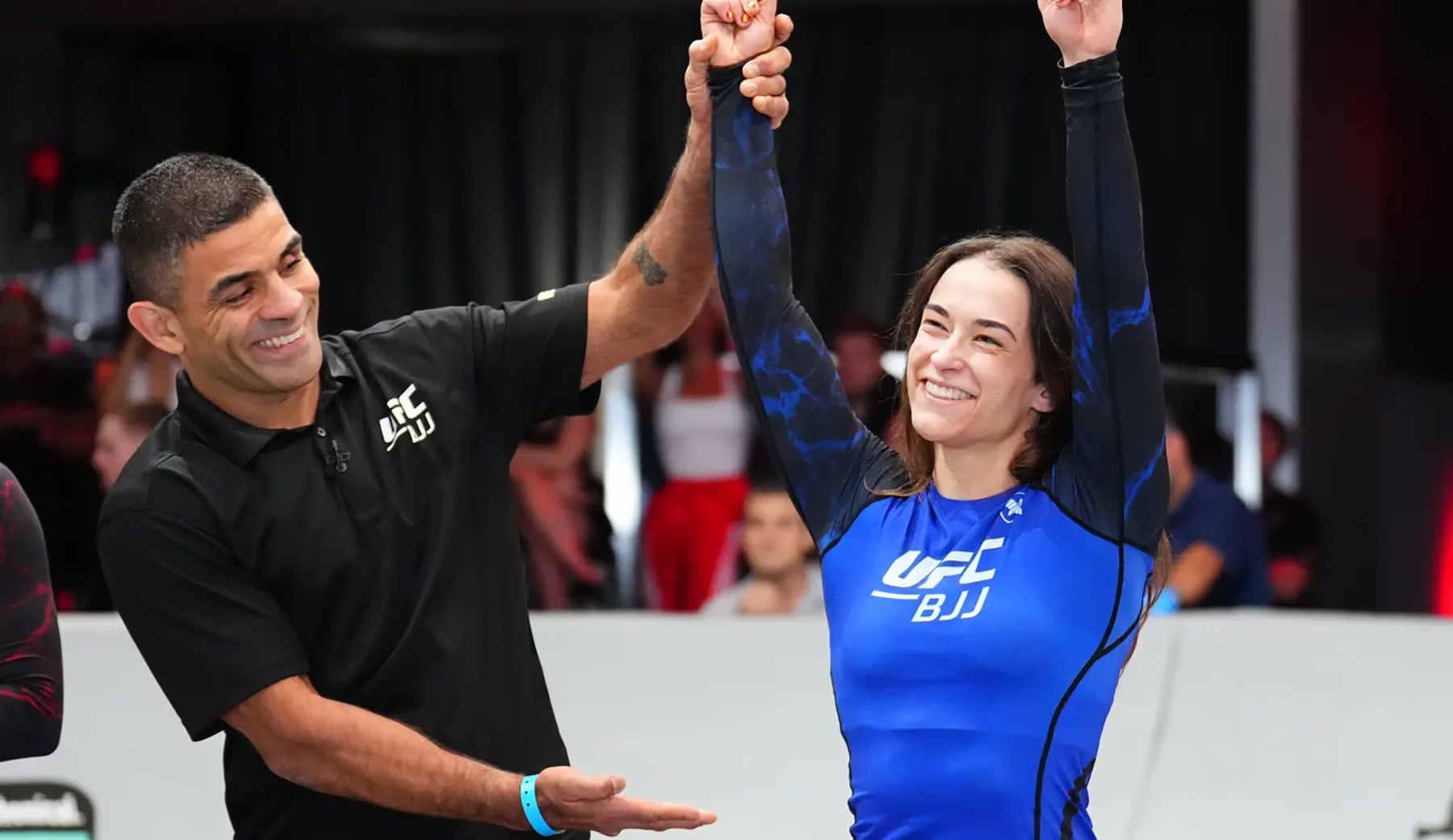
In many ways a black belt of any school represents that school wherever they go. They may not get a paycheck, but they play a huge part in communicating the value of that academy through their conduct. From this position, Beth does a huge amount of work behind the scenes to help make a safe space for everyone on the mats – especially our female community.
For Beth, that role developed gradually over the years. When she first encountered martial arts, she wasn’t exactly enthusiastic about it.
[Women in Martial Arts: Defying Expectations and Setting New Standards]
From company to necessity
Beth started training around the end of 2012. Her husband, Professor Alex Huddleston, fought professionally in MMA at the time, so as a result, Beth spent a lot of time around gyms and martial arts academies. The environment (very bro-heavy at the time) didn’t immediately appeal to her, but an incident at work changed her perspective.
As a nurse practitioner in a hospital’s psych ward by day, Beth works with a lot of unhoused patients and those experiencing opiate addiction. At the time, however, she was working in an emergency room when a patient attacked her. After that experience, learning to defend herself started to feel necessary.
“That’s when I started training” she says, “to make myself feel more safe in spaces. Especially as a woman, being comfortable with patients who are over the top and unpredictable.”
She began training consistently at a school affiliated with American Top Team. There weren’t many women in the room, but one instructor left a lasting impression: Leana Dietrich, a black belt Pan Ams and Worlds champ who helped lead the BJJ program. Seeing a female leading the classes and bringing a leadership energy to the community made Beth realize she wanted to be that for other women some day.
In 2016, the school she trained at closed. Beth and Alex transitioned to Easton Training Center in Castle Rock, where they trained for three years with Alex teaching until he got offered the role of BJJ Department Head in Boulder.
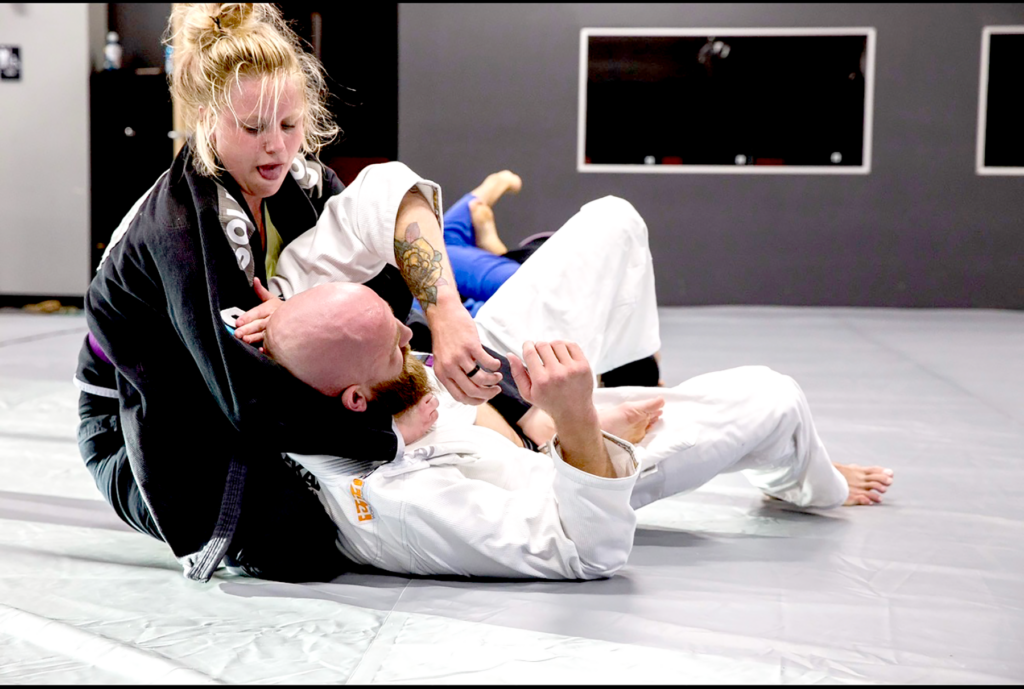
Since then, Beth has played a vital role in making people stay on the mats, helping with competition prep and even holding randoris.
[Women in Martial Arts: the Journey Through Time]
Multidimensional impact of martial arts
For Beth, the impact of martial arts spans far beyond the self-defense she started for. From the community she’s built to the way she shows up in the world, martial arts has affected every corner of her life.
Growing up in a small town without much family, having a space that brings the same people together multiple times a week to grow, work and play has given her something she’d rarely experienced before.
“Just having this big community of people,” Beth says, “has been the best part…building relationships with people and watching them grow in their personalities and beliefs.”
As everyone who trains has experienced, you build a unique connection when you’re choking people on the mats numerous times a week while talking about life problems.
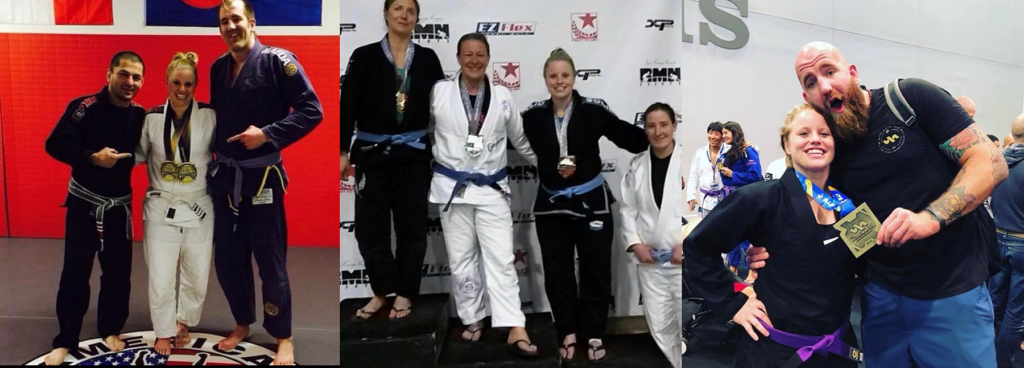
Over time, as Beth grew more comfortable within her own Jiu Jitsu, martial arts journey and voice, she naturally stepped into a supportive role – encouraging teammates, checking in with newer students, and helping people feel comfortable in the room.
In daily life, martial arts has helped her show up for herself and others in a more honest, present way. Coming from a chaotic home, Beth often felt lost; Jiu Jitsu has helped guide her, ground her and allowed her to work through a lot of those things from her early life.
Along with giving her a place to work out her emotional and mental noise, the mats also offered good role models to emulate.
“I’m going to carry myself like the other black belt females I’ve seen,” Beth remembers thinking. “I want to embody those role model tendencies – someone who, if I had a daughter, I’d want her to look up to.”
Jiu Jitsu has given her a moment to slow down, stay present in the moment and helped her become a better person, friend, training partner and listener.
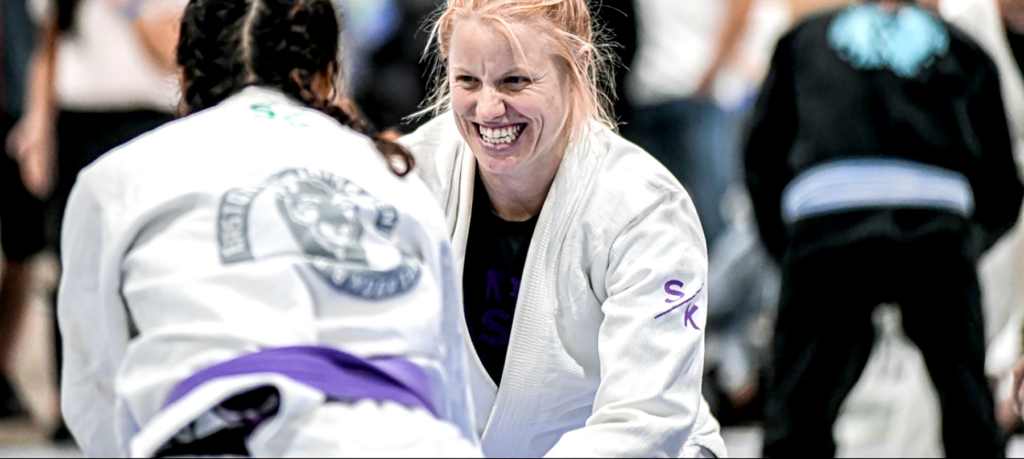
Lessons from the long road
Beth received her black belt in September 2022, nearly a decade after she first started training.
Like with nearly all practitioners who have trained for years, the black belt didn’t come without its challenges. Early on, Beth often trained with much larger male partners due to a lack of women on the mats. Those rounds pushed her technically and as an athlete, but they also came with moments where she felt a male partner going lightly because she’s a woman, or occasionally saying something inappropriate.
These moments posed different challenges, each pushing her towards finding her voice and learning how to advocate for herself. Today, if she feels a male going too hard or doing something not BJJ-appropriate, she has no problem pulling them off to the side, but this took time.
“At the beginning,” she says, “I’d eat a lot of things; I’d cry, I’d quit.”
In these moments, one of the biggest challenges for Beth became remembering why she started and showing up for herself no matter the outside circumstances. Over time, she became more comfortable using her voice, whether that meant addressing something inappropriate or simply declining a training round that didn’t feel right.
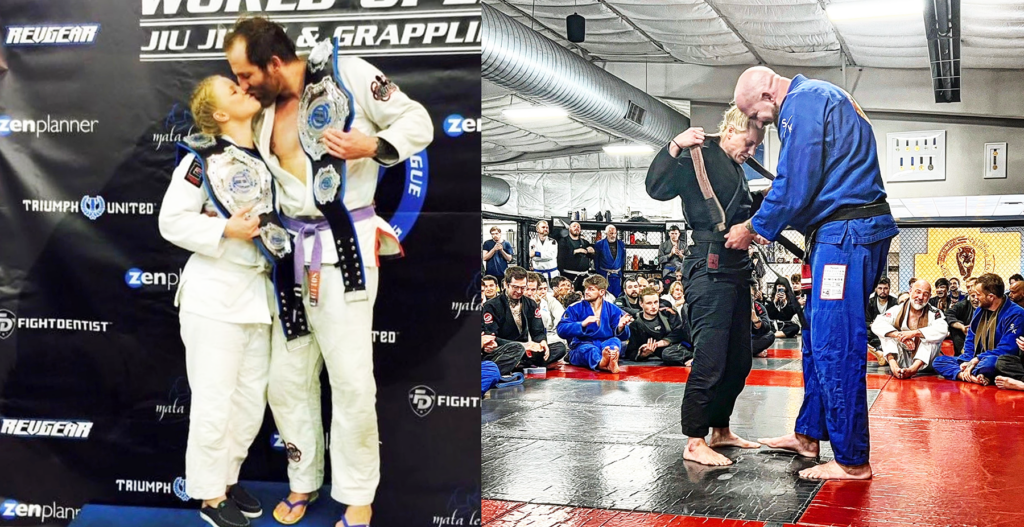
That skill becomes even more important when injuries enter the picture. Growing up playing softball competitively, Beth had experienced her fair share of injuries. After dealing with multiple knee injuries, Beth began approaching training from an angle of risk management – knowing how far to push herself to grow without taking herself out of the game.
“You can curate your experience,” she says. “Some days, you’re not in the right space for a certain round, and that’s okay.”
Sometimes, you can rehabilitate an injury just to get reinjured, and this can take a mental toll. Knowing how to use your voice, like verbalizing the injury or declining a round, can help remove some of the anxiety. In the end, if you love something, you find a way to do it.
[We’re Defined by What We’re Willing to Struggle For]
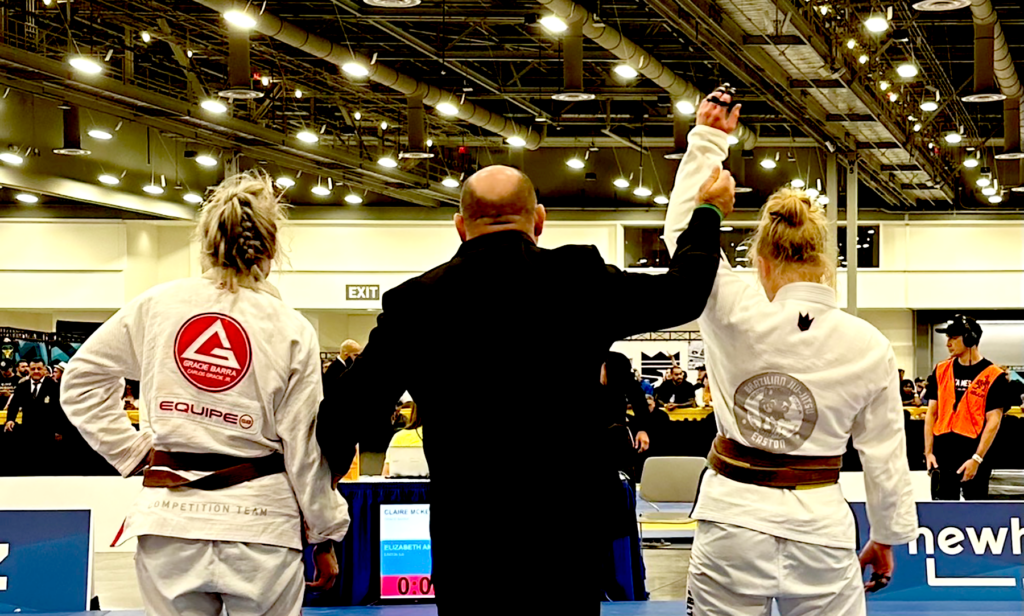
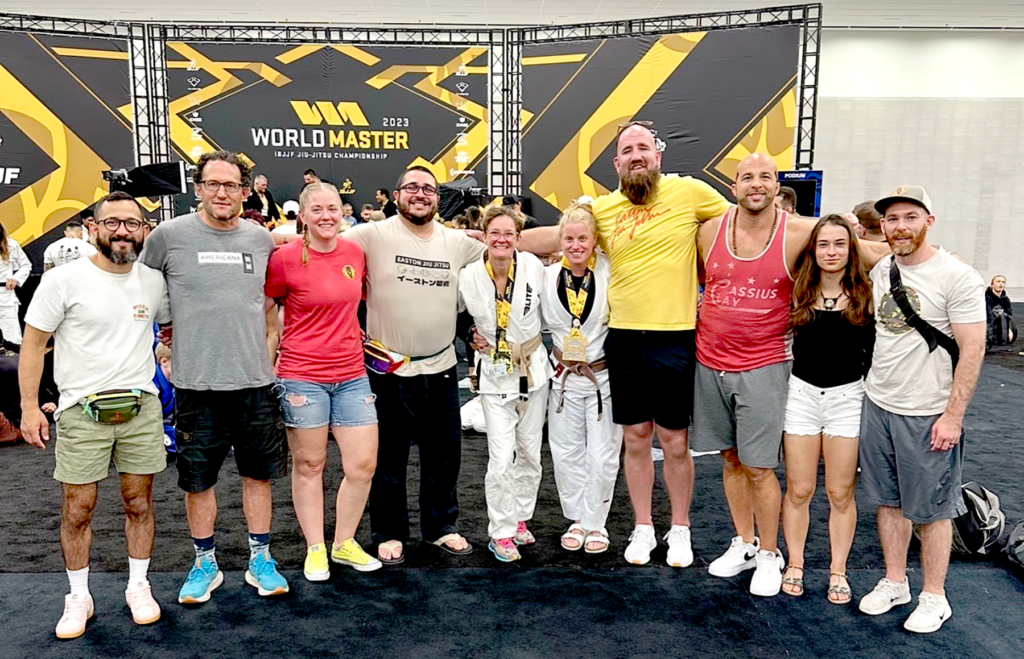
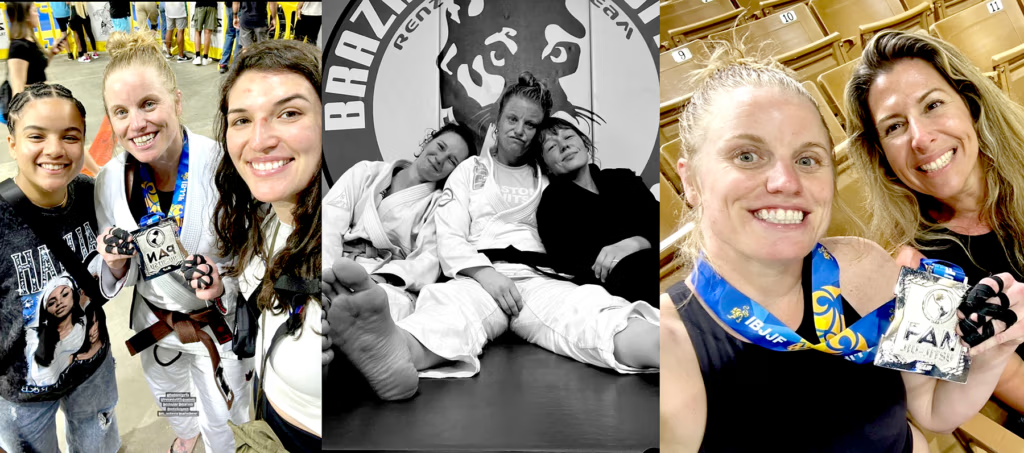
Alongside years of training, Beth also built a strong competition record. She competed in many of the major Brazilian Jiu Jitsu tournaments throughout her time starting at blue belt, including Adult Worlds, World Masters, Pan Americans and other local IBJJF competitions as well as local ones like Naga and Grappling Industries.
“BJJ gave me the belief in myself,” says Beth, “that I can do hard things.”
The biggest thing Beth has gained over her long martial arts journey includes a solid foundation of belief in herself. Among the emotional, physical and mental growth, she has found one of the most valuable pieces of wisdom she’s earned goes back to the idea that failing, succeeding, and doing hard things are not all that different.