
Jump In: A Breakdown of Contrast Therapy to Avoid a Breakdown of Your Body
Author’s note: This article does not replace the advice of your medical professional, and the information provided is for informational purposes only and does not constitute professional medical advice, diagnosis, or treatment. Users should always consult with a qualified healthcare professional for any health concerns or before making any decisions related to their health and well-being. The author does not promote any particular brand of contrast therapy, and these are just the brands she happens to use with varying degrees of success.
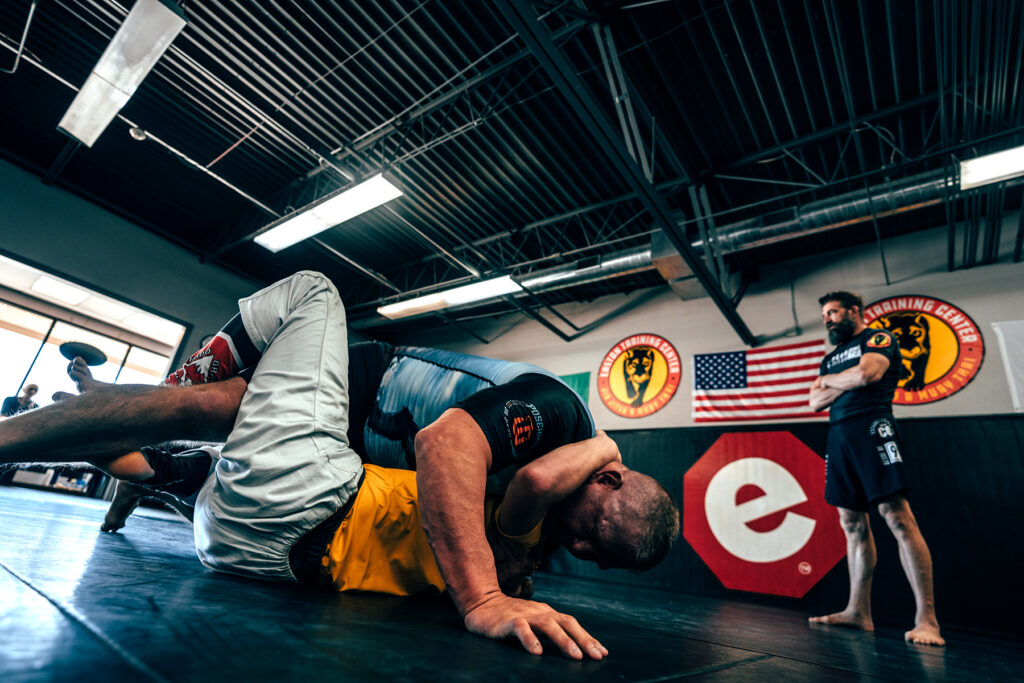
Combat sports generally do not get a gold star for promoting longevity in the body, so in the interest of maintaining supple joints and muscles and overall mobility, a variety of complementary practices exist. These practice lay the foundation for continued training and support a healthy and strong body and mind for decades to come, both on and off the mats.
Regular massages, mobility, eating well and staying hydrated count among a few, and one that has recently snowballed in popularity is contrast therapy.
Contrast therapy, defined by any activity that stimulates heat- and cold-shock responses in the body, can range from hot baths, sauna exposure, cold plunges and sitting or even swimming in cold rivers and lakes. Though some therapies remain more accessible than others, we can still seamlessly introduce (or heighten our current) contrast therapy protocols for improved training and longevity in a sport that is, by definition, actively working to break down our body.
[The Power of Mobility: How It Stands Apart From Exercise]
Benefits of contrast therapy
The benefits of contrast therapy extend beyond training-centric priorities. Heat and cold exposure can boost mental acuity and enhance the function of the nervous and cardiovascular systems, as well as support metabolic activity, brown fat activation, and potentially the microbiome.
Contrast therapies induce a noted uptick in neurotransmitters, leading to heightened dopamine and serotonin production, providing a natural antidepressant. Continued use of contrast therapy can also improve our ability to tackle difficult situations. People report a feeling of happiness after contrast therapy, and those who suffer from chronic pain also frequently note decreased discomfort. These physical responses translate into the ability to train harder, rest better and feel healthy in between.
So, how can we access these incredible, life-changing benefits?
Heat
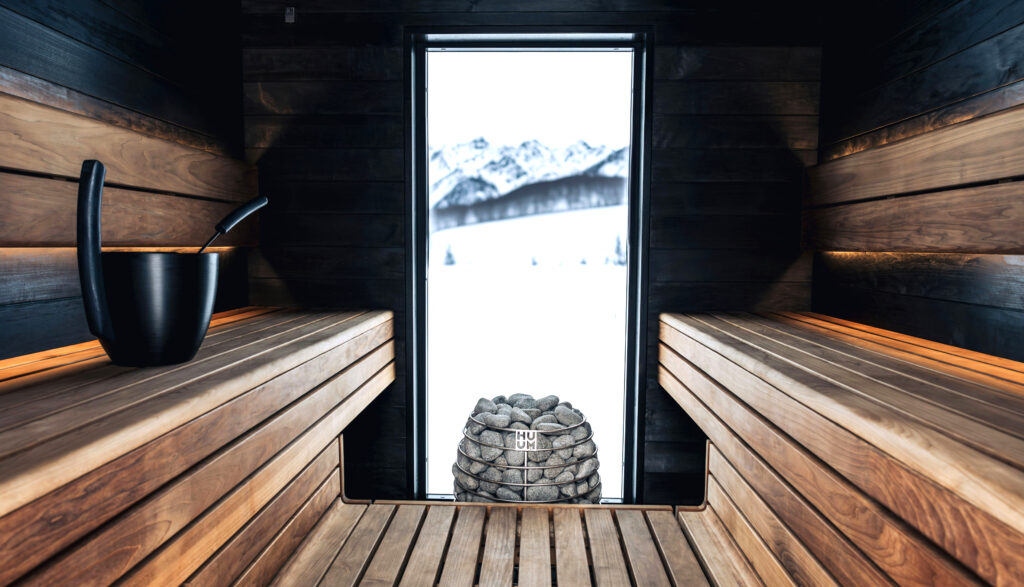
The gold standard of heat therapy is the sauna, though warm baths also offer a variety of benefits. The heat exposure activates our sympathetic (fight or flight) and parasympathetic (rest and digest) nervous systems, engaging an acute (short-term) stress response that emulates the response we get from exercise.
If you have access to a sauna, the optimal protocol calls for heat above 175F for 15-20 minutes, three times a week for a total of 57 minutes combined. In the absence of a sauna, hot baths for the same frequency and duration at a hot but comfortable temperature can stimulate similar responses in the body. (When we say sauna, we mean traditional sauna. Infrared saunas offer benefits, but unrelated to contrast therapy.)
Cold
Getting into a warm bath rarely makes a hard sell, but getting into sub-60-degree cold water elicits epic levels of resistance. Some people even claim to be cold-phobic, so what benefits could possibly outweigh the discomfort of putting ourselves through the torture of cold plunging?
Arguably the more potent of the contrast therapies, exposure to the cold can offer a smorgasbord of benefits, including increased clarity, drive and a general feeling of happiness. The cold supports insulin and glucose regulation, as well as the ever-important — and often overlooked — brown fat organ. It also stimulates the part of our brain responsible for doing things it doesn’t want to do: the anterior mid-cingulate cortex (aMCC). Like a muscle, the more you work it, the easier it becomes to tackle hard things. Personally, cold plunging helps me with headaches, migraines and stiffness in my neck from working at obtuse angles all day.
The ideal protocol for cold exposure starts relatively warm, with short duration, and increases in coldness and time to 11 minutes a week at a water temperature below 60F. That 11 minutes would divide into however many times a week works for your schedule. In my case, that translates to 3m40s in a cold water tub on my deck three times a week.
In the absence of a cold plunge tub, river or lake, using the bathtub at the coldest water setting can make a great substitute. Dumping some bags of ice from the convenience store down the street can help reduce the temperature if needed.
| Total Time/Week | Ideal Temperature | # Sessions/Week | Ideal Duration/Session | |
| Sauna | 57 minutes | Above 175F | 2-3 | 15-20 minutes |
| Cold Plunge | 11 minutes | Below 60F | 3+ | 1 to 4 minutes |
[Improve at Any Age With Better Sleep, Diet and Stretching]
Leveling up
When I first started cold therapy three years ago, I’d turn on only the cold water to fill my bathtub and found that in the spring months in Denver, the average temperature would be around 52°F, which is below the studied beneficial threshold of 60°F. I told myself that if I continued to use this mostly free version of cold therapy, I would only then invest in a $100 soft-sided cold plunge. If I continued after that, then I would invest in the more substantial insulated cold tub and chiller combo.
After a few months of shivering in my cold bathtub, my husband gifted me a Nurecover soft-sided tub. Three times a week, I would go through the motions of filling it with cold hose water and ice from our freezer. I found the soft-sided tub to require consistent maintenance; it was often too warm in the summer and could freeze solid in the winter, but by then I was hooked on the high I got from the cold. (Not to mention, the relief I felt from my migraines and neck stiffness.)
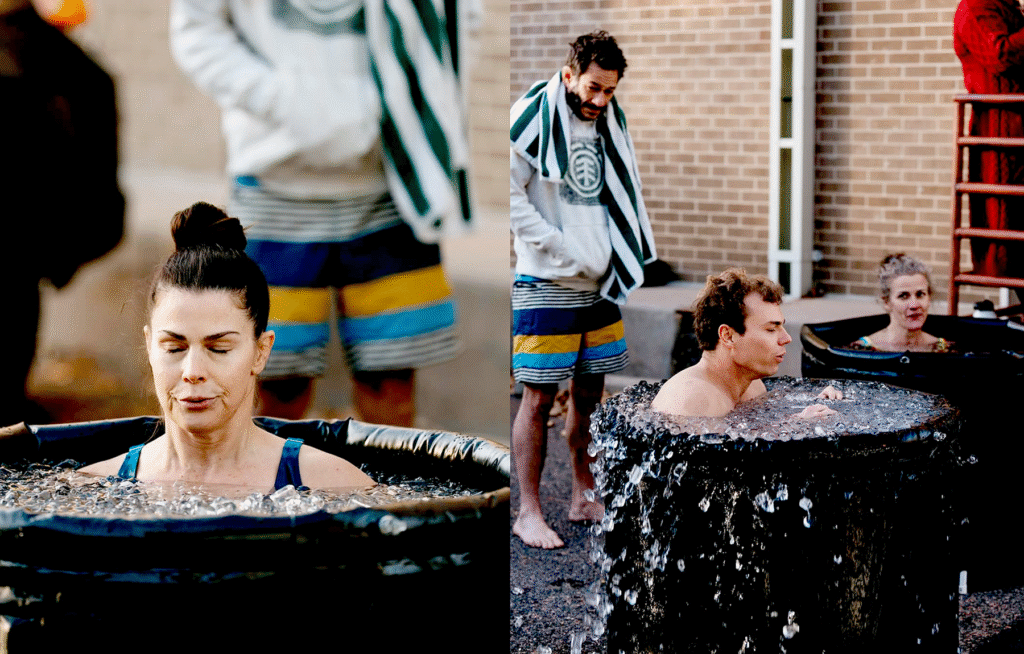
I started saving immediately for a well-insulated tub and chiller, finding an Ice Barrel 300 and Warrior Willpower ½ horsepower chiller and filter system that work fabulously year-round on our deck, yielding considerably less maintenance. My ideal temperature is now 38°F, and I find it extra rewarding when the water temperature plummets to 33°F, and I have to break ice off the top of the water.
Make no mistake, after years of cold plunging at these temperatures, I still despise getting in, (I’d even venture to say I dread it at times ) but knowing the benefits I will feel after makes it easier. I know if I stop plunging, the stiffness in my neck, sluggish energy and fogginess in my workday will all creep back in.
Adding cold therapy to your routine
Cold therapy works best in the morning, before lifting (not after), and at any time in relation to cardio training. Start closer to 60°F for shorter times (30 seconds to 1 minute), and consider having a buddy join for the initial plunges. Having someone there helps with safety, and it’s more fun to suffer with a friend!
You also don’t need to dunk your head to receive the benefits of the cold. If alternating with heat therapy, the Søberg Principle indicates ending on cold, as the benefits for the vascular system are a result of your body heating itself without the help of external heat stimulus. Cold showers do not create the same stimulus as cold baths.
In many cases, I find that getting in the cold water is the hardest thing I will do that day, and I tell myself this when I am sitting in the tub in the morning, knowing that the rest of my day will likely be a cakewalk comparatively.
For those of you resistant to contrast therapy, I implore you to consider the benefits of this simple and powerful routine. If you finally work your body up to 3m40s of cold therapy, how will the remaining 23h56m of your day be?