
Black Belt Ana Mayordomo: Pick Your Journey and Make it Work
For Ana Mayordomo, BJJ Black Belt and professional competitor, Brazilian Jiu Jitsu didn’t begin as a lifelong plan. It began as curiosity, a moment of recognition.
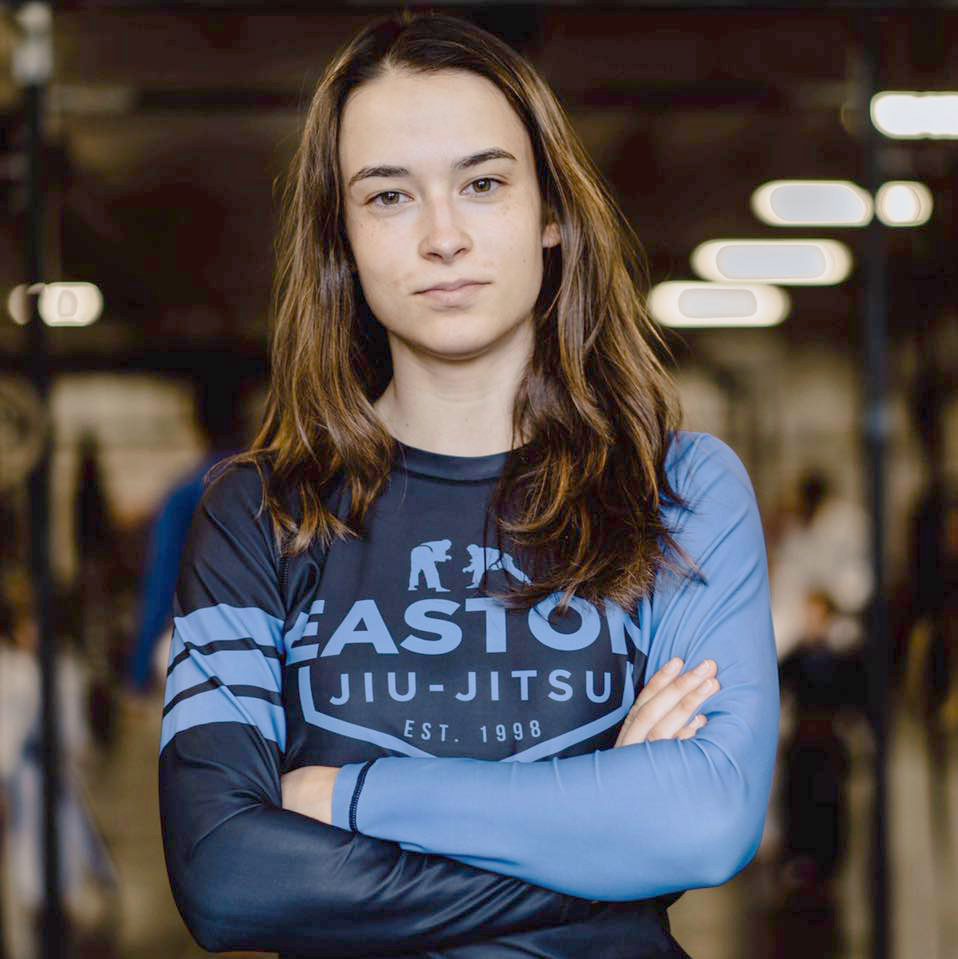
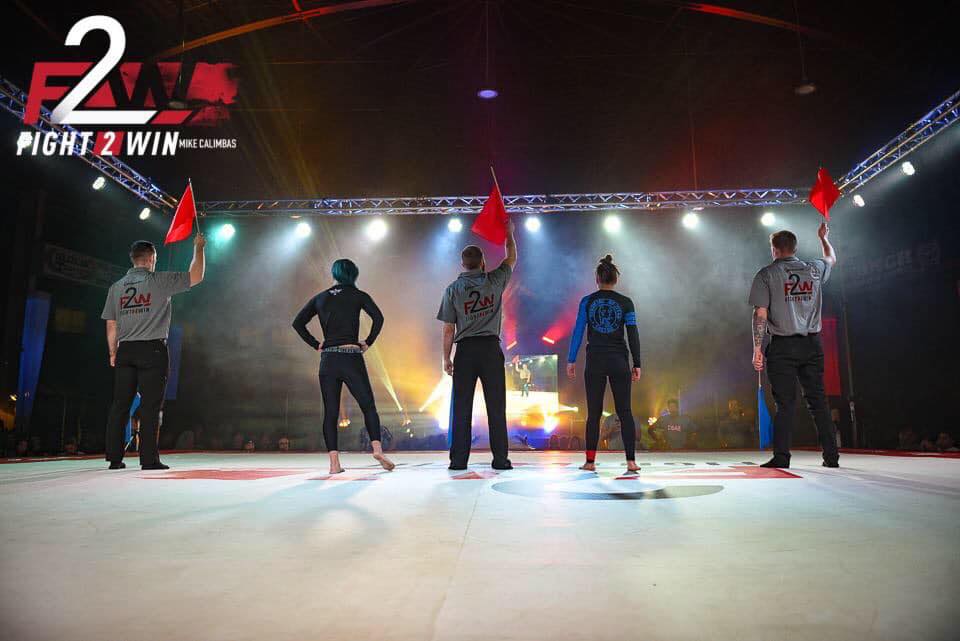
At 13 years old, Ana’s family relocated from Spain where she grew up to Colorado. Three years later, in May of 2016, Ana walked into Easton Training Center for the first time to try Kickboxing and Muay Thai. She had attended a Muay Thai tournament where she watched two women compete, and the presence, confidence and ownership of space stood out beyond the fighting. Ana decided to try striking and chose Easton Denver as her home academy.
The first martial arts academy she’d ever trained at, Easton brought a new form of intention to the physical activity in her life. Before that, sports had always played a more circumstantial role in her life, with Ana playing basketball and tennis alongside her siblings.
From May until December, she took exclusively Kickboxing and Muay Thai classes and in December tried her first Jiu Jitsu class. For a couple of months, Ana did both striking and grappling, but soon committed fully to Jiu Jitsu as her primary art. Nearly seventeen, Ana had also just signed up to compete in her first Easton In-House Jiu Jitsu tournament.
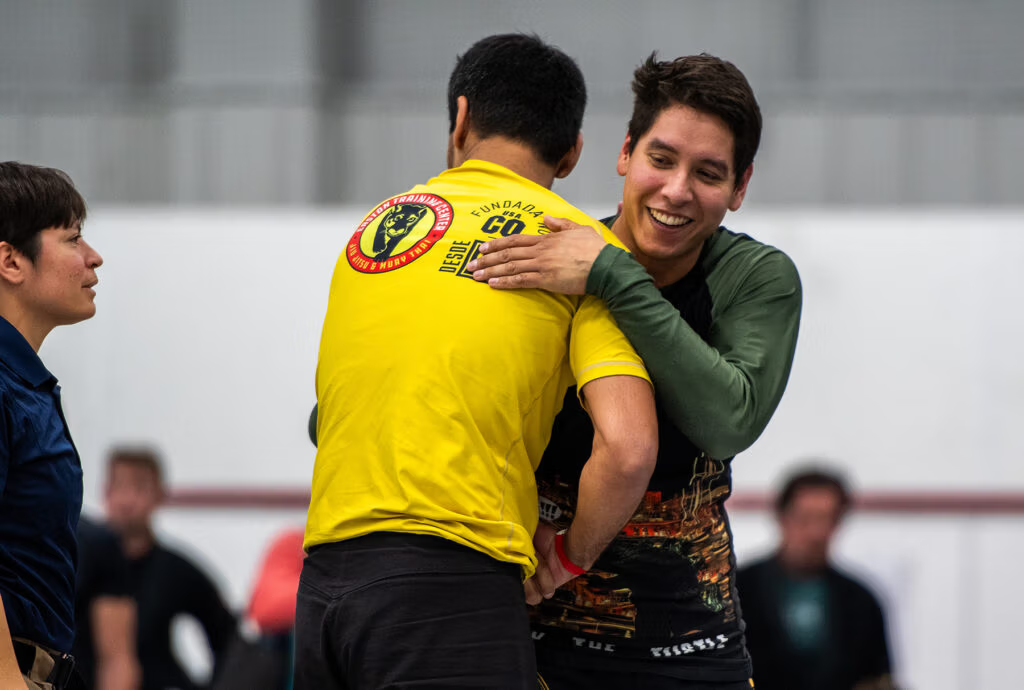
Encouraged by the people around her to compete at least once, Ana has become a firm believer that competition is valuable for anybody, regardless of their goals. That belief would shape far more than her competitive career.
“Competition exposes you to emotions I don’t think we feel as adults anymore,” says Ana, “like to feel nervous and then have to perform. And then mentally frame that in a way that allows you to perform to your best potential.”
[Training For Competition: A Breakdown]
Staying honest with yourself
For the Easton Black Belt who now represents Kingsway BJJ in Austin, Texas, where she trains and competes with Gordon Ryan and John Danaher, Brazilian Jiu Jitsu helped Ana learn how to carry herself with confidence.
Starting martial arts at an especially formative stage of life when many teenagers feel unsteady or unsure, what stood out to Ana in the sport most wasn’t dominance or winning, but its honesty.
In BJJ, you can spar at near full intensity. What shows up on the mat reflects exactly where you are: technically, mentally, emotionally. Ana found this honesty both confronting and grounding.
“What you get is what you are,” says Ana. “How you do in rolls, how you do in competitions; it keeps you really honest. It’s also taught me how to deal with failure.”
A high-achieving student with a Type A, perfectionist mindset, Ana found she wasn’t very adaptable early on. Since school and most other things came easily, she had never had to navigate failure. Jiu Jitsu, and especially competing, forced her to learn how to lose, recalibrate and keep moving forward without letting results define her worth.
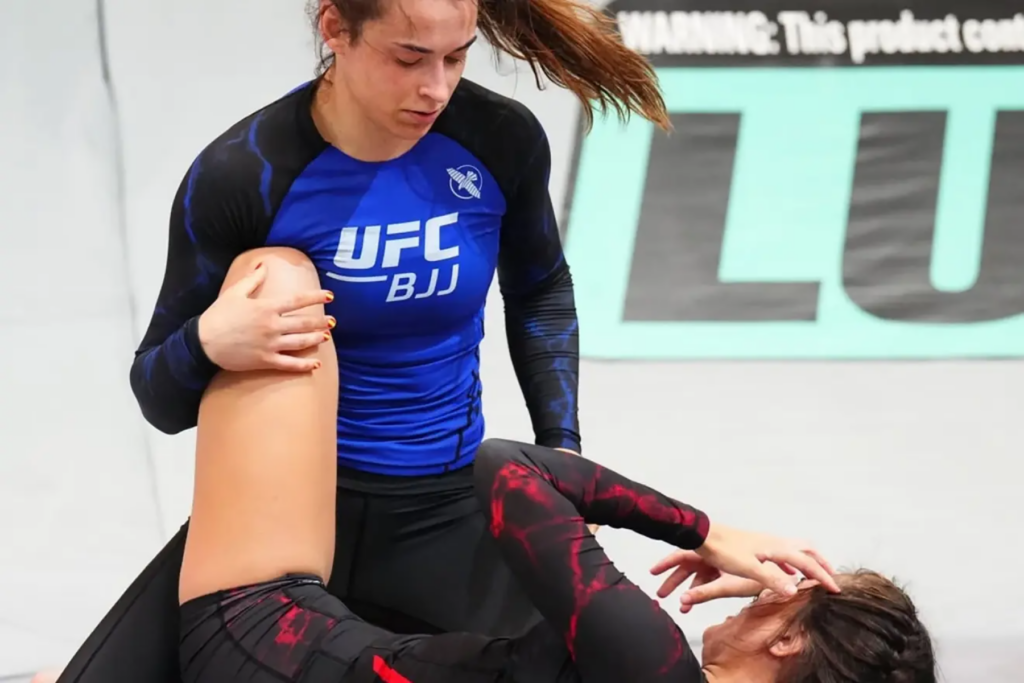
Over time, what once felt black-and-white and outcome-driven slowly became process-oriented. Growth mattered more than medals, and effort mattered more than validation. Ana now competes with confidence rooted not in outcome, but in preparation.
“I believe in the effort I put in,” Ana says, “rather than hope the results help support my ego. I have nothing to prove. I just want to show up and show everyone what I can do.”
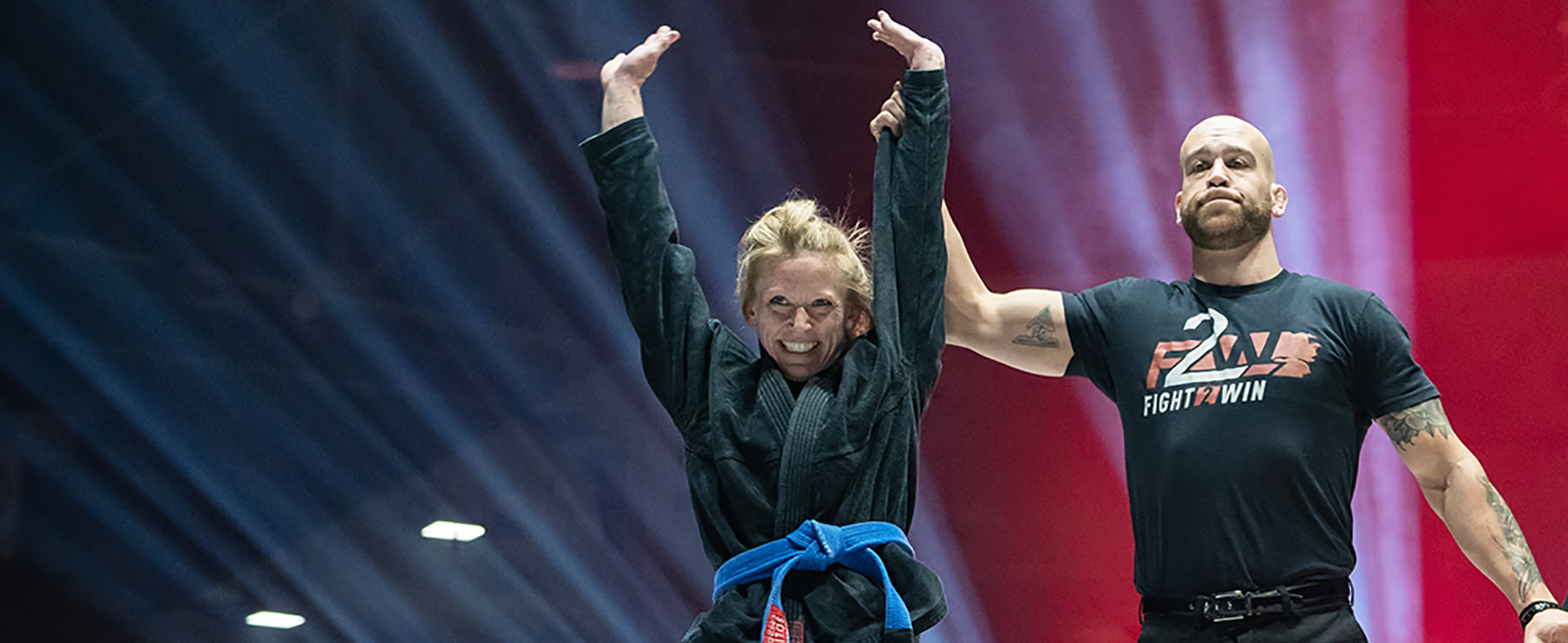
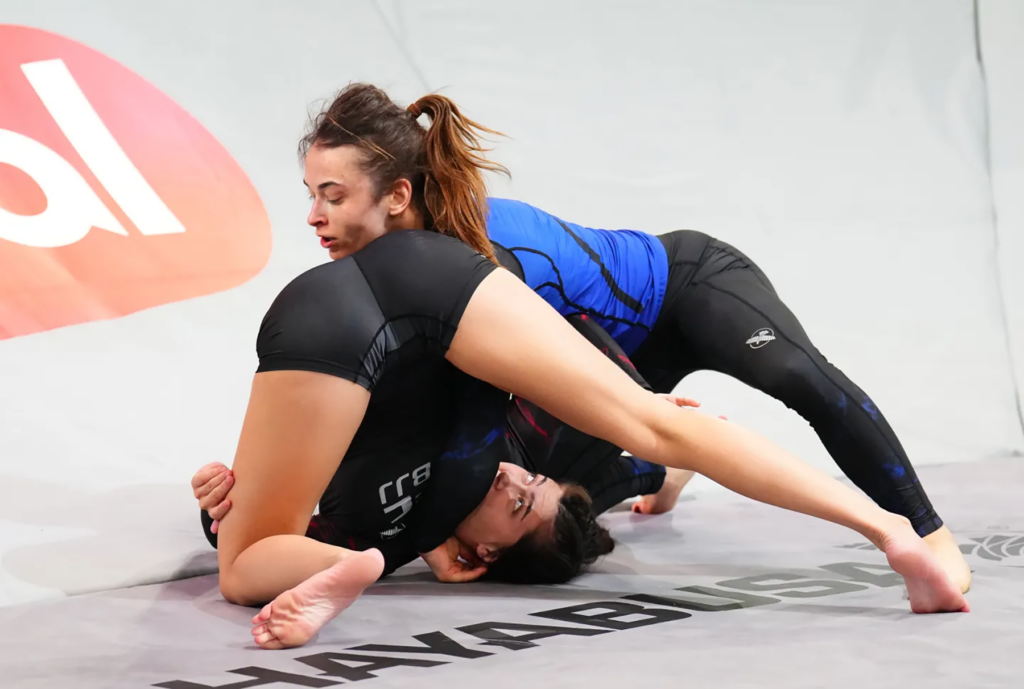
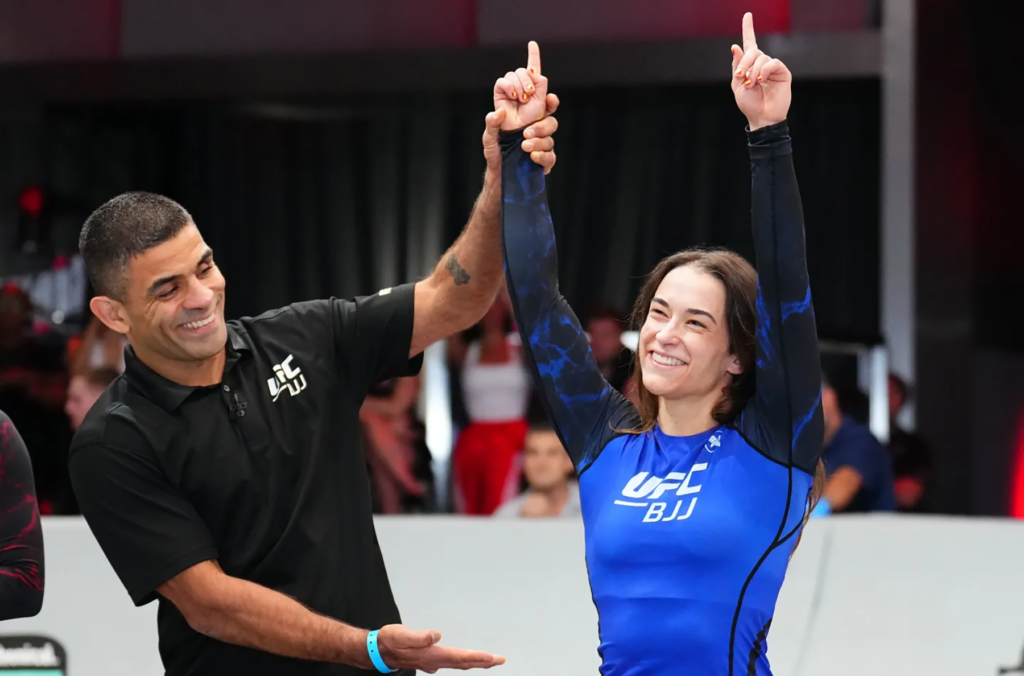
Today, Ana’s accomplishments include No-Gi World titles at blue and brown belt, No-Gi Pans at purple and brown, gold at IBJJF Euros and Pan Ams, ADCC European Trials, a match on UFC BJJ, and top-10 world rankings at both 125 and 135 pounds – all at black belt. She also got silver at No-Gi Worlds as a black belt.
Balancing ambition and stability
A veteran scholar with a full academic scholarship, school has always played a large role in Ana’s life. She holds three bachelor’s degrees (in mathematics, computer science, and marketing) from the University of Denver and works full-time at a remote corporate job that helps support and balance the hectic travel and training schedule.
While Ana juggles a lot to keep up with everything, she finds the effort worth the reward. At the end of the day, Ana says we choose what stress we’re willing to put up with. She has chosen to deal with the stress of juggling a lot of responsibilities and wearing numerous hats in exchange for a stable income and the freedom that it brings.
Jiu Jitsu comprises a portion of her income now, but Ana knows that if she transitioned to living fully off of BJJ, she would sacrifice other values and pursuits she has.
“I want to make sure I love what I do,” says Ana, “and when you turn something you love into work it can lose that.”
For Ana, there is no single “right” path, only a choice of which stress you’re willing to carry. Some choose the uncertainty of full-time competition. Others choose stability with some constraints. Between those extremes exists an entire spectrum, and Ana believes everyone gets to decide where they fall.
That philosophy has guided her through a demanding schedule of training, travel and competition (including stretches where she’s competed in four major tournaments within ten weeks) and setbacks as well.
[Intentional Balance: Rest vs. Exertion]
Resilience through change
One of the most challenging periods of Ana’s journey came after relocating to Austin, Texas to train at the highest levels of the sport. Her coach, Professor Eliot Marshall, had known John Danaher for over a decade, and at one tournament, the three connected. Ana had won a lot of major tournaments at colored belt levels, and John invited her to train at his academy.
However, shortly after moving, she suffered injuries from a car accident that forced her out of training and competition for nearly a year. The timing made it especially difficult as she found herself in a new city, far away from the academy that had become a core part of her life and suddenly unable to train.
The physical recovery comprised only part of the battle; trusting her body again and dealing with the injury’s psychological effects took just as much mental work. In the end, Ana closed the year off by doing a training camp at Easton and returning to the mats alongside the people she came up with.
[Women in Martial Arts: the Journey Through Time]
Community first
While competition can help teach people how to perform through (or simply sit with) nerves, pressure, vulnerability, and injury and setback can teach resilience, what matters most in Ana’s opinion is the community.
Not everyone needs to become a world champion, but everyone should try to build a practice with people who support you through the imperfect parts. Whether it’s Jiu Jitsu or something else, Ana believes the key is the same: find a place that helps you grow and stick with it.
Growth and success don’t come from choosing the “right” path; they come from choosing your path and showing up honestly along the way.